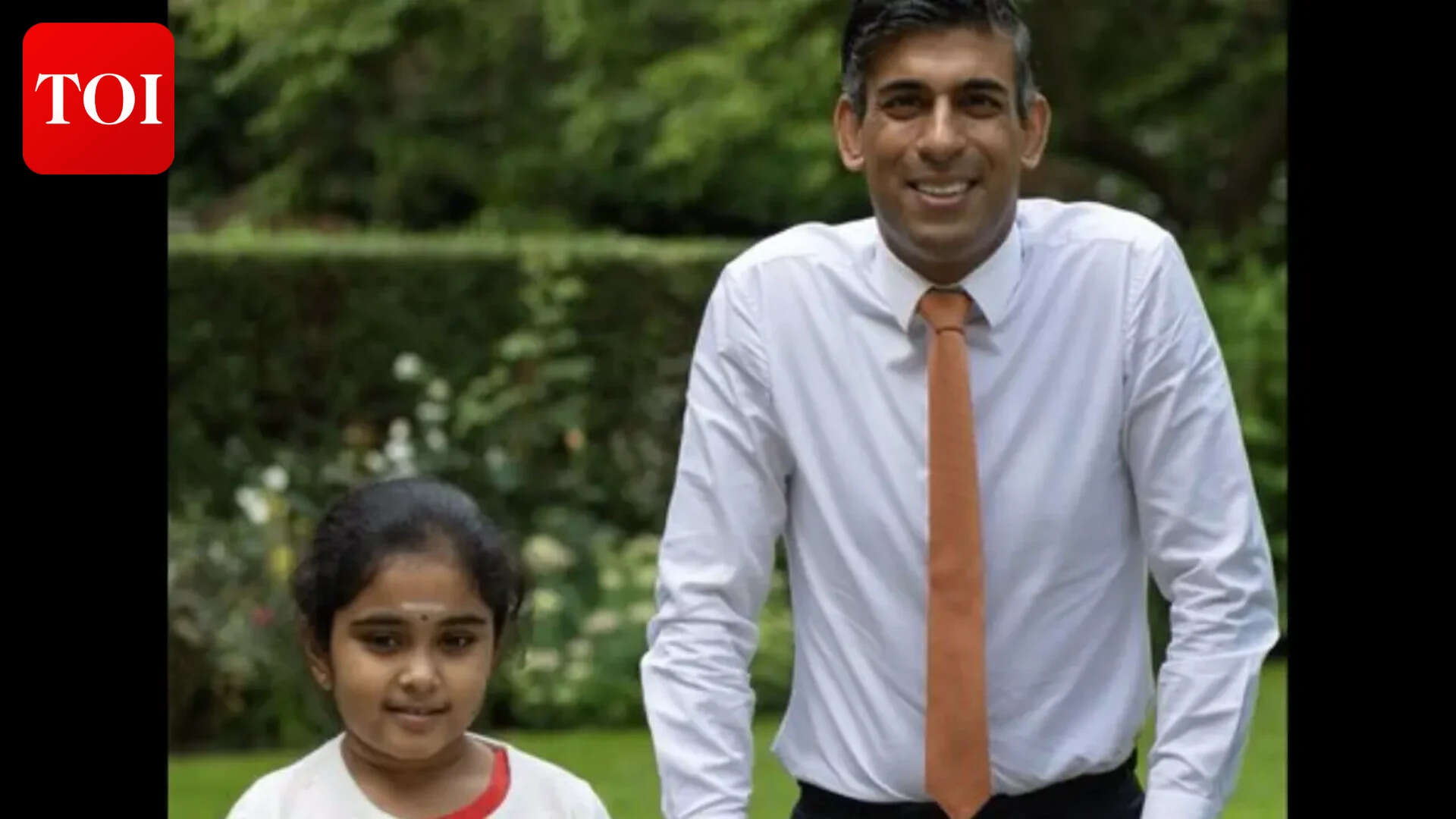
Bodhana Sivanandan represents a rare convergence of cognitive early-onset mastery and institutional validation within the English chess ecosystem. While political commendations often frame such talent through the lens of national pride, a rigorous analysis reveals that Sivanandan’s ascent is not a matter of "inspiration" but a specific byproduct of high-density tactical training and a structural shift in how the English Chess Federation (ECF) identifies and accelerates elite assets. To understand her position as England’s top-ranked female player at age nine, one must deconstruct the mechanics of her Elo progression and the specific competitive advantages inherent in her developmental timeline.
The Cognitive Acceleration Framework
The primary driver of Sivanandan’s performance is the compression of the developmental feedback loop. In traditional chess advancement, a player’s growth follows a linear path of opening theory, tactical drills, and endgame technique. Sivanandan exhibits a non-linear acceleration that suggests a mastery of "pattern chunking"—the ability to recognize complex positional structures and tactical combinations as single units of information rather than discrete pieces.
This cognitive efficiency is measured through two primary variables:
- Tactical Solving Density: The frequency and complexity of calculation exercises completed during the early developmental window (ages 5–8).
- Tournament Saturation: The exposure to "classical" time controls against opponents with significantly higher ratings, which forces the adaptation of defensive resilience and high-stakes decision-making.
Sivanandan’s performance at the European Blitz Chess Championship, where she secured the best female player title by defeating Grandmasters and International Masters, demonstrates that her tactical intuition functions at speeds that bypass the typical "check-and-verify" hesitation seen in even seasoned club players. This is not a personality trait; it is a neurological optimization for high-speed pattern recognition under time pressure.
Structural Validation and the ECF Pivot
The endorsement by Rishi Sunak and the subsequent national attention serves as a signal of a broader institutional shift within English chess. For decades, England’s chess infrastructure lacked the centralized identification systems seen in Eastern European or Indian programs. The recognition of Sivanandan indicates a tactical pivot by the ECF to prioritize "early-identification assets."
The strategic logic behind this shift rests on the Compound Interest of Elo. A player who reaches a 2000 FIDE rating by age nine has a significantly higher probability of achieving the Grandmaster (GM) title before eighteen than a player who reaches that milestone at age twelve. This three-year delta represents thousands of hours of high-level tournament experience and coaching during the brain's most plastic phase. By elevating Sivanandan as a central figure, the ECF is signaling a move toward a high-performance model that emphasizes youth-centric talent pipelines over traditional, broad-base participation.
The Gender Gap in Competitive Chess: A Mechanistic View
The classification of Sivanandan as "England’s top female player" necessitates an examination of the structural disparities in the chess landscape. The performance gap between male and female players is frequently debated, but a data-driven perspective focuses on the Participation Pool Variable.
Historically, the ratio of male to female players has been heavily skewed. This creates a statistical inevitability: if 90% of the players are male, the top of the rating bell curve will be dominated by males. Sivanandan’s position as a top-ranked female player at such a young age is a precursor to a potential "leveling effect." As more young female players enter the competitive ecosystem at earlier ages, the statistical probability of female GMs increases.
Sivanandan’s competitive vector is unique because she is currently competing—and winning—in open sections, not just girls-only events. This exposure to a wider, more aggressive pool of opponents is a critical component of her "Stress Testing" phase. A player’s ceiling is often determined by the average strength of their regular competition; by bypassing the silos of age-restricted or gender-restricted play, Sivanandan is maximizing her Elo growth potential.
Tactical Patterns and the Modern Engine Influence
One cannot analyze a modern prodigy without acknowledging the role of Stockfish and other high-level chess engines. Sivanandan belongs to a generation of "Engine-Native" players. Unlike previous generations who learned from books and physical boards, these players internalize engine-perfect evaluations from day one.
The resulting playstyle is often characterized by:
- Material Agnosticism: A willingness to sacrifice material for abstract positional advantages that only a computer can accurately calculate.
- Concrete Calculation: A preference for deep, forced variations over general "principled" play.
- Precision in the Endgame: A technical accuracy in simplified positions that historically took decades to master.
Sivanandan’s games show a high correlation with engine "best-move" choices in complex middlegame positions. This suggests a training regimen heavily reliant on digital analysis, which effectively "hard-wires" a computer-like objectivity into the player’s decision-making process.
The Risks of Premature Institutionalization
While the current trajectory is steeply upward, any rigorous strategy must account for the Burnout Coefficient. The transition from "prodigy" to "professional" is the most dangerous phase in a player's career. The pressure of national expectations, coupled with the diminishing returns of Elo gains as one approaches the 2500–2600 threshold, creates a psychological bottleneck.
The second limitation is the Plateau Effect. Most prodigies hit a wall when their raw tactical talent is neutralized by the deep opening preparation and positional sophistication of seasoned Grandmasters. To transcend this, Sivanandan will need to move beyond pattern recognition and into the realm of "Psychological Chess"—understanding the specific weaknesses and tendencies of her opponents, a skill that usually requires a level of emotional maturity that is difficult to fast-track.
Strategic Forecast: The Path to Grandmaster
To maintain her current momentum and secure the Grandmaster title within the next 36 to 48 months, the following strategic actions are required:
- Iterative Opening Specialization: Moving from a generalist opening repertoire to a "Deep-Tree" specialization in two or three core systems. This reduces the cognitive load during the first 15 moves and preserves energy for the complex middlegame.
- High-Altitude Coaching: Transitioning from tactical tutors to strategic mentors who have successfully navigated the 2400-to-2600 Elo jump. This involves a shift from "solving puzzles" to "understanding imbalances."
- Selective Tournament Scheduling: Avoiding high-frequency, low-reward open tournaments and focusing on "Closed-Loop" Invitationals where the average opponent rating is consistently 100–200 points higher than her own.
The focus must remain on the Incremental Gain of One Percent. In the elite tiers of chess, the difference between an International Master and a Grandmaster is not the ability to see a mate-in-five, but the ability to identify a microscopic positional weakness twenty moves in advance. Sivanandan’s current trajectory suggests she has the foundational hardware for this; the remaining variable is the consistent application of high-level strategic software.
The final strategic move is the decoupling of her progress from the "female" category entirely. To achieve a 2700+ Super-GM rating, the internal and external metric must be her rank in the Absolute Open Category. If Sivanandan continues to treat gender-based titles as secondary milestones rather than end-goals, her ceiling remains effectively limitless.