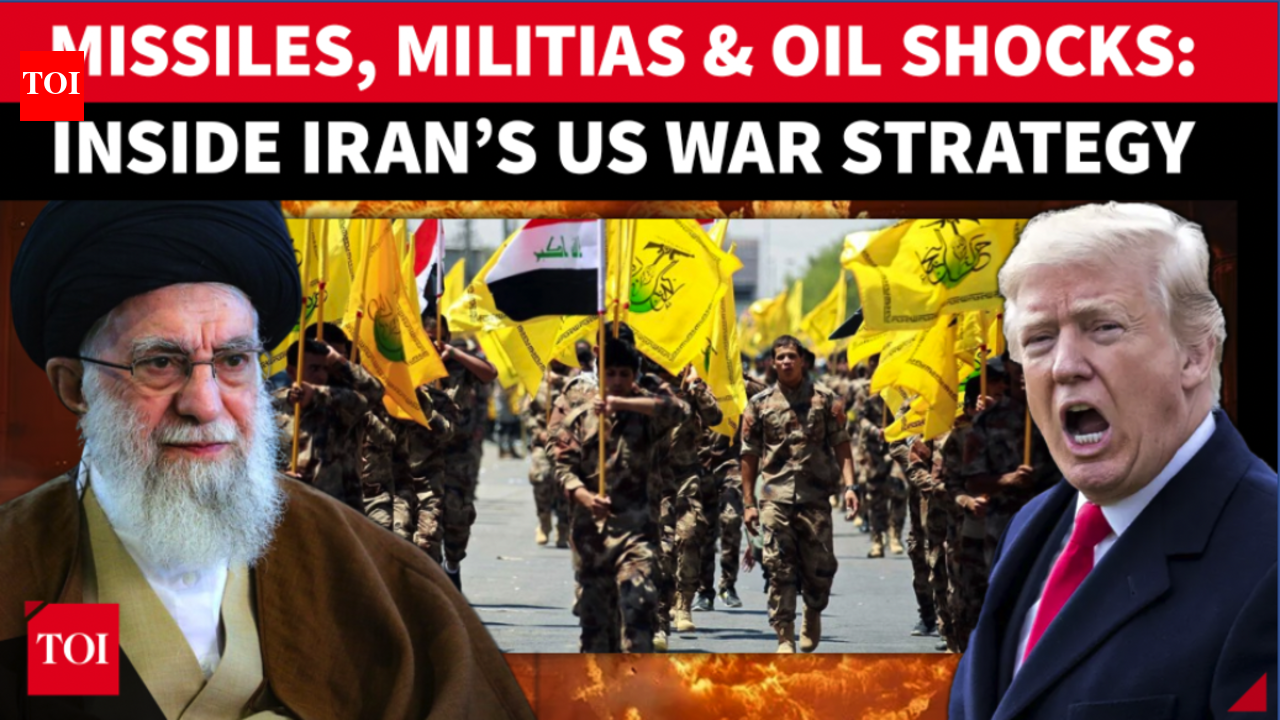
The current standoff between the United States and Iran is not a binary choice between total war and regional stability. It is a sustained exercise in managed attrition, where the fundamental objective for both parties has shifted from decisive kinetic victory to the exhaustion of the adversary’s strategic depth. To analyze the trajectory of this conflict, one must move past the narrative of erratic decision-making and examine the structural constraints governing both Washington’s coercive pressure and Tehran’s asymmetric response.
The Mechanism Of Managed Attrition
The conflict operates on a three-tier cost function: kinetic, economic, and political. Washington’s current doctrine, post-June 2026, relies on a combination of selective strikes against nuclear and military infrastructure and a suffocating maritime blockade. The strategic intent is to drive Iran toward a domestic breaking point, predicated on the assumption that the Islamic Republic cannot sustain a state of perpetual mobilization while its economic output, particularly oil exports, remains significantly degraded.
Tehran, conversely, employs an "asymmetric endurance" strategy. By leveraging regional proxy networks and the strategic chokepoint of the Strait of Hormuz, Iran imposes costs on the global economy that Washington must eventually account for in its domestic political calculus. The goal for Iran is not to defeat the U.S. military in a conventional engagement, but to create sufficient friction in the international order—specifically within energy markets—to force a recalibration of U.S. objectives.
The Variables Of The Strait Of Hormuz
The Strait of Hormuz acts as the central bottleneck in this conflict. It functions as a force multiplier for Iranian capabilities and a significant liability for the U.S. alliance structure.
- Market Volatility: Iran’s capacity to threaten shipping lanes is not merely a military provocation; it is a mechanism to drive up global insurance premiums and energy prices, effectively taxing the global economy to compensate for its own internal economic distress.
- Resource Exhaustion: The U.S. and its allies are operating against a finite inventory of interceptors and munitions. Iran’s lower-cost drone and missile swarms allow for a favorable exchange ratio in terms of economic cost per engagement. Maintaining an air-defense umbrella across the region is a high-burn-rate strategy that Washington must continually justify to its political base.
- Information Warfare: Iran’s use of cyber operations against U.S. critical infrastructure is calibrated for psychological saturation rather than catastrophic damage. These attacks are designed to demonstrate the vulnerability of the U.S. homeland, thereby complicating the domestic political environment for the administration’s continued involvement.
Strategic Asymmetry And The Limits Of Pressure
The persistent failure of the Islamabad Memorandum of Understanding (MoU) to yield a diplomatic breakthrough illustrates the fundamental mismatch in the parties' negotiation goals. Washington seeks a comprehensive reordering of Iran’s regional revisionist policies, including the disarmament of its proxy networks and the permanent cessation of nuclear enrichment. Tehran, however, views these demands as an existential threat to the core of its regime security.
The "maximum pressure" model fails because it underestimates the regime’s tolerance for economic pain. History indicates that authoritarian structures often prioritize survival over macroeconomic stability. Consequently, the assumption that sanctions will naturally lead to a capitulation on core nuclear and strategic issues is unsupported by the current data. The regime has effectively institutionalized a wartime economy, reallocating domestic resources to shield its leadership and key security apparatus from the effects of the blockade.
The Dynamics Of Escalation Risk
Conflict escalation in this environment is rarely the result of a deliberate, high-level policy decision. It is increasingly a product of "incident-driven" expansion. The structural instability created by the ongoing exchange of strikes means that a tactical error—a miscalculation at sea or an over-reach by a proxy force—can force an escalation that neither Washington
The Structural Mechanics of Statecraft: Iran, Deterrence, and the Cost of Escalation
news
category
Geopolitical equilibrium rests not on rhetorical posturing, but on the calibration of structural pressure points and resource constraints. The strategic calculus governing relations between Washington and Tehran is frequently obscured by volatile media narratives that alternate between impending regional conflagration and sudden diplomatic normalization. To evaluate whether current dynamics represent a permanent alteration of the strategic balance or merely a temporary interlude before kinetic escalation, one must abandon surface-level diplomatic theater and analyze the underlying architecture of state behavior, economic exposure, and coercive instruments available to both actors.
The Tripartite Matrix of Deterrence
Statecraft between asymmetric adversaries relies on a tripartite matrix of deterrence: economic denial, military escalation dominance, and regional proxy management. When evaluating the systemic friction between the United States and Iran, each vector operates under distinct systemic constraints.
- Economic containment operates through secondary sanctions designed to constrict hydrocarbon export volume and isolate financial clearing mechanisms.
- Military deterrence functions via force posture distribution, missile defense architecture, and the credible threat of critical infrastructure degradation.
- Proxy management involves asymmetric network endurance, resource allocation to regional militias, and the suppression of domestic dissent through state apparatuses.
The strategic interaction between these vectors creates a continuous feedback loop. When economic pressure intensifies, proxy networks often increase regional friction to impose localized costs on adversary supply chains and maritime transit corridors. Conversely, kinetic suppression of proxy networks forces the central state to absorb security deficits or recalibrate its nuclear enrichment thresholds as an alternative deterrent mechanism.
The Asymmetric Cost Function
Analyzing the sustainability of current postures requires examining the internal cost functions of both governments. Tehran operates under severe structural inflation, currency devaluation, and capital flight driven by sustained trade isolation. However, the authoritarian political model possesses a high tolerance for localized economic degradation, shifting the primary burden of sanctions onto the civilian population while insulating the security apparatus and elite economic foundations controlled by military-linked conglomerates.
The United States and its regional allies face a different structural calculus. Prolonged regional instability threatens global energy pricing stability, maritime insurance rates, and diplomatic capital. The deployment of high-end naval and air defense assets to counter asymmetric threats incurs significant operational costs, straining finite military inventories against the backdrop of competing global strategic priorities in Europe and East Asia. Consequently, both capitals are incentivized to manage conflict below the threshold of total war, utilizing gray-zone operations, cyber interference, and diplomatic signaling to achieve marginal objectives without triggering uncontrollable escalation dynamics.
Strategic Trajectory and Coercive Equilibrium
The structural friction between Washington and Tehran does not resolve through binary outcomes like total capitulation or all-out war. Instead, it settles into a durable state of managed hostility defined by calculated thresholds.
To maintain strategic stability, decision-makers must continuously monitor three leading indicators: shifts in nuclear enrichment grade thresholds, variations in maritime transit security through critical chokepoints, and the financial sustainability metrics of regional proxy networks. The absence of a definitive diplomatic settlement ensures that tactical pauses function merely as operational regrouping phases within a continuous cycle of friction management. The strategic imperative for any analyst is to track the moving equilibrium points of this containment architecture rather than anticipating a permanent resolution.