We like to believe we can sense danger. We tell ourselves that evil announces itself with a shift in the air, a sinister glint in the eye, or a primal instinct screaming at us to run. But it rarely does. True danger usually arrives carrying a suitcase, looking exhausted, and asking politely for a glass of water.
It begins with a knock on a door in a quiet Ohio neighborhood. It ends with a notification on a smartphone that shatters a person's reality forever.
Between those two moments lies a terrifying truth about human nature. When we open our homes to those in need, we are not just sharing our space. We are gambling with our lives.
The Instinct to Heal
Kindness is an active choice. For some, it is a default setting. When an Ohio homeowner—a woman whose quiet life was defined by community and faith—met a young couple claiming to have fallen on hard times, her immediate reaction was not suspicion. It was empathy.
They looked weary. They spoke of bad luck, of dead ends, of needing just a few days to catch their breath and get back on their feet. To a Good Samaritan, this is a call to action.
Imagine the scene on that first evening. The smell of a home-cooked meal. The soft clinking of silverware. The couple, polite and deeply grateful, offering to wash the dishes. In the living room, small talk flows easily. They talk about the weather, about how hard the world can be, about their hopes for a fresh start.
The homeowner sits across from them, feeling that warm, quiet satisfaction that comes from doing the right thing. She looks at the young man and woman sitting on her sofa and sees reflection of her own values. She sees people who just needed a break.
This is how trust is built. Brick by brick, conversation by conversation, smile by smile. We project our own goodness onto others because the alternative—living in a state of perpetual paranoia—is too heavy a burden to bear. We want to believe in the inherent decency of strangers.
They went to bed that night under her roof, sleeping in blankets she had folded, protected by walls she paid for.
They were safe. And she thought she was, too.
The Shadow Four Hundred Miles Away
While the coffee brewed the next morning in Ohio, a digital dragnet was quietly tightening across state lines.
Four hundred miles away, the pavement was still stained with the reality of what this couple had left behind. In another town, in another neighborhood, a family was grieving. A life had been violently taken. The police lines were up, the flashbulbs of forensics units were piercing the dark, and detectives were staring at a computer screen displaying two faces.
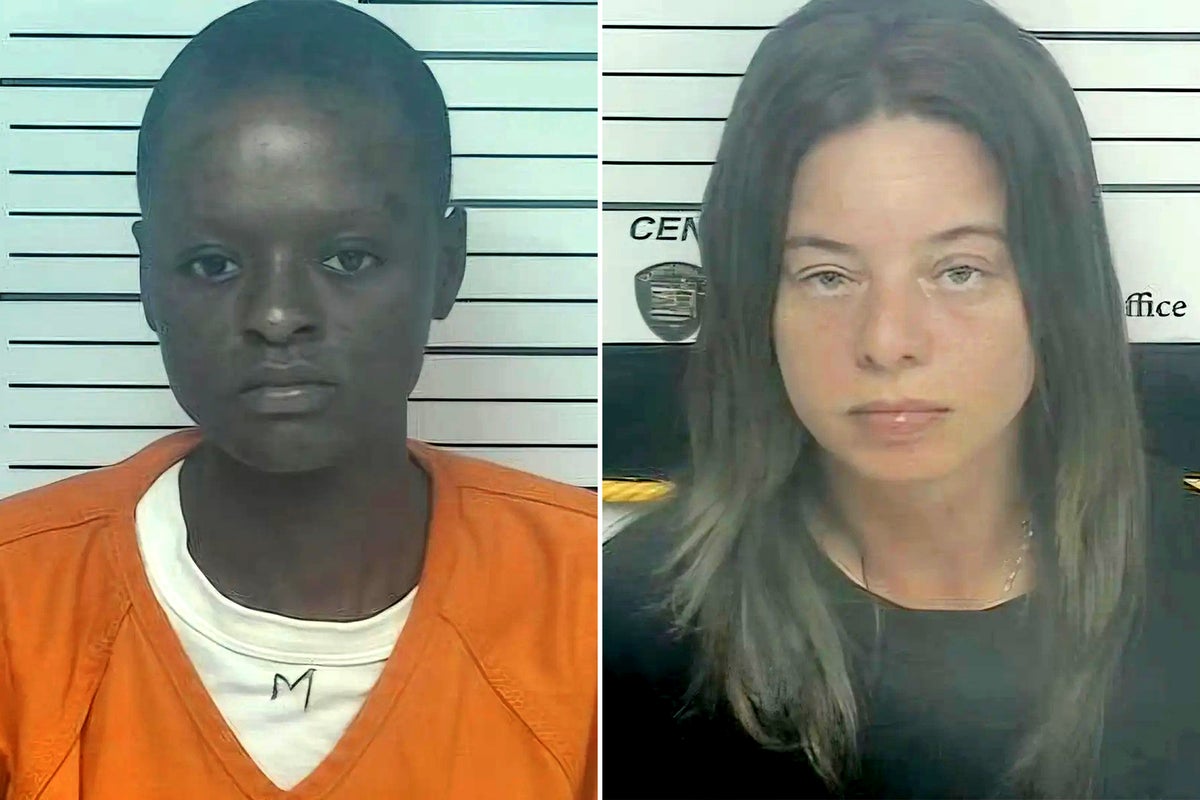
The same two faces currently waking up in a cozy Ohio spare bedroom.
The contrast is dizzying. On one end of the highway, a hunting party of federal marshals and state troopers is tracking a pair of alleged killers. On the other end, those same fugitives are sitting at a kitchen table, nodding politely as their host asks if they prefer their eggs scrambled or fried.
This is the invisible stakes of modern life. We live in an era where information moves at the speed of light, yet human perception remains agonizingly slow. We judge books by their covers because we have no choice; we cannot read the minds of the people we pass on the street.
As the hours ticked by, the couple played their parts flawlessly. They were the perfect guests. They helped around the house. They kept their voices low. They did nothing to trigger the ancient, internal alarms that evolutionary biology gave us to detect predators.
Because predators do not always growl. Sometimes, they smile.
The Notification That Shatters the World
Discovery never happens like it does in the movies. There is rarely a dramatic confrontation, a sudden gasp, or a weapon drawn in the kitchen light. It happens in the quietest way possible.
A casual scroll through a news feed. A shared post from a friend a few states over. A mugshot that looks vaguely familiar.
Then, the sudden, icy realization.
The breath catches in the throat. The heart skips, then hammers against the ribs with a violence that feels loud enough to wake the house. The face on the screen is unmistakable. The names match. The tattoos match.
The people wanted for a brutal murder hundreds of miles away are currently down the hall, breathing the same air, steps away from where you stand.
In that exact moment, the architecture of a home changes entirely. The walls, once a symbol of security, become a cage. The locks on the doors feel useless because the threat is already inside the perimeter. Every sound—a floorboard creaking, a door handle turning, a muffled cough from the spare room—becomes an existential threat.
How do you walk past that room? How do you keep your voice steady when you say goodnight? How do you dial three digits on a phone when you know that a single loud gasp could bring them running down the hallway?
The psychological trauma of this realization is profound. It is a violent violation of the sanctuary we call home. The physical danger is immense, but the emotional wreckage is permanent. The realization that you slept soundly while wolves rested in the next room is a thought that leaves a permanent scar on the psyche.
The Cost of an Open Door
The police arrived eventually, of course. The flashing red and blue lights illuminated the quiet Ohio street, casting long, dancing shadows against the vinyl siding of the houses. The couple was taken into custody without a fight. The handcuffs clicked into place, the cruiser doors slammed, and the engine roared to life, carrying the danger away into the night.
The physical threat was gone. The human story, however, was just beginning.
Consider what is left behind in the wake of an event like this. The neighbors gather on their lawns, whispering, looking at the house with new eyes. But inside, the silence is deafening.
The dishes they ate from are still in the sink. The sheets they slept on are still wrinkled. The physical remnants of their presence remain, a haunting reminder of how close the blade came to the skin.
The real tragedy of these stories goes beyond the immediate terror. The real casualty is the concept of community itself.
When we read about a Good Samaritan who gets burned, a collective chill runs through society. We look at our own doors. We think about the next time someone asks us for help. We think about the stranded motorist, the neighbor down on their luck, the traveler looking for directions.
And we hesitate.
We lock the door a little tighter. We look out the peephole with suspicion instead of warmth. We allow a little bit of our collective humanity to erode because the risk of kindness feels too high. The actions of two desperate fugitives do not just destroy the lives of their victims; they poison the well of human generosity for everyone else.
The Ohio homeowner survived the encounter physically unharmed. But her world has changed fundamentally. The next time someone knocks on her door, she will not see a person in need. She will see the ghost of the couple who slept in her spare room. She will see the mugshots. She will feel that sudden, paralyzing coldness in her chest.
We cannot live without trust. It is the invisible glue that holds our neighborhoods, our towns, and our societies together. Yet, every so often, the universe delivers a brutal reminder that trust is a luxury.
The light in the spare room is turned off now. The bed is stripped. The house is empty, quiet, and secure. But the front door feels much heavier than it did before.