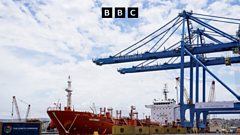
Every time a tanker brushes against a ripple in the Persian Gulf, the commentariat loses its collective mind. ADNOC drops a report about vessel incidents, OilPrice.com rushes out a panic-laden headline about mounting risks, and desk traders instantly price in a phantom Armageddon.
Stop buying the theater.
I have watched traders panic-buy crude over phantom maritime threats for two decades, blowing millions on phantom supply shocks while the physical market sits bloated and bored. The lazy consensus says that every regional flare-up near the Strait of Hormuz is a direct chokehold on global energy supplies. The reality is far more mundane, and far more cynical. Hormuz is not a fragile glass pipe waiting to shatter; it is an economic pressure valve that neither Tehran nor the Gulf states can afford to close for more than a long weekend.
Let us dismantle the panic piece by piece.
The Geography of Mutual Destruction
The core misconception starts with a basic failure of incentive analysis. People look at a narrow maritime channel on a map and assume that physical proximity equals strategic vulnerability.
Imagine a scenario where a total blockade of the Strait of Hormuz actually happens. Crude spikes to one hundred and fifty dollars a barrel overnight. Sounds like a geopolitical win for producers, right? Wrong.
The moment the Strait closes, the economies of the Gulf exporters suffocate in real-time. ADNOC, Saudi Aramco, and the Kuwait Petroleum Corporation rely on those exact tankers to fund their state budgets, sovereign wealth funds, and domestic subsidies. They do not ship oil out of charity; they do it to pay their bills. Furthermore, China remains the primary consumer of Gulf crude. A total blockade does not starve the West; it starves Beijing. You do not bite the hand that buys eighty percent of your export volume unless you are genuinely suicidal.
History shows us that hostile actors in the Gulf prefer gray-zone friction over total war. Harassment, minor kinetic incidents, electronic spoofing, and boarding actions are designed to generate noise without crossing the threshold of total economic mutually assured destruction. When ADNOC counts fifteen vessel attacks or security incidents, the media labels it an existential threat. In the shipping insurance and risk assessment world, it is simply the cost of doing business in a crowded waterway.
Pricing the Noise Versus Pricing the Barrels
Markets love a good narrative because narratives are easy to trade. Fundamental supply and demand math is tedious. It requires looking at inventory builds in Cushing, tracking floating storage off Singapore, and calculating actual refinery runs in Shandong.
It is much easier to trade a headline.
When tanker incidents hit the newswires, algorithms sweep up crude futures based on keyword sentiment rather than physical cargo availability. I have sat on trading desks where a single Reuters alert about a suspicious drone sighting added three dollars to Brent crude in four minutes, despite not a single barrel of physical production being offline.
The truth that nobody on financial television wants to admit is that global oil markets are structurally oversupplied more often than they are starved. Non-OPEC production from the Americas continues to surprise to the upside. Permian output is not driven by ideology; it is driven by high-yield completion techniques and massive horizontal lateral lengths that shrug off geopolitical headlines five thousand miles away.
When you factor in global spare capacity—sitting comfortably in Saudi and Emirati storage tanks ready to be tapped at a bureaucratic whim—the idea that a few skirmishes in the Gulf can permanently derail global energy supply is mathematically laughable. Spare capacity is the ultimate dampener, yet the media treats it like a mythical creature.
The Insurance Cartel and the Risk Premium Game
Let us talk about who actually profits from this manufactured terror.
Marine war risk insurance premiums spike every time an incident occurs in Middle Eastern waters. Underwriters at Lloyd's of London and various syndicates across Europe rub their hands together every time a tanker reports a minor hull scrape or a suspicious VHF radio hail.
A temporary spike in risk premiums adds pennies or dollars to the delivered cost of a barrel, which gets absorbed by the refining margin or passed down to the consumer at the pump. The shipping companies bake these spikes into their long-term contracts. The traders who long the front-month futures ride the wave up, cash out before the reality sets in that no oil was actually lost, and leave retail investors holding the bag when the correction hits.
It is a well-oiled machine. Pun intended.
The media gets clicks, insurers get higher premiums, traders get volatility, and the actual physical barrels keep moving through the channel at ninety percent of their normal clip.
Stop Trading the Theater
If you want to survive in energy markets, you have to separate kinetic noise from supply reality.
Stop reacting to every casualty report out of the Gulf as if the valves have been permanently welded shut. Look at the prompt spreads. Look at physical differentials. Look at actual tanker tracking data showing vessels bypassing troubled zones via alternative pipelines like the Habshan-Fujairah pipeline in the UAE, which bypasses the Strait of Hormuz entirely.
The market has built-in redundancies that the panic-peddlers conveniently forget to mention. The UAE built that pipeline for a reason. Saudi Arabia has the East-West Petroline for a reason. They know the geography is volatile, so they engineered workarounds decades ago.
The next time a headline screams about mounting risks in Hormuz, check your emotions at the door, look at the spare capacity numbers, and ask yourself who benefits from the spike.
The Strait is open. The oil is flowing. The only thing leaking is the truth.