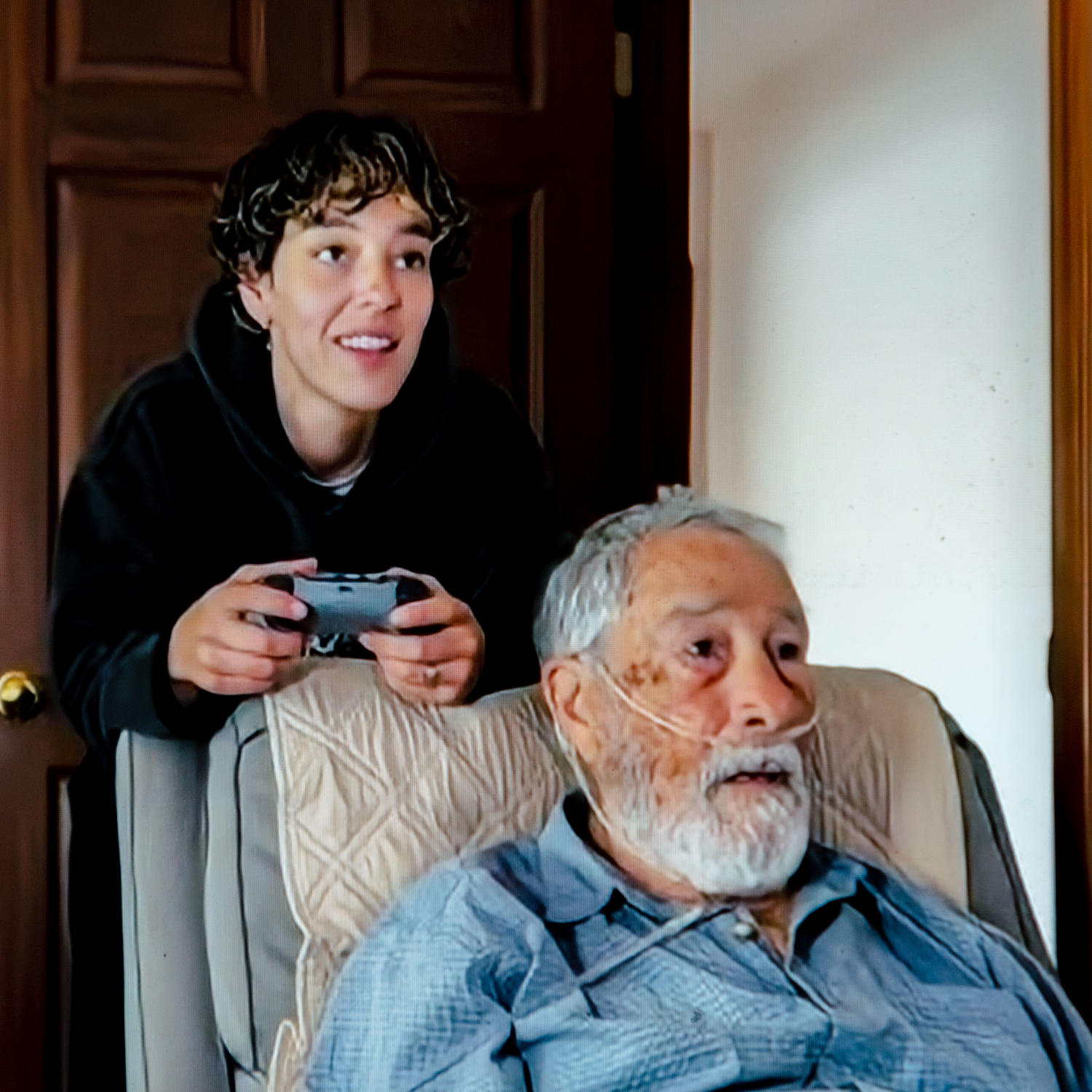
Mainstream gaming media loves a heartwarming tailgating story. They point cameras at twenty-somethings camping outside big-box retailers in lawn chairs, clutching energy drinks, and crying over a physical disc like it is the Ark of the Covenant. They frame a thirteen-year development cycle as a triumph of human patience and consumer devotion.
That narrative is pure corporate PR dressed up as human-interest journalism.
We are not witnessing a celebration of art. We are watching Stockholm Syndrome at scale. When a multi-billion-dollar publisher takes over a decade to ship a sequel while extracting billions from a decade-old multiplayer economy, lining up around the block is not passion. It is capitulation.
I have spent fifteen years inside publishing strategy and live-service monetization rooms. I have watched executives high-five over retention metrics while intentionally starving a player base of new single-player content because the old microtransactions were printing money too efficiently. The mainstream press writes puff pieces about fans throwing launch parties. They completely miss the economic mechanics that forced those fans to wait thirteen years in the first place.
The Myth of the Patient Consumer
Let us dismantle the lazy consensus right out of the gate. The prevailing media storyline argues that Rockstar Games took thirteen years between Grand Theft Auto V and Grand Theft Auto VI strictly in pursuit of perfection, and that fans nobly endured the drought out of pure respect for the craft.
Look at the timeline. GTA V launched in September 2013 on the PlayStation 3 and Xbox 360. Between 2001 and 2013—a span of twelve years—Rockstar released GTA III, Vice City, San Andreas, Liberty City Stories, Vice City Stories, GTA IV, The Lost and Damned, The Ballad of Gay Tony, Chinatown Wars, and GTA V. Ten distinct Grand Theft Auto experiences in twelve years.
Then came the silence. Thirteen years for one sequel.
Did game development get harder? Yes. Asset fidelity, motion capture, and open-world physics engines require massive teams and years of engineering. Red Dead Redemption 2 absorbed the bulk of the studio's bandwidth until late 2018. Nobody disputes the technical labor required to build modern AAA worlds.
What the puff pieces ignore is the financial incentive structure. GTA Online generated over $8 billion in revenue for Take-Two Interactive. When a live-service product prints hundreds of millions of dollars every fiscal quarter with minimal overhead compared to building a brand-new engine from scratch, urgency evaporates. Why cannibalize your own golden goose when the players are happily buying Shark Cards in a 2013 sandbox?
Fans did not wait thirteen years because they are uniquely virtuous. They waited because they had zero choice, and the industry trained them to confuse scarcity with quality.
Why Midnight Launch Parties Are Actually a Symptom of Monoculture Decay
Read any mainstream recap of the GTA VI launch celebrations and you will see the same tired tropes. Grown adults taking PTO. Friends flying across the country to sit on the same couch. Custom Vice City neon signs in living rooms.
On a human level, camaraderie is great. Nobody is attacking friends getting together to play video games. The problem is what this hyper-concentrated hype reveals about the collapse of the mid-tier gaming market.
Twenty years ago, if a flagship franchise took a five-year break, a dozen AA competitors stepped into the vacuum. You had Saints Row, Sleeping Dogs, True Crime, The Saboteur, Watch Dogs, and Mafia competing for open-world supremacy. Some were flawed. Many were brilliant. All of them kept the market competitive and gave players places to go.
Today, rising development costs and risk-averse private equity have hollowed out the middle of the industry. Publishers only greenlight guaranteed mega-hits or cheap mobile cash grabs. Because there are no true alternatives to a Rockstar open world, all consumer oxygen gets sucked into a single event once per decade.
When a starving man finally gets a steak, he does not critique the sear. He weeps. The ecstatic launch parties documented by entertainment reporters are not proof of a thriving industry. They are proof of a monopolized attention economy where consumers have been starved of comparable experiences for so long that a normal product release triggers a religious revival.
Dismantling the Wrong Questions About AAA Development
If you look at search trends surrounding the GTA VI release, players are asking predictable, surface-level questions. Most of them operate on broken premises. Let us fix them.
Did GTA VI actually need thirteen years of development?
No. Active full-scale production did not begin in October 2013. Rockstar operated as a unified global studio to ship Red Dead Redemption 2 in 2018. Meaningful full-studio allocation to GTA VI only ramped up after Arthur Morgan's story wrapped. Even accounting for pandemic disruptions and the leaks in 2022, the thirteen-year gap is a byproduct of corporate resource allocation, not a thirteen-year continuous coding marathon.
Is the $70 to $100 price tag justified because fans waited so long?
This is the most dangerous myth circulating in consumer forums. Value in software is determined by utility and craft, not by how long the developer kept you waiting. Paying a premium price because a company took a decade to ship a product rewards inefficiency. If a restaurant makes you wait four hours for a table, you do not tip 50 percent out of gratitude for the wait. You judge the food on the plate.
Will GTA VI set a new standard that other studios will follow?
It will set a visual and systemic benchmark that other studios cannot afford to match. Take-Two has the balance sheet to absorb a nine-figure, multi-year burn rate without blinking. If mid-sized publishers try to replicate Rockstar's scope, they will bankrupt themselves. Instead of inspiring better games, GTA VI will likely terrify executives into greenlighting even fewer single-player risks.
The Hidden Cost of Nostalgia-Driven Hype
I have sat in post-mortem meetings for massive entertainment launches where the marketing team popped champagne on Friday, and the retention team panicked on Monday.
When hype builds for over a decade, expectation detaches from reality. In the minds of fans who grew up on Vice City in 2002 and GTA V in 2013, GTA VI stopped being a video game around 2020. It became a time machine. People subconsciously expect the game to make them feel twenty-two again, hanging out in their college dorm with zero responsibilities.
No piece of software can deliver your youth back to you.
Look at the launch rituals fans organized. Recreating 2013 LAN parties. Eating the exact snacks they ate in high school. Taking a week off work to disconnect from adult obligations. That behavior is driven by escapism and nostalgia, not an objective evaluation of modern game design.
There is a massive downside to this dynamic for the players themselves. When you invest ten years of emotional equity into a corporate product before touching a controller, you lose the ability to hold the creator accountable. Any flaw gets rationalized. Any predatory monetization model gets excused. If GTA VI launches with aggressive online paywalls or stripped-back single-player post-launch support—just like GTA V did when its planned story DLC was scrapped in favor of GTA Online updates—the fanbase will defend the publisher because admitting disappointment means admitting they wasted a decade of anticipation.
What Smart Gamers Should Do Instead
You do not have to boycott the biggest entertainment release of the decade to maintain your dignity as a consumer. You just need to stop acting like a hostage grateful for water.
- Separate single-player craft from live-service extraction. Judge the campaign on its writing, world density, and mechanical polish. The moment you boot up the online component, put your wallet in another room. Remember that every design friction point in an online economy is engineered to test your patience until you pay to bypass it.
- Stop pre-ordering digital goods. Supply scarcity died in 2014. Buying a digital license six months before reviews drop gives a billion-dollar corporation an interest-free loan while stripping you of consumer leverage.
- Fund the mid-tier rebels. If you hate waiting thirteen years for open-world innovation, stop giving 100 percent of your gaming budget to three mega-publishers. Buy weird, ambitious AA games on day one. Studios only build alternatives when the market proves there is money outside the monoculture.
- Treat launch week like a normal Tuesday. Play the game at your own pace. Ignore the algorithmic FOMO machine pushing you to binge forty hours in three days just to keep up with social media spoilers.
The Uncomfortable Truth About What Comes Next
To be fair to the fans sleeping on concrete outside retail stores, human beings crave shared cultural moments. In an era of fragmented streaming algorithms, niche subreddits, and personalized feeds, almost nothing unites millions of people at the exact same second anymore. GTA VI is one of the last true monoculture events left in entertainment. Wanting to be part of a collective cultural pulse is completely natural.
The tragedy is that we have allowed publicly traded holding companies to weaponize that basic human desire for connection.
Rockstar's developers are among the most talented artists, engineers, and writers in the medium. Their technical achievements deserve genuine respect. What does not deserve your reverence is a corporate timeline that stretched an entire generation, turning normal consumers into evangelists for their own deprivation.
Enjoy Vice City. Drive fast, cause chaos, and appreciate the sheer engineering required to render every blade of grass and neon reflection. Just drop the gratitude act. You paid full price for a product that took thirteen years to arrive—they should be thanking you.



