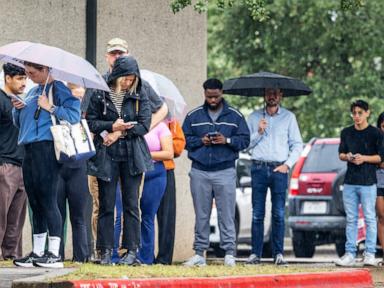
Mainstream coverage of state citizenship voting amendments follows a predictable, tired script. A headline drops about voters weighing constitutional changes while Donald Trump warns of noncitizen election fraud. The article immediately pivots to the standard partisan ping-pong match: Republicans claim foreign nationals are infiltrating the ballot box, while Democrats and civil rights groups dismiss the measures as redundant fear-mongering designed to suppress minority turnout.
Both sides are peddling half-truths. And the reporters amplifying this binary are completely missing the actual constitutional mechanism driving these ballot measures.
Having spent years dissecting state election codes, municipal charters, and constitutional litigation, I have watched advocacy groups and campaign strategists burn millions of dollars fighting over a phantom threat while ignoring the exact two-word phrasing change that actually alters state law. The lazy consensus claims these amendments do nothing because federal law already bans noncitizens from voting. That is flatly wrong—not because noncitizens are secretly swinging presidential races, but because federal law does not govern local elections.
The Two-Word Legal Loophole Nobody Mentions
If you want to understand why states like Alaska, Arkansas, Kansas, South Dakota, and West Virginia put citizenship requirements on their November 2026 ballots—following eight states in 2024—stop listening to cable news panels and read the actual constitutional text.
Most older state constitutions use permissive phrasing: "Every citizen of the United States who is 18 years of age or older... shall be entitled to vote."
Legal scholars, including election law heavyweights like Rick Hasen and state supreme court litigators across the country, know that "every citizen" establishes a floor, not a ceiling. It guarantees citizens the right to vote, but it does not explicitly prohibit a state legislature or a home-rule municipality from extending local voting rights to noncitizens. Under the Illegal Immigration Reform and Immigrant Responsibility Act of 1996, Congress barred noncitizens from voting in federal elections for president, the U.S. House, and the U.S. Senate. Congress left state and local elections entirely to the states.
Between 1991 and 2025, voters across the country decided 18 local ballot measures to authorize or expand noncitizen voting in municipal, county, or school board elections. Nine of them passed, allowing green card holders and other legal residents to vote in local races in jurisdictions across California, Maryland, Vermont, and Washington, D.C.
When state legislatures refer a constitutional amendment changing "Every citizen" to "Only a citizen," they are not trying to stop undocumented immigrants from casting fraudulent federal ballots. They are executing a pre-emptive legal strike against home-rule cities. They are stripping municipal governments of the authority to allow green card holders to vote in school board or city council races.
Media outlets that frame these amendments purely as a reaction to Trump’s rhetoric about federal election fraud fail basic civics. The real battle is a tug-of-war over localism versus state preemption.
Why the "Fraud" Narrative Collapses Under Scrutiny
On the other side of the ledger, the political rhetoric claiming massive waves of illegal noncitizen voting is equally detached from reality. You do not need partisan talking points to prove this; you just need to look at the enforcement math.
When the Department of Justice and state attorneys general launch aggressive, high-profile crackdowns ahead of midterm elections, they deploy massive investigative resources to find noncitizens on voter rolls. What do they actually find? A microscopic fraction of a percent. Even the Heritage Foundation's own conservative election fraud database—spanning more than four decades across the entire United States—has documented fewer than 100 confirmed cases of noncitizen voting.
Consider the administrative reality of how most noncitizens end up on a voter roll in the first place. In nearly every documented prosecution, the culprit is not a coordinated cartel smuggling ballots across the border. It is bureaucratic friction at the Department of Motor Vehicles.
Under the National Voter Registration Act of 1993—commonly known as the Motor Voter law—states must offer voter registration opportunities when residents apply for or renew a driver's license. In states with automatic voter registration, an applicant has to actively opt out. When a legal permanent resident goes to renew a license, checks the wrong box on a poorly designed touchscreen, or misunderstands derivative citizenship rules from a parent's naturalization decades earlier, they get added to the rolls.
The consequences for that clerical mistake are catastrophic. Lying about citizenship on a federal immigration form or voter application carries felony penalties, prison time, and mandatory deportation. Rational actors trying to stay in the United States do not risk permanent exile just to cast one vote in a district where the margin of victory is 15,000 ballots.
Answering the Wrong Questions Entirely
When voters search for information on citizenship ballot measures, they usually ask two deeply flawed questions: "Are illegal immigrants voting in federal elections?" and "Will these amendments stop election fraud?"
Both questions miss the mark. Here is the brutal truth behind the questions people should actually be asking:
- Does passing an "Only a Citizen" amendment make elections more secure? No. Election security relies on backend database hygiene—cross-referencing state motor vehicle records with Systematic Alien Verification for Entitlements (SAVE) data, auditing voter rolls, and maintaining chain-of-custody logs. Changing three words in a state constitution does not upgrade a single server or catch a single clerical error at the DMV.
- Why did Arizona voters reject Proposition 144 in 2026 while five other states passed theirs? Because Arizona's constitution already explicitly restricted voting to U.S. citizens, and lawmakers stuffed Proposition 144 with unrelated baggage regarding voter ID rules, campaign finance, and election administration. Voters smell legislative overreach when politicians bundle redundant constitutional posturing with structural changes to election oversight.
- Why do state lawmakers keep putting this on the ballot if local noncitizen voting isn't even happening in their state? Turnout engineering. In low-to-moderate turnout midterm cycles, ballot measures act as ideological magnets. Putting a citizenship requirement on the ballot costs the state legislature almost nothing, polls at over 70 percent approval nationwide, and forces opponents into an awkward defensive posture where arguing against the measure sounds like arguing for noncitizen voting.
The Hidden Downside of Constitutional Preemption
I have argued for years that clarity in election law is a net positive. If a state wants to reserve the franchise strictly for citizens, writing that explicitly into the state constitution eliminates ambiguity and prevents years of expensive appellate litigation over municipal charters.
However, pretending this approach has zero downsides is dishonest. There is a serious operational cost to weaponizing citizenship amendments as political theater: collateral disenfranchisement.
When states pass sweeping constitutional mandates without funding accurate verification infrastructure, county clerks and secretaries of state face immense political pressure to purge voter rolls aggressively before elections. Because federal immigration databases like SAVE were built to verify benefit eligibility—not real-time citizenship status for millions of voters—they frequently lag behind recent naturalizations.
If a naturalized citizen registers to vote three weeks after taking their oath, an outdated database check can flag them as a noncitizen. Worse, poorly executed roll purges routinely sweep up eligible citizens who simply share a common name or birth date with a noncitizen resident. You end up blocking legal voters from casting a ballot in the name of stopping a statistically nonexistent crime.
Furthermore, locking election rules into a state constitution strips local communities of flexibility. A green card holder who owns a home, pays property taxes, and sends three kids to the local public school system has a direct financial and civic stake in who sits on the local school board. Preemptively banning municipalities from ever experimenting with local resident voting—even if a city's voters explicitly want it—centralizes power at the state capitol under the guise of "protecting democracy."
How to Actually Fix the System
If lawmakers and election administrators cared more about functional governance than viral soundbites, they would abandon constitutional symbolism and execute three concrete, unglamorous reforms:
- Decouple noncitizen driver's licenses from voter registration workflows. States that issue driver's licenses or state IDs to noncitizens must build a hard software firewall at the DMV. If an applicant presents a green card, visa, or foreign passport to prove lawful presence, the terminal should never display the voter registration prompt. Eliminate the user-interface trap before the data ever reaches the Secretary of State.
- Mandate real-time naturalization data syncing. U.S. Citizenship and Immigration Services (USCIS) should automatically transmit verified naturalization data—with explicit opt-out consent—directly to state election offices, while simultaneously updating federal verification databases in real time. No naturalized citizen should ever be flagged as an ineligible voter because two federal agencies failed to update a spreadsheet.
- Require single-subject discipline on ballot referrals. State legislatures should be barred from bundling citizenship definitions with unrelated changes to mail-in voting, drop boxes, or election board authority. If a lawmaker wants to ask voters whether citizenship should be required to vote, let that question stand on its own merits without hiding poison pills in the fine print.
Stop treating constitutional amendments like magic wands. Changing the wording of a state charter will not fix broken DMV software, update lagging federal databases, or stop politicians from manufacturing crises every October. Until election officials fix the plumbing behind the registration desk, these ballot measures remain exactly what political consultants designed them to be: expensive billboards paid for by taxpayers.


