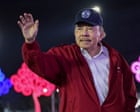
The international commentariat is having another collective fainting spell.
Daniel Ortega stood in front of a crowd in Managua, declared that Nicaragua will no longer hold elections to keep the opposition out, and Western foreign policy analysts immediately lost their minds. Headlines flared across major outlets, lamenting the "official death of democracy" in Central America. Think tanks issued press releases calling it a "tragic escalation."
This reaction is laughable. It is naive, performative, and profoundly out of touch with reality.
Ortega did not kill democracy on Sunday. He buried a decaying corpse that his regime had already dismembered a decade ago.
By publicly stripping away the pretense of voting, Ortega gave the world something it rarely gets from an autocrat: absolute, unvarnished honesty. The outrage machinery is burning energy over the cancellation of a ritual that had already been rendered meaningless. It is time to stop mourning the loss of a fake ballot box and start dissecting why the foreign policy establishment was so deeply attached to the lie in the first place.
The Ritual of the Sham Ballot
For decades, political scientists and Western diplomats have operated under a flawed assumption: that holding an election—any election, no matter how rigged—is inherently better than holding none.
This is the electoralist fallacy. It treats the physical act of dropping paper into a plastic box as a sacrosanct metric of legitimacy. Dictators figured out this vulnerability long ago. They realized that if you put on a decent show, give a few opposition figures controlled airtime, and let international observers book hotel rooms in your capital, the international community will grant you a pass. You get to stay in the global financial system, trade goods, and sit at multilateral tables.
Ortega played this game for years. He tweaked constitutions. He altered voting thresholds. He bought off minor opposition parties to create the illusion of pluralism.
Then came 2021.
When the threat to his dynasty became real, Ortega stopped playing subtle. He did not just rig the count; he literally threw every viable presidential candidate into prison before a single vote was cast. He locked up journalists, exiled clergy, and banned dozens of civic organizations. He won that election with over 75 percent of the vote while the candidates who could have beaten him sat in dark cells.
Yet, after that farce, international bodies still treated 2027 as a date on the calendar that mattered. Analysts still wrote policy papers debating whether "electoral pressure" could force concessions.
Ortega just saved everyone time and paper.
He didn't change the operational reality of Nicaragua; he merely shut down the theater company. Staging a fake election costs millions of dollars in state funds, requires massive administrative coordination, and forces a dictator to temporarily pretend he cares about public opinion. Why waste the money? Why bother with the logistics of ballot stuffing when your control over the army, the courts, and the police is absolute?
Why Western Foreign Policy Loves Fake Elections
The sheer panic over Ortega’s declaration reveals a dirty secret about Western diplomacy.
Western institutions need authoritarian elections. They rely on them.
When a dictator holds a rigged election, diplomats have a neat, predictable framework to operate within. They can issue a statement expressing "deep concern." They can send monitoring missions. They can sponsor "voter education" programs through non-profits. They can offer conditional aid tied to "electoral benchmarks."
It creates a comfortable bureaucracy of engagement. It allows global leaders to pretend that a totalitarian state is merely a "maturing democracy" going through a rough patch.
When Ortega declares that elections are permanently over, he destroys that entire industry. He forces Western governments to confront a stark, uncomfortable reality: they have zero leverage, their diplomatic toolkits are useless, and their soft-power playbook is utterly impotent against a regime that no longer cares about international validation.
Look at the way media coverage frames this event. The narratives describe a "sudden turn toward total rule."
This is historically ignorant. The turn did not happen this weekend. It happened when the Sandinista regime crushed the 2018 street protests with fatal force, killing over 300 citizens and driving hundreds of thousands into exile. It happened when Rosario Murillo was named "co-president" by executive decree, codifying a family dynasty.
The election cancellation is not a shift in strategy; it is the administrative cleanup after a total victory.
| Regime Phase | Electoral Illusion | Actual Power Dynamics |
|---|---|---|
| 2007–2016 | Pluralist democracy with constitutional limits. | Gradual court packing and institutional capture. |
| 2018–2021 | Contested elections with heavily monitored opposition. | Violent suppression of dissent, imprisonment of rivals. |
| 2025–Present | Complete abolition of the electoral system. | Formal dynastic autocracy with total state monopoly. |
The Mechanics of Totalitarian Efficiency
There is a lesson here that geopolitical analysts consistently fail to grasp. Autocrats do not abandon democratic mechanisms because they are desperate; they abandon them when they are completely secure.
In the early stages of authoritarian consolidation, elections serve as a useful tool for dictators to identify internal dissent. By watching who votes for whom and tracking local turnouts, a rising strongman can map out where his enemies live. But once the opposition leadership is completely eliminated—either rotting in prison cells, stripped of their citizenship, or living in Miami—the diagnostic value of an election drops to zero.
At that stage, maintaining the electoral facade introduces unnecessary risk.
Imagine a scenario where a rogue polling worker leaks real data, or a localized protest breaks out near a voting precinct. Even a controlled vote creates friction points where popular discontent can theoretically spark. By removing the vote entirely, Ortega removes the friction points.
He is insulating his power structure against unpredictable variables. He is telling his military officers, police commanders, and party loyalists: There is no alternative coming. There is no candidate who will offer you a deal in six years. You sink or swim with the Sandinista Front.
That clarity strengthens his internal control. It forces every ambitious politician inside Nicaragua to submit entirely to the ruling family, because the exit door marked "elections" has been bricked over.
The Flaw in the Sanctions Machine
So what is the Western response? The same tired playbook. Expect a fresh wave of economic sanctions from Washington and Brussels. Expect statements condemning the Murillo-Ortega regime from human rights groups.
It will accomplish nothing.
Sanctions do not dismantle a personalist dictatorship that has already insulated itself from domestic accountability. Ortega and Murillo have spent the last decade building alternative economic pipelines. They have deepened ties with non-Western powers that do not ask questions about ballot boxes or civil rights. They have weaponized migration, using the flow of desperate citizens as a pressure valve to purge potential rebels while simultaneously driving up remittance dollars sent back home.
The current sanction-and-condemn strategy assumes that autocrats care about their international reputation. They do not.
When a ruler is willing to strip hundreds of his own citizens of their nationality and seize their private property, he is not going to change his mind because a foreign deputy assistant secretary of state issues a strongly worded press release.
What Facing the Cold Truth Actually Requires
If the global community wants to deal effectively with total autocratic regimes, it must throw out its obsolete playbook.
First, stop demanding "free and fair elections" from leaders who have explicitly outlawed them. It makes foreign diplomats look like naive children shouting into the wind. When a dictator tells you he is done with voting, believe him.
Second, shift from electoral advocacy to raw power leverage. Dictatorships like Ortega's do not fall because of lost votes; they fall due to elite fracture, military defection, or economic paralysis.
If you want to alter the behavior of a total state, you stop funding the non-profits that write reports about democratic backsliding. You target the specific financial streams that keep the armed forces loyal. You stop pretending that a political resolution will come from within a captured constitutional framework.
Ortega did the world a favor on Sunday. He pulled down the curtain. He exposed the absolute uselessness of the electoral theater in a state run by a family cartel.
Stop crying because the theater burned down. Start dealing with the reality of the fortress standing in its place.
Daniel Ortega's Declaration on Nicaraguan Elections
This footage features Ortega's direct remarks outlining the elimination of future electoral challenges, providing essential context to his public dismantling of the country's voting process.