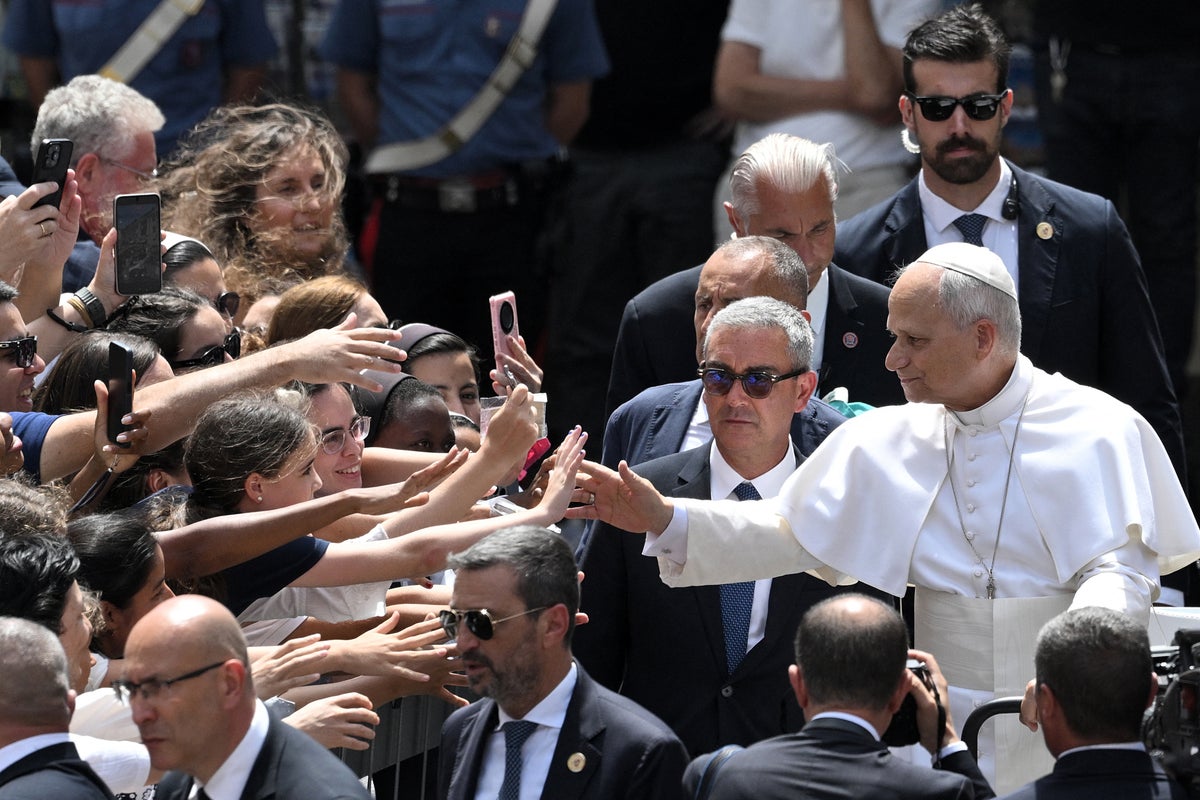
The media narrative writes itself because laziness pays well. A crowd gathers, thousands scream, a man in white waves, and suddenly church public relations teams are popping champagne. We get the predictable think-pieces comparing a Roman Pontiff to touring musicians, complete with exhausted stadium metaphors and breathless commentary about youthful energy.
It is a remarkably shallow read of institutional longevity. Meanwhile, you can read related events here: The Ghost Who Came Back From The Jungle.
Equating spiritual authority with celebrity culture is not just historically illiterate; it misunderstands why young people actually gravitate toward strict traditions in an age of infinite choice. Pop stars sell validation. Pontiffs demand self-annihilation. Conflating the two misses the entire engine of institutional survival.
I have spent years watching cultural institutions panic, throw out their playbooks, and try to chase relevance by mirroring secular spectacle. They always lose. When an ancient church tries to act like a music festival, it does not look modern. It looks desperate. To see the full picture, we recommend the excellent report by NPR.
The Lazy Consensus on Youth and Spectacle
The core premise of the mainstream take is straightforward: young people are leaving traditional institutions, so when a leader draws a crowd, it must be because he has broken the mold, adopted a relaxed vibe, or mastered the aesthetic of a modern icon. The assumption is that religion needs to sand down its edges to appeal to a generation raised on personalization and vibes.
This argument collapses the moment you examine actual demographic data on religious adherence. Young adults drifting back toward historic liturgy are not looking for a watered-down version of a weekend concert. They want high-barrier demands. They want Latin, silence, incense, and moral boundaries that do not shift with local polling data.
When commentators look at packed papal events and assume the youth are responding to a charismatic persona, they reveal their own secular bias. They believe human beings only mobilize for entertainment. They forget that the human animal is biologically wired for transcendence, sacrifice, and rules that cost something.
A pop star builds a brand around self-expression. A religious leader stands as a living speed bump against self-worship. You cannot merge those two models without destroying one of them.
The Mechanics of Counter-Cultural Attraction
To understand why traditional structures occasionally surge with young adherents, you have to look at what modern digital life actually does to the human nervous system. We live in an environment of totalized optionality. Every choice is customizable, frictionless, and ultimately hollow.
When everything is negotiable, nothing matters.
Young people are not fleeing institutional religion because it is too strict. They are leaving because it has spent the last fifty years trying to be cool, relevant, and apologetic. An institution that spends its Sundays trying to prove it is just like a secular NGO has no reason to exist. Why wake up early for a second-rate community center when you can get better coffee and peer validation at a local cafe?
The counter-intuitive truth is that strictness scales. High-demand communities create high-trust environments. When an institution maintains rigid boundaries, clear doctrines, and uncompromising moral expectations, it stops being a product to consume and becomes an identity worth adopting.
Every time leadership tries to water down doctrine to capture the youth demographic, adherence drops. Every time an institution doubles down on its distinct, unpalatable, and uncompromising heritage, curious minds lean in.
The Danger of Manufactured Coolness
The obsession with branding creates a toxic internal dynamic. PR consultants and media-trained strategists want every public appearance framed through the lens of viral moments. They want soundbites that play well on social feeds.
This creates a dangerous mismatch between the office and the marketing. A global religious leader is not an influencer managing a follower count. The moment you treat papal authority as a personal brand, you subject it to the brutal laws of algorithmic churn. Today the crowd loves the aesthetic; tomorrow the algorithm finds someone edgier, or the optics shift, and the mob turns.
True authority does not need to trend. It endures precisely because it refuses to participate in the attention economy.
Let us be honest about the downside of this contrarian stance. Embracing uncompromising traditionalism alienates the institutional managers who prefer smooth public relations and frictionless institutional decline. It invites intense friction from internal factions who want the church to look like a progressive subcommittee of the United Nations. But trying to please everyone guarantees you inspire no one.
What the Pundits Get Wrong About Authority
When journalists write about religious revivals among the young, they consistently misdiagnose the locus of power. They look at the personality at the top and assume the charisma drives the movement.
It is the exact opposite. The office outlasts the occupant. The power is in the continuity, the heavy robes of tradition, and the weight of two thousand years of accumulated doctrine. A man in white is interesting only to the extent that he represents something vastly larger, older, and stranger than himself.
Strip away the history, soften the dogma to fit modern sensibilities, and you are left with an aging man giving lifestyle advice. Nobody crosses oceans to hear lifestyle advice from a bureaucrat. They show up for the eternal.
Stop looking for the secret marketing playbook behind generational shifts in faith. There is no growth hack for eternity. People do not convert for the vibes, and they certainly do not die for a brand.