Clickbait media outlets are regurgitating the same listicle they publish every June. You know the one: a poetic invitation to grab a blanket, sit in a dewy field, and watch "spectacular night sky events." They promise a cosmic light show. They deliver neck strain, mosquito bites, and a profound sense of disappointment.
I have spent decades dragging high-end optics across continents. I have watched people spend thousands of dollars to stand on freezing mountains only to realize the "blazing cosmic alignment" they read about online looks like two generic dots in a hazy twilight. The mainstream travel and lifestyle press routinely hypes up mediocre astronomical events because it makes for easy seasonal content. They treat the night sky like a Hollywood blockbuster, ignoring the brutal physics of atmospheric distortion, light pollution, and human biology.
If you follow the standard, lazy consensus on summer stargazing, you are going to waste your time. Let us dismantle the heavily promoted events for this summer and look at the real mechanics of what is actually worth your attention.
The Planetary Conjunction Delusion
Every mainstream guide is currently screaming about the "cosmic kiss" of Venus and Jupiter in early June, followed immediately by Mercury joining the lineup. The articles imply a rare, jaw-dropping alignment.
Here is the data they ignore. On June 9, Venus and Jupiter are indeed close—about 1 to 2 degrees apart. But they are low on the western horizon right after sunset.
Do you know what else is on the western horizon right after sunset? The sun's residual glare.
To the naked eye, you are not looking at a dramatic celestial collision against a velvet, star-studded backdrop. You are squinting through thick, turbulent layers of horizon-haze and evening smog to see two bright specks fighting against a gradient of orange twilight.
Mercury's arrival a few days later makes for a neat geometric trivia point, but unless you possess a perfectly flat horizon completely devoid of trees, buildings, and water vapor, you will barely track it before it sets an hour after the sun.
If you want to actually see something mind-blowing through binoculars or a small telescope, stop looking at sunset alignments. Wait for Saturn's opposition later in the year, or focus your telescope on the Summer Triangle high overhead, where targets like the Ring Nebula (M57) actually offer structural detail away from the murky horizon.
The Perseids Are Overrated (Unless You Drive 100 Miles)
The mid-August Perseid meteor shower is the golden goose of lifestyle journalism. The headlines promise "100 to 150 meteors per hour." The articles tell you to look up from your backyard.
This is a mathematical lie.
The number quoted by journalists is the Zenithal Hourly Rate (ZHR). The ZHR is a theoretical maximum calculated under laboratory-perfect conditions: a perfectly black sky with zero light pollution, no cloud cover, and the radiant point directly overhead.
Unless you are standing in the middle of the Atacama Desert or a designated Tier-1 Dark Sky Reserve, you will never see the ZHR. If you live in a typical suburban environment, the limiting magnitude of your sky drops drastically. Light pollution from streetlights, LEDs, and distant commercial zones acts as a giant dimmer switch.
Instead of 100 meteors an hour, you will see perhaps 5 or 10 of the absolute brightest fireballs over the course of an entire evening. The rest are completely swallowed by ambient light.
The only reason the Perseids are hyped above superior winter showers—like the Geminids—is pure human comfort. It is easy to convince a casual reader to sit outside on a warm August night. It is much harder to convince them to do it in freezing December weather, even though the Geminids regularly produce a higher, more reliable yield of bright, slow-moving meteors.
If you are not willing to pack a vehicle, check a light pollution map, and drive to a Bortle Class 3 or better zone, do not bother staying up for the Perseids. You are just counting mosquitoes.
The Euro-Centric Eclipse Trap
The absolute peak of the media frenzy this summer centers on the August 12 solar eclipse. Outlets are screaming that it is the first total solar eclipse in Europe since 1999. They are telling travelers to book immediate flights to Spain or Iceland.
As an absolute rule of astrotourism: never trust a weather forecast for an eclipse path unless you have money to burn.
The total solar eclipse path cuts through Greenland, western Iceland, and northern Spain. On paper, it sounds like the ultimate summer vacation add-on. In reality, it is a high-stakes gamble with terrible odds for the northern locations.
Iceland in mid-August has an average cloud cover probability hovering around 70% to 80%. If you fly to Reykjavik expecting a pristine view of totality, you are statistically likely to spend two minutes standing in the dark under a heavy gray drizzle.
Spain offers significantly better cloud-clearing prospects, but the eclipse occurs extremely late in the day, just before sunset. The sun will be less than 10 degrees above the horizon during totality.
This creates a massive logistical nightmare that lifestyle blogs completely ignore. At 10 degrees elevation, any mountain range, distant apartment building, or low-lying coastal fog layer will completely block your view of the sun. Furthermore, looking at an eclipse through that much atmospheric mass severely degrades the sharpness of the solar corona.
If you are going to chase this event, ignore the generic advice to "visit Spain." You must scout precise topographical maps to ensure you have an unobstructed, downward-sloping western view, or you will miss the entire event due to a rogue hill.
How to Actually Approach the Summer Sky
Stop treating astronomy like a fireworks display where you turn up, sit down, and expect to be entertained. The universe operates on scales that do not care about your weekend plans.
If you want to experience the night sky without the bitter taste of media-induced disappointment, change your entire strategy.
- Ditch the Naked Eye for the Milky Way Core: Instead of waiting for specific calendar dates, use any clear, moonless night in July or August to look south toward the constellations Sagittarius and Scorpius. This is where the core of our galaxy sits. Even under moderate skies, a cheap pair of 7x50 binoculars will reveal dense star clouds, open clusters, and dark nebulae that are infinitely more breathtaking than a fleeting three-second meteor.
- Invest in a Contrast Filter, Not a Bigger Lens: People assume they need a massive telescope to combat city lights. They are wrong. A light pollution rejection filter or an Ultra High Contrast (UHC) filter attached to a modest 4-inch reflector will do more for your viewing quality than a massive, unmanaged light-bucket telescope sitting in a suburban yard.
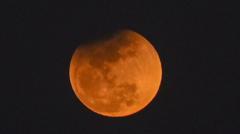
- Embrace the Partial Lunar Eclipse: The partial lunar eclipse on August 28 will get a fraction of the press that the solar eclipse receives because it is "only" partial and occurs in the early morning. Yet, it requires zero travel, zero dangerous solar filters, and offers a stark, high-contrast look at the Earth's shadow casting onto the lunar topography. It is a clean, honest astronomical event that does not require a flight to Iceland to enjoy.
Stop falling for the seasonal listicle trap. The sky is not a curated playlist of spectacular moments designed for your convenience. It is a chaotic, vast expanse that requires patience, dark locations, and a refusal to believe the hype of mainstream travel editors. Pack your car, find a truly dark destination, or do not bother looking up at all.