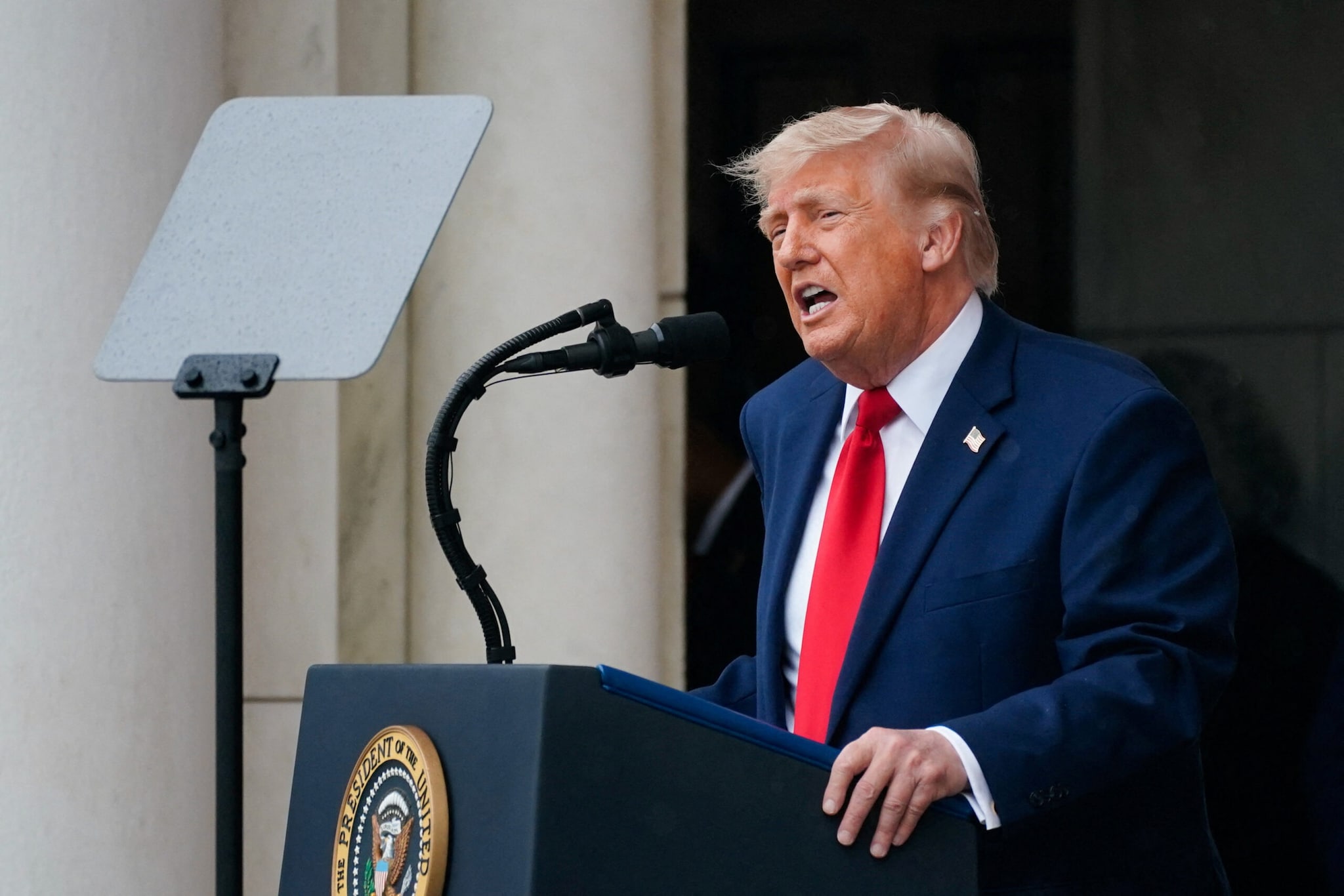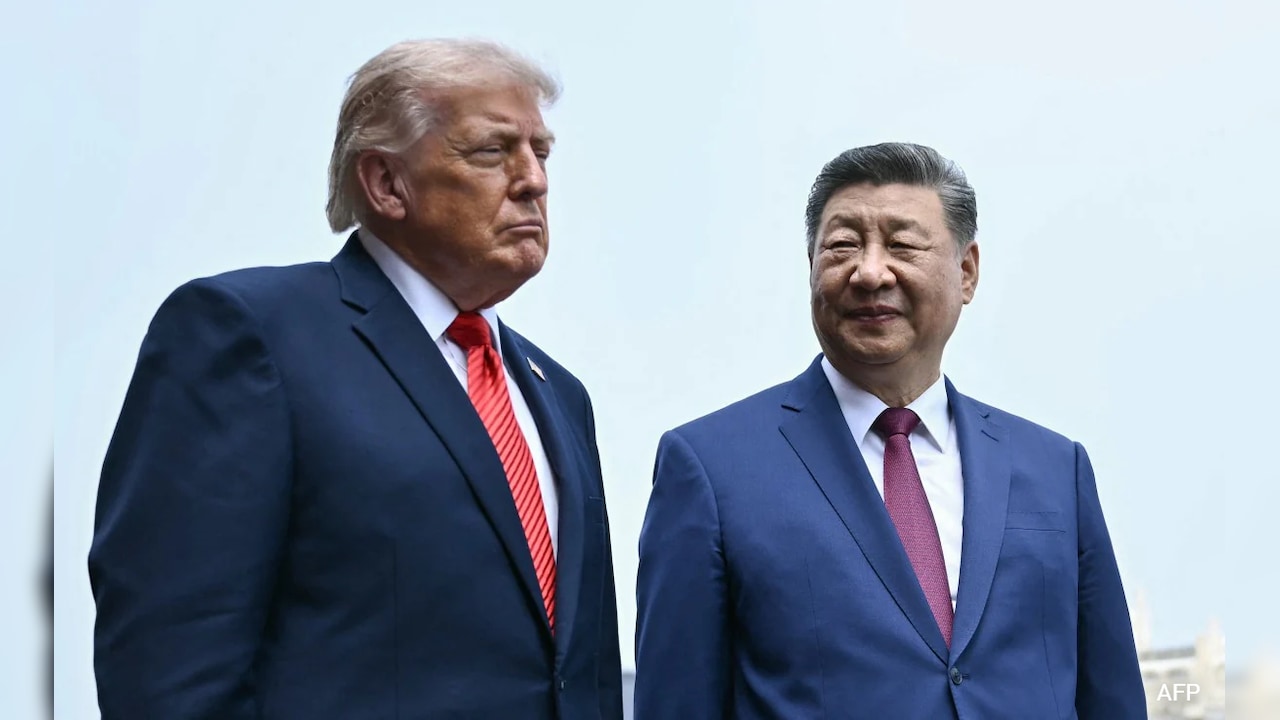
The corporate media is predictable. Whenever American and Chinese leaders share a stage, the consensus machine spins into overdrive. The recent summit in Beijing between Donald Trump and Xi Jinping is being heralded by mainstream commentators as a masterclass in transactional diplomacy. They point to the newly minted U.S.-China Board of Trade. They cheer for the headline-grabbing commitment by Beijing to purchase 200 Boeing aircraft. They celebrate the $17 billion annual pledge for American agricultural exports.
It is a comforting narrative. It suggests that economic conflict can be managed like a corporate restructuring, handled through brute-force tariff leverage and high-profile boardroom deals.
It is also entirely wrong.
The belief that verbal purchase agreements and bilateral committees move the needle in global power politics is the lazy consensus of our era. While Washington pats itself on the back for forcing Beijing to buy more soybeans and commercial jets, it is missing the broader geopolitical landscape. China is not retreating. It is rewiring the global economy.
By treating a systemic, structural rivalry as a mere balance-of-payments dispute, American policy is failing to address the vulnerabilities that matter. The Beijing agreements are not a victory; they are a brilliantly executed diversion by China.
The Boeing and Soybean Illusion
Let us dismantle the crown jewel of the recent summit: the corporate purchase agreements.
Politicians love manufacturing jobs, and nothing screams manufacturing like a commercial airliner. Securing an initial commitment for 200 Boeing aircraft looks incredible on a White House fact sheet. But anyone who has negotiated a cross-border supply contract knows that a verbal commitment from a state-directed economy is worth less than the paper it is typed on.
Consider the historical precedent. During the first trade war in 2017, China signed an eye-popping agreement for the state-owned China Energy Investment Corporation to invest nearly $84 billion in West Virginia shale gas. Wall Street cheered. Local politicians took victory laps. Years later, those plans dissolved into nothingness as geopolitical tensions grew. China signs purchasing declarations when it needs to lower the diplomatic temperature, then quietly mothballs them when the spotlight fades.
Furthermore, forcing China to buy American agricultural products like beef and soybeans does nothing to alter the structural imbalance of high-tech production. It locks the United States into the role of a primary commodity exporter—essentially serving as China’s farm—while Beijing doubles down on monopolizing the industries of the next century.
If your strategy relies on forcing a strategic adversary to buy your corn so they can sell you your telecommunications hardware, you have already lost the war.
The Flawed Logic of Section 122 and 232 Tariffs
The administrative apparatus in Washington remains obsessed with tariffs as the ultimate economic weapon. Following the Supreme Court’s 6-3 ruling invalidating the use of the International Emergency Economic Powers Act (IEEPA) for broad import duties, the administration quickly pivoted. It deployed a 10% global tariff under Section 122 of the Trade Act of 1974, alongside aggressive Section 232 duties targeting metals like steel, aluminum, and copper.
The prevailing wisdom asserts that these tariffs protect domestic manufacturing and close the trade deficit. The data says otherwise.
According to comprehensive analysis by the Tax Foundation, the massive tariff escalations did not fundamentally alter the U.S. trade balance. While the average effective tariff rate rose to historic highs, the trade deficit fell by a statistically negligible $2.1 billion. Why? Because tariffs do not change the fundamental macroeconomic reality: a country's trade balance is driven by its national savings and investment rates, not by import duties.
Worse, these blunt instruments create massive collateral damage for American enterprises. I have watched domestic hardware and electronics firms blow millions of dollars overnight trying to re-engineer their supply chains to avoid metal-intensive equipment penalties. When you slap a flat 50% tariff on aluminum sheets or a 25% tariff on metal derivatives, you are not punishing China. You are taxing the American manufacturers who use those inputs to build competitive products.
Imagine a scenario where a U.S. industrial equipment manufacturer faces a 15% tariff on essential electrical grid components. Their production costs spike, their margins shrink, and suddenly they are underbid in third-party markets by European or Asian competitors who are not shackled by Washington's trade restrictions. The tariff acts as a tax on domestic innovation.
The Great Transshipment Shell Game
The most glaring flaw in the hawkish trade narrative is the assumption that a drop in direct imports from China equals a victory for American decoupling.
It is true that real U.S. imports from China dropped significantly following the second tariff escalation. On paper, it looks like America is successfully breaking its dependency. But look closely at where those import volumes went. They did not return to Ohio or Pennsylvania. They migrated to Taiwan, Vietnam, and Mexico.
What we are witnessing is not a resurgence of domestic manufacturing; it is the Great Transshipment Shell Game. Chinese entities have spent years aggressively investing in manufacturing hubs across Southeast Asia and Latin America. They ship sub-assemblies, electronic components, and raw materials from Shenzhen to Vietnam or Mexico, perform minimal final assembly, stamp a new "Made in" label on the box, and exploit trade agreements to enter the American market duty-free or at severely reduced rates.
The trade data compiled by the Peterson Institute for International Economics (PIIE) reveals that while China's direct share of U.S. imports declined, imports from the rest of the world rose by over 9%. We have not cut the cord with Chinese manufacturing; we have simply added a middleman and made our own supply chains longer, more expensive, and less transparent.
Missing the Real Battlegrounds
While Washington debates Section 301 forced-labor probes and squabbles over the precise definition of cathode copper, Beijing is playing a completely different game. They understand that true geopolitical leverage in the 21st century is not built on trade surpluses; it is built on platform dominance and critical supply chain choke points.
1. The Critical Mineral Stranglehold
China controls the processing of over 70% of the world's rare earth elements and an even higher percentage of battery-grade lithium, cobalt, and graphite. The White House proudly announced that China would "address U.S. concerns" regarding supply chain shortages of critical minerals like neodymium and indium. This is tactical naivety. Beijing will never willingly cede its monopoly over the materials required for defense systems, aerospace, and advanced electronics. They use this dominance as an economic kill-switch, deploying export controls with precision whenever foreign policy dictates.
2. Standard-Setting and Infrastructure
Through its digital infrastructure initiatives across the Global South, China is quietly embedding its technical standards into the foundational architecture of developing economies. From 5G networks and smart-city surveillance systems to undersea fiber-optic cables, Beijing is ensuring that the global technology stack of tomorrow is built on Chinese blueprints. Once an entire region adopts your technical architecture, they are locked into your ecosystem for decades, regardless of what tariffs America levies at its own borders.
3. The AI and Automation Divergence
The real threat is not cheap Chinese consumer goods; it is the rapid automation of China's industrial base. While American factories face acute labor shortages and regulatory gridlock, China is installing industrial robotics at a rate that dwarfs the rest of the world combined. Combined with aggressive state backing for generative AI applied directly to manufacturing logistics, Beijing is building an unassailable efficiency advantage. Tariffs cannot compete with an adversary that can out-automate you by an order of magnitude.
Stop Trying to Fix Trade Balances
The fundamental premise of American foreign economic policy is broken. We are asking the wrong questions. We are asking, "How do we force China to buy more American goods?" when we should be asking, "How do we build a domestic industrial foundation that does not rely on an adversary’s permission to exist?"
If the United States wants to maintain its position as a global superpower, it must abandon the theater of transactional diplomacy and the illusion of tariff-enforced isolation. There are specific, unconventional strategies that must be deployed immediately.
First, stop using blanket tariffs that penalize domestic producers. Instead, implement highly targeted, permanent capital subsidies and fast-tracked regulatory pathways specifically for the domestic processing of critical minerals and advanced metallurgy. We do not need a tariff on aluminum drink cans; we need a domestic supply chain for high-purity gallium and germanium that cannot be switched off by Beijing.
Second, pivot away from bilateral managed-trade agreements that favor legacy corporate giants like Boeing. The focus must shift toward building exclusive, high-standard technology alliances with trusted democratic partners. This means creating a unified economic bloc with matching export controls, shared research and development funding for quantum computing and artificial intelligence, and ironclad supply chain redundancies.
Third, recognize that the trade balance is a vanity metric. True economic resilience is measured by technological supremacy and industrial agility. If we continue to measure our strategic success by the volume of soybeans shipped out of Pacific Northwest ports while ceding the foundational technologies of the future to state-backed entities in Beijing, the Beijing summit will be remembered not as a diplomatic triumph, but as the moment America negotiated the terms of its own economic obsolescence.