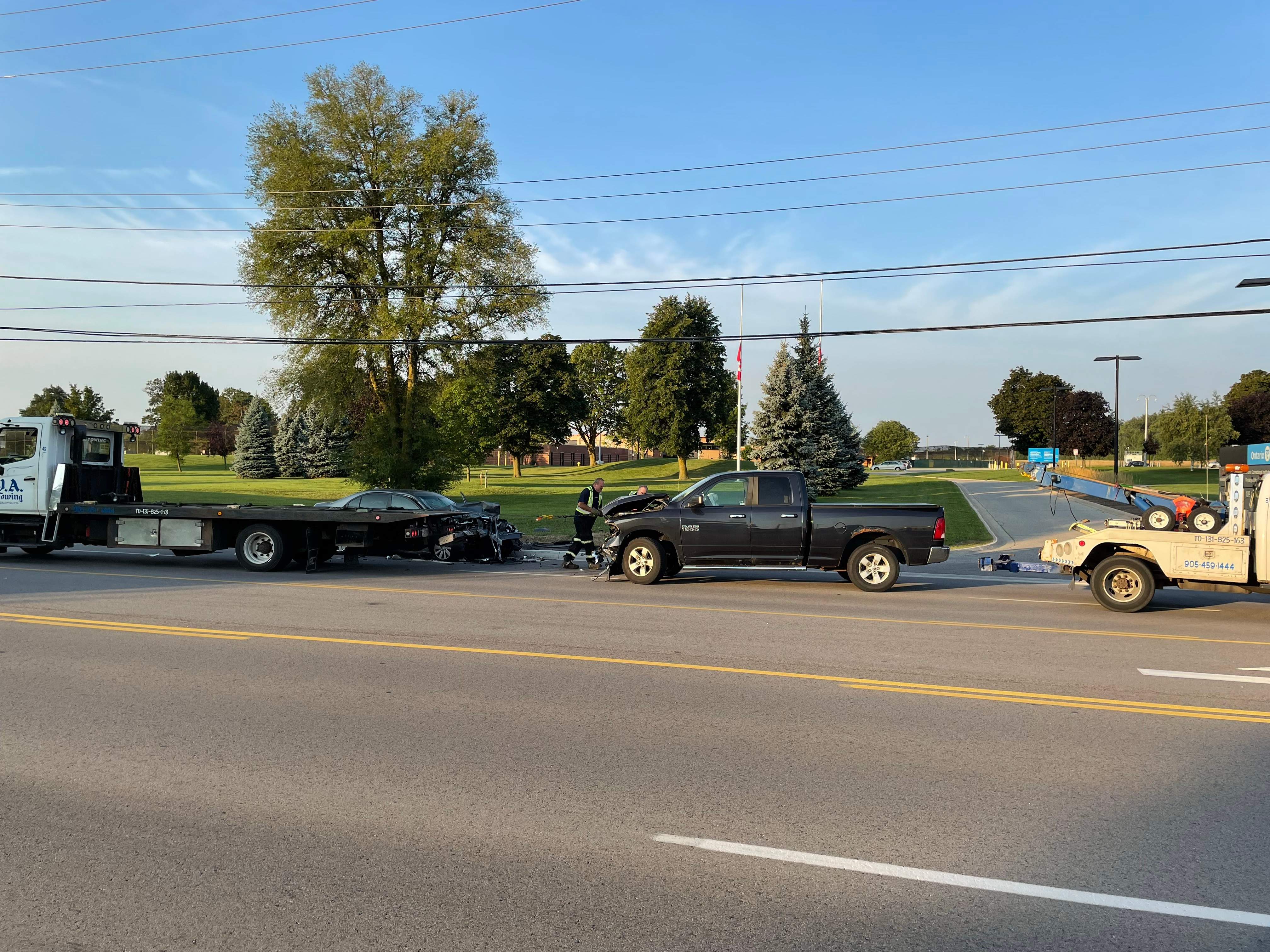
Two people went to the hospital after a collision in Brampton.
Cue the predictable chorus. The local council members step up to the microphones with grim faces. Traffic safety advocates call for lower speed limits, more speed cameras, and narrower lanes. Social media threads fill with angry residents demanding harsher penalties for reckless drivers. Everybody nods along because it feels like the sensible, compassionate thing to do.
It is also completely wrong.
I have spent years analyzing urban mobility, municipal infrastructure, and collision data across North American municipalities. I have watched cities blow millions of dollars on arbitrary limit reductions that do not change the physics of a poorly designed intersection. We treat every crash as a moral failure of the individual behind the wheel while ignoring the structural failures built directly into the concrete beneath their tires.
Blaming speed alone is a lazy cop-out for planners who refuse to fix bad geometry.
The Fallacy of the Arbitrary Number
Drop a speed limit from sixty kilometers an hour to fifty. Does the crash rate drop? In many cases, no. Drivers do not scan signs the way planners imagine. They drive at the speed the road design demands of them.
When you build a four-lane stroad with wide asphalt lanes, clear sightlines, and zero friction, human psychology takes over. People drive at the speed the environment permits, not the speed the legal sign mandates. Slapping a new number on a metal post without changing the physical characteristics of the street is an exercise in bureaucratic theater. It lets city halls check a box, pretend they took action, and wash their hands of the next collision.
Let us define terms. A stroad is neither a street nor a road. It attempts to move high volumes of traffic at high speeds while simultaneously providing direct access to commercial strip malls and residential driveways. It is an engineering abomination. Mixing high-speed through-traffic with turning vehicles, pedestrian crossings, and erratic parking maneuvers guarantees disaster.
Yet, when two cars collide at a chaotic Brampton intersection, the headline focuses exclusively on the kinetic outcome rather than the spatial cause.
Why Our Fixes Make Things Worse
Municipalities love quick-fix interventions because they are cheap. They install speed bumps that damage suspension systems, frustrate emergency responders, and push cut-through traffic onto quiet residential side streets. They deploy mobile speed display trailers that drivers learn to ignore within a week.
Imagine a scenario where a city council genuinely wants to reduce injuries. Instead of lowering limits on a highway-style arterial road, they narrow the lanes with physical barriers, plant mature trees close to the curb to create a sense of enclosure that naturally slows human reaction, and eliminate permissive left turns across oncoming traffic without dedicated protected phases.
The data from progressive traffic engineering firms consistently proves that self-enforcing street design beats punitive enforcement every single day of the week. People slow down when the environment makes them uncomfortable speeding, not because a fine sits waiting in their mailbox three weeks later.
Admitting this truth comes with a heavy downside for local governments. Real traffic calming costs money. It requires tearing up asphalt, redesigning drainage, and taking space away from cars to dedicate it to protected transit and active mobility corridors. It requires political courage. So instead, we get the status quo: a crash, a hospital visit, a hand-wringing press release, and another lower speed sign that nobody obeys.
The Real Variable Nobody Wants to Discuss
Look closer at the collision reports coming out of rapidly growing suburban hubs like Peel Region. The issue is not just lane width or speed limits. It is throughput exhaustion and design obsolescence.
We have engineered road networks that force millions of residents into cars for every single daily trip, concentrating massive volumes of frustrated, distracted drivers onto corridors that were never meant to handle this density. When you combine exhausted commuters, complex multi-phase signaling, and sprawling commercial strip development, crashes are not anomalies. They are mathematical certainties.
We need to stop pretending that treating the symptom cures the disease. Lowering limits on a poorly designed road is like putting a band-aid on a fractured femur.
Tear down the stroads. Rebuild the intersections for human error rather than robotic perfection. Demand better geometry from your civil engineers instead of better excuses from your politicians.
The next time an ambulance sirens through a Brampton intersection, do not ask how fast they were going. Ask why the road invited them to crash in the first place.