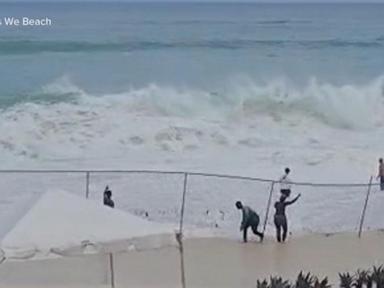
Every time a viral video drops of someone screaming while a lifeguard or a bystander hauls them out of a turbulent stretch of Bahamian surf, the media machinery spins up the exact same lazy narrative. The ocean is painted as a rogue predator lying in wait. Commentators wring their hands about the unpredictable fury of the sea, the terrifying power of hidden currents, and the sheer luck of survival.
It is a comforting myth because it externalizes the blame. If the ocean is an unpredictable monster, nobody is at fault. It is just bad luck.
Except it is almost never bad luck. It is staggering, willful ignorance of basic physics combined with a total breakdown of personal risk assessment.
I have spent decades watching tourists treat the Atlantic like a backyard hotel pool, ignoring every visual warning sign, dismissing red flags as mere suggestions, and then panicking the second their feet lose contact with the sand. The terrifying rescue in that viral clip was not a tragedy of nature. It was a masterclass in preventable panic.
The Myth of the Dragging Monster
Let us dismantle the core falsehood driving almost every water safety panic. The moment someone gets caught in a strong outflow or heavy shorebreak, the panic response kicks in. They think they are being pulled under. They think the water is conspiring to drown them.
The physics tell a completely different story.
Water is a fluid medium governed by pressure and volume. When waves break against a shallow shelf, millions of gallons of water are pushed onto the shore. That water has to get back out to sea. It naturally funnels through the path of least resistance, creating a narrow channel of fast-moving water rushing away from the beach. That is the infamous riptide.
It does not pull you under. It pulls you out.
The panic happens because exhausted swimmers try to swim straight against a current moving faster than an Olympic sprinter. They burn through their glycogen stores in forty seconds, ingest a lungful of salt water, and transition from a mild inconvenience to a cardiac event. The ocean did not attack them. They exhausted themselves fighting gravity.
If you want to survive, you stop swimming. You float. You let the channel spit you out past the break where the velocity drops to zero, and then you swim parallel to the shore for twenty yards before heading back in. It is not rocket science. It is seventh-grade science. Yet millions of adults walk onto tropical beaches without the foghest idea how fluids move.
The Resort Industry Liability Trap
Why does this keep happening? Look at the financial incentives of the tourism machine.
Walk down the beach at any five-star resort in the Bahamas or the Caribbean, and you will see miles of pristine coastline with zero active warning systems or sporadic, poorly placed red flags. Why? Because putting up massive warning signs that say Danger Extreme Surf Kills Tourists ruins the aesthetic. It impacts booking rates.
Resorts want you relaxed, half-drunk on rum punch, and walking into the water without a second thought. They rely on the legal fiction of assumption of risk while actively minimizing the visual cues that remind people they are stepping into an untamed wilderness.
I have watched hotel general managers actively suppress incident reports of near-drownings on their property to protect the quarterly numbers. They would rather roll the dice on a visitor's inability to read a wave pattern than install proper signage or station permanent rescue personnel at non-swimming beaches.
When a rescue happens, it gets packaged as exciting local color or a testament to the bravery of local staff, masking the structural failure of the property to manage basic safety infrastructure. It is a grotesque ecosystem where ignorance is monetized.
The Psychology of Fatal Arrogance
There is also the ego factor. Modern urban life has insulated us from physical consequences. We live in a world of soft surfaces, climate control, and digital guardrails. When people step onto a beach, they bring that same psychological entitlement with them.
They look at the turquoise water, see a few whitecaps, and assume that because they paid four thousand dollars for a resort package, the physical universe owes them a safe, frictionless experience.
They do not look at the wave period. They do not check the wind direction. They do not watch the set intervals to see that every seventh wave is double the height of the rest. They just walk in wearing heavy linen shorts or loose swimwear that acts like a sea anchor when wet, and wonder why they are suddenly fighting for air.
Arrogance kills more people in the surf than undertows ever did.
If you cannot tread water for twenty minutes without touching the bottom, stay out of water over your chest. If the local fishermen are sitting on the porch watching the water shake their heads, do not paddle out to prove how tough you are.
Stop waiting for the media to coddle your lack of preparation by calling every rescue a miracle. Start treating the natural world with the cold, calculating respect it demands. The ocean does not care about your vacation budget, and it is not going to change its physics to match your itinerary.