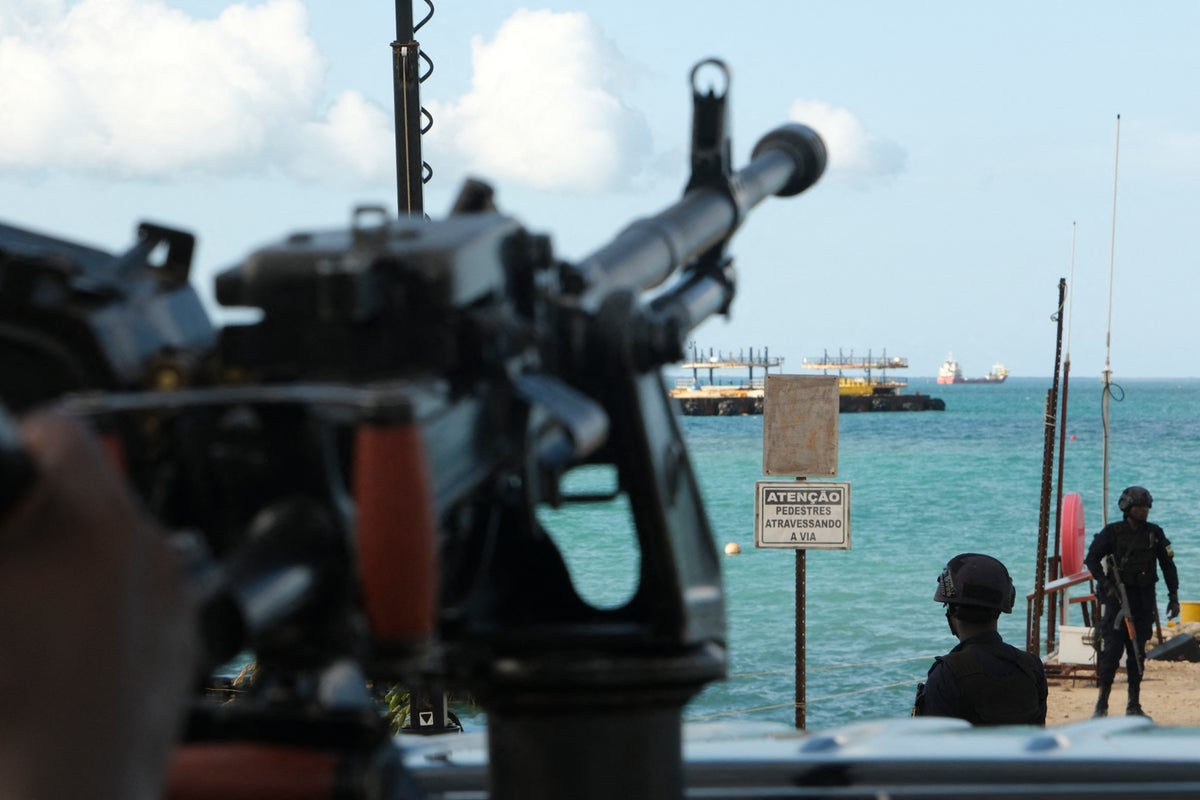
The media wants you to gawk at the smoke coming out of northern Mozambique. Three American trophy hunters airlifted out of a luxury camp near the Niassa Special Reserve, a burned-down base, whispers of Islamic State-linked militants sweeping down from Cabo Delgado. The standard narrative plays like a predictable reel: helpless tourists caught in the crosshairs of asymmetric warfare, blindsided by sudden geopolitical violence in the wild heart of Africa.
It is a clean, comforting lie. It turns a predictable logistics failure into a thrilling safari tragedy. Learn more on a connected issue: this related article.
The lazy consensus is that these camps are innocent victims of an expanding terrorist franchise. Look closer at the maps, the timelines, and the commercial incentives, and you find a much uglier truth. These attacks are not random lightning bolts from a clear sky. They are the entirely foreseeable cost of running high-end adventure tourism inside an active, multi-year insurgency zone while pretending the security perimeter is as solid as a gated community in Florida.
Let us define the actual threat environment instead of hiding behind State Department advisories that wealthy clients routinely ignore. Since 2017, northern Mozambique has been ground zero for Ahlu Sunna Wa-Jama, a radical insurgency that has displaced hundreds of thousands. This is not a hidden secret or an unpredictable black swan event. The conflict has bled across provincial lines for years. If you plant a luxury safari camp on the literal doorstep of Cabo Delgado, you are not pioneering unchartered wilderness. You are operating a high-value asset in a war zone and crossing your fingers that local militia forces will act as your private security guard. Additional reporting by The Washington Post explores comparable perspectives on the subject.
When insurgents torched the camp near Marangira and sent workers fleeing into the brush, shockwaves rippled through the adventure travel industry. Wealthy travelers act stunned that insurgent groups looking for cash, weapons, and logistical supplies would target isolated camps filled with satellite phones, fuel drums, and generous ransom potential.
This brings us to the core failure of the tourism board defense mechanism. The argument from outfitters has always been that these reserves cover millions of acres, making total lockdown impossible. True. But that is an argument for shutting down operations, not for taking the risk and blaming the victims or the weather when the inevitable happens.
Imagine a scenario where a commercial airline flew daily routes through an active surface-to-air missile test zone because the pilots had local clearance, only to act surprised when a jet took fire. You would call that criminal negligence. Yet when million-dollar hunting concessions fly clients into Niassa during an active Islamist insurgency, the industry calls it an unfortunate security anomaly.
The economic incentives create a toxic feedback loop. Outfitters rake in tens of thousands of dollars per hunter, paying minimal lip service to real-time military intelligence. They rely on private airstrips and hired bush pilots to punch holes through blockades the second things go sideways, privatizing the profits of exotic isolation while socializing the rescue costs onto local military forces and international observers.
Local operators love to lean on the trope that conservation funding relies on high-end hunting dollars to keep poachers at bay. There is mathematical truth to that model during times of regional stability. But conservation economics completely break down when an insurgency moves in. Wildlife reserves stop being sanctuaries and start serving as tactical highways for insurgents moving between hideouts, smuggling routes, and resource nodes. Turning a blind eye to militant expansion because your booking calendar is full for the dry season is corporate malpractice disguised as ecological stewardship.
The response from international travelers needs a complete reality check. If you pay to drop into a remote African bush camp with a standing U.S. State Department Level 4 Do Not Travel warning hanging over the region, you have opted out of standard consular rescue guarantees. No amount of private helicopter insurance changes the baseline physics of a firefight in dense mopane woodland.
The media focuses on the evacuation helicopters because it makes for good copy. It shifts the focus away from the structural arrogance of operators who think luxury tents can outpace automatic weapons and systemic state instability.
Stop treating these raids as acts of nature. They are business calculations made by insurgents capitalizing on soft targets, matched by the willful blindness of an industry that refuses to price real warfare into its brochures.
If you want to hunt big game in a conflict zone, stop crying when the war finds you.


