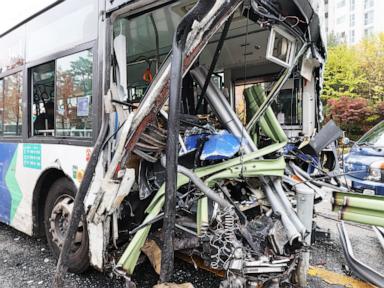
A bus plows into thirty-two vehicles on a crowded South Korean thoroughfare. Dozens end up in emergency rooms. Within forty-eight hours, the media script writes itself. Reporters camp outside police precincts waiting for a toxicology report, a confession of drowsy driving, or a neat mechanical excuse like brake failure.
That narrative is lazy, predictable, and dangerously wrong.
When a commercial transit vehicle obliterates thirty-two cars in a single chain-reaction event, hunting for a lone villain behind the wheel misses the real culprit. A single driver does not create a thirty-two-vehicle catastrophe on their own. Modern urban road architecture, poorly calibrated fleet telemetry, and a broken transit labor model build the bomb; the driver merely happens to be sitting in the cab when the fuse runs out.
I have spent fifteen years auditing commercial fleet safety systems and reconstructing multi-vehicle collisions across East Asia and North America. I have sat in windowless depositions watching transit executives point at dashcam footage of an exhausted operator to absolve themselves of systemic negligence. Every single time a pileup of this magnitude hits the headlines, the public demands a scapegoat while the infrastructure that guaranteed the crash gets a free pass.
The Myth of the Rogue Operator
Mainstream coverage of mass-casualty transit crashes relies on a comforting fiction: if we just punish the bad driver, the roads become safe again.
Look closely at the physics of a thirty-two-car impact. A standard municipal or intercity transit bus weighs between twelve and eighteen metric tons fully loaded. At fifty kilometers per hour, that vehicle carries roughly 1.5 megajoules of kinetic energy. To transfer enough momentum to smash through thirty-two separate passenger vehicles—each weighing around 1.5 tons—requires three distinct failures happening simultaneously:
- Zero physical separation between high-mass transit vehicles and dense, stop-and-go commuter traffic.
- Unmitigated kinetic buildup on downhill or high-speed urban arterial corridors where traffic signals create sudden standing queues.
- Total failure of automated intervention, meaning either the vehicle lacked active emergency braking or the system was overridden by poorly tuned urban proximity sensors.
Blaming the human operator for all three is like blaming a match for burning down a building packed with open gasoline cans.
Why "Human Error" Is an Accounting Trick
In transportation safety engineering, "human error" is rarely a root cause. It is a convenient legal endpoint. Under South Korean traffic liability frameworks—and nearly every equivalent statute globally—establishing driver negligence caps corporate exposure and satisfies public outrage within a single news cycle.
I have seen transit authorities spend millions on driver-facing facial recognition cameras that beep when an operator blinks too slowly, while refusing to spend a fraction of that budget redesigning bottlenecked bus-only lanes that dump heavy coaches directly into merging commuter traffic.
When an operator works split shifts across congested metropolitan corridors like Seoul, Gyeonggi, or Busan, cognitive tunnel vision is not a character flaw. It is basic neurobiology. The human brain is incapable of maintaining peak vigilance for ten hours straight while navigating motorcycles, delivery scooters, erratic lane-changers, and tight timetable penalties. Yet every time a crash occurs, investigators treat human physiology as a criminal offense.
The Pedal Misapplication Trap and the EV Torque Problem
Whenever a bus or heavy vehicle accelerates uncontrollably into stopped traffic in South Korea, the public debate instantly splits into two camps: sudden unintended acceleration (SUA) versus pedal misapplication.
Both arguments miss a massive technological shift happening right beneath commuters' feet.
South Korea has aggressively electrified its municipal bus fleets over the past five years. Electric buses do not behave like legacy diesel coaches. An internal combustion engine builds torque gradually through a multi-speed transmission; if a driver stomps the wrong pedal in a diesel bus, there is a brief mechanical lag—a half-second window of engine roar and gear engagement—before the vehicle surges forward.
Electric drivetrains deliver 100 percent of peak torque at zero RPM.
There is no engine roar. There is no transmission shift delay. If a fatigued driver confuses the brake and accelerator—or if a floor mat, footwear slip, or sudden startle reflex triggers a full-throttle input—an electric or modern high-torque hybrid bus launches eighteen tons of steel like a catapult. By the time the human nervous system registers that the vehicle is accelerating instead of decelerating (which takes roughly 250 to 400 milliseconds under stress), the bus has already cleared the first three cars.
Once the first impact occurs, airbags deploy, cabin glass shatters, and secondary collisions throw the driver sideways out of their seating geometry. At that point, the human is no longer driving. They are a projectile inside a runaway battering ram.
What Everyone Gets Wrong About Autonomous Emergency Braking
The most common question following a thirty-two-car pileup is deceptively simple: Why didn't the bus's automatic emergency brakes stop it?
The premise of that question assumes Advanced Emergency Braking Systems (AEBS) work the same way on city streets as they do on test tracks. They do not.
In fact, active safety systems on commercial buses frequently fail in dense urban traffic for three technical reasons that manufacturers rarely advertise:
- The False-Positive Override Problem: In hyper-dense traffic, buses routinely pass within centimeters of stopped cars, pedestrians on curbs, and weaving delivery scooters. If an AEBS radar triggers full braking every time a scooter cuts across a bus's bow, passengers standing in the aisle get thrown through the windshield. To prevent constant passenger injuries, fleet engineers calibrate urban collision-avoidance thresholds conservatively—or allow drivers to suppress alerts.
- Throttle Override Logic: In almost every commercial vehicle homologation standard worldwide, aggressive driver throttle input overrides automated braking. The system assumes that if the human is stomping the accelerator to the floor, they are intentionally executing an evasive maneuver. If the driver is suffering a medical episode or experiencing pedal confusion, the computer politely steps aside and lets the bus plow into thirty-two cars.
- Multi-Impact Sensor Blindness: Millimeter-wave radar and forward-facing optical cameras are mounted directly behind the front bumper and windshield. The exact millisecond the bus strikes vehicle number one, the radar array is crushed and the camera lens is obscured by crumpled sheet metal. From car number two through car number thirty-two, the bus has zero electronic awareness of what is in front of it.
Relying on software to rescue bad road geometry is a fool's errand.
The Infrastructure Failure Nobody Audits
Look at the road layout where massive multi-car pileups occur in major Korean cities. You will almost always find a lethal combination of high-capacity arterial multi-lane roads, steep grades, and abrupt signalized intersections with zero run-off zones.
Urban planners in rapidly motorized cities prioritized throughput over forgiveness. Look at the Vision Zero framework pioneered in Sweden and adopted in principle by cities worldwide—including Seoul's own municipal traffic safety initiatives. The core tenet of Vision Zero is brutally simple: humans will always make mistakes, so the road system must be engineered so those mistakes do not result in mass casualties.
A road where a single loss of control can impact thirty-two vehicles is an indictment of civil engineering, not just operator competence.
Imagine a scenario where a heavy transit corridor features physical concrete median barriers separating dedicated busways from general traffic, combined with gradual speed-calming geometry approaching major intersections and mandatory automated speed limiters geofenced to urban zones. Even if a driver suffers a catastrophic stroke at the wheel, the bus grinds along a concrete barrier and strikes at most two or three vehicles ahead of it. It cannot fan out across four lanes of stopped commuters like a bowling ball hitting a rack of pins.
Instead, we build eight-lane urban drag strips, paint a thin blue line on the asphalt to designate a "bus lane," and act shocked when physics takes over.
The Hidden Economics of Transit Timetables
There is another layer to this that neither police investigators nor transport ministries want to touch: the schedule itself.
Transit operators in metropolitan hubs operate under relentless turnaround metrics. Even under quasi-public bus management systems—like the jun-gongyeongje model used in Seoul and several major South Korean provinces—drivers face intense pressure to maintain headway intervals in some of the worst traffic congestion on earth.
When a route falls ten minutes behind schedule due to gridlock, the driver absorbs the stress. Break times at the terminal shrink from fifteen minutes to four. Bathroom breaks get skipped. Hydration drops. Blood sugar crashes.
I have reviewed internal dispatch logs from major Asian and European transit carriers where drivers completed back-to-back peak-hour loops with less than six minutes of stationary rest across five hours of continuous operation. No aviation regulator on earth would allow a commercial pilot to operate under those cognitive conditions, yet we routinely put forty passengers and eighteen tons of kinetic mass into the hands of an exhausted bus driver operating inches away from hundreds of families in compact sedans.
Answering the Wrong Questions
When news breaks of dozens injured in a thirty-two-vehicle crash, public search trends immediately spike around predictable questions. Almost all of them miss the mark.
"Are South Korean buses safe to ride?"
Statistically, riding inside a heavy transit bus remains vastly safer per passenger-kilometer than driving a private car—precisely because mass wins in a collision. In a thirty-two-vehicle pileup, the overwhelming majority of severe injuries occur inside the crushed passenger cars, not inside the bus. Asking whether the bus is safe for its riders ignores the real asymmetry: heavy commercial vehicles pose an existential kinetic threat to everyone outside them.
"Should older bus drivers be banned from commercial driving?"
Age-based knee-jerk reactions are the favorite distraction of politicians after a major crash. South Korea, facing a severe demographic crunch and a chronic shortage of commercial drivers, has seen endless debate over raising or capping age limits for transit operators. Here is the uncomfortable truth: twenty-five-year-old drivers with untreated sleep apnea, smartphone distraction, or ten-hour shift fatigue crash just as violently as sixty-five-year-old drivers. Focusing on chronological age instead of mandatory biometric fatigue monitoring, strict shift-rest enforcement, and physical road separation solves nothing while worsening the driver shortage that forces remaining operators to work overtime.
"Will self-driving buses prevent pileups like this?"
Not anytime soon, and believing otherwise delays real fixes. Level 4 autonomous transit shuttles currently struggle in chaotic, unprotected mixed urban traffic with unpredictable motorcycles, double-parked delivery trucks, and aggressive lane merges. Even if full autonomy arrives on major arterial routes within the next decade, it will still require dedicated, physically segregated transit lanes to operate safely—the exact same infrastructure investment that would stop human-driven pileups tomorrow morning.
What Actually Stops a 32-Car Pileup
If transport ministries, municipal planners, and fleet operators actually want to end mass-casualty urban pileups rather than just holding press conferences after them, the fixes are unglamorous, expensive, and entirely proven:
- Eliminate Throttle-Override in Low-Speed Urban Geofences: Commercial vehicle regulators must mandate that within dense urban speed zones (under 60 km/h), Automatic Emergency Braking cannot be overridden by sudden, 100-percent accelerator pedal application unless the steering angle confirms an active lane-change maneuver. If an eighteen-ton bus is closing on a wall of stopped cars at full throttle, the computer must cut power and lock the brakes—period.
- Physical Segregation Over Paint: Painted bus lanes are an illusion of safety. High-volume urban transit corridors require raised curbs, bollards, or Jersey barriers separating heavy buses from multi-lane passenger car queues. If a bus loses control, the barrier absorbs the energy—not thirty-two sedans.
- Acoustic and Tactile Pedal Differentiation: In high-torque electric and hybrid commercial vehicles, brake and accelerator pedals need distinct tactile resistance curves, physical height offsets, and immediate cabin audio warnings when full throttle is applied from a near-stop while forward radar detects stationary obstacles within twenty meters.
- Black-Box Telematics Audits Before Crashes, Not After: Regulators should audit harsh-acceleration events, tailgating frequency, and terminal turnaround rest intervals across entire bus depots every month. A driver who logs fifteen hard-braking events in a week is a flashing red warning light long before they ever hit thirty-two cars.
The Real Verdict
There is an undeniable downside to adopting this systemic approach: it costs billions in civil engineering, slows down urban bus schedules by a few minutes per route, and forces transit agencies to hire more drivers rather than squeezing extra shifts out of existing staff. Taxpayers hate funding concrete barriers, and commuters hate longer headways.
So instead, we stick with the cheap lie. We wait for the police to name a single tired driver, suspend their license, file criminal negligence charges, and declare the case closed—leaving the exact same eighteen-ton machines, running on the exact same unforgiving roads, under the exact same punishing schedules, lined up behind another thirty-two cars tomorrow morning.


