The wind at the Badaling pass does not just blow; it screams. It carries the scent of dry earth and the ghosts of a million men who once stood where I am standing now. For centuries, the Great Wall of China has been sold to us as a monolith, a static grey ribbon of stone stretching across the spine of the mountains. We talk about it in numbers: 13,000 miles, two millennia of history, billions of bricks. But numbers are cold. They don't capture the sweat of the Ming dynasty soldier or the quiet desperation of a stonecutter working by the light of a guttering oil lamp.
For 400 years, something was missing from our understanding of this dragon. While tourists snapped photos of the restored battlements, the Wall was keeping a secret under its skin. It wasn't just a wall. It was a living, breathing network of hidden passages, scout holes, and "false" walls designed to swallow an invading army whole.
The Architect of Shadows
Imagine a young scout named Chen. He is nineteen, stationed on a remote stretch of the Wall in the late 16th century. The air is so cold his breath freezes to his collar. He isn't standing on top of the wall where everyone can see him. He is inside it.
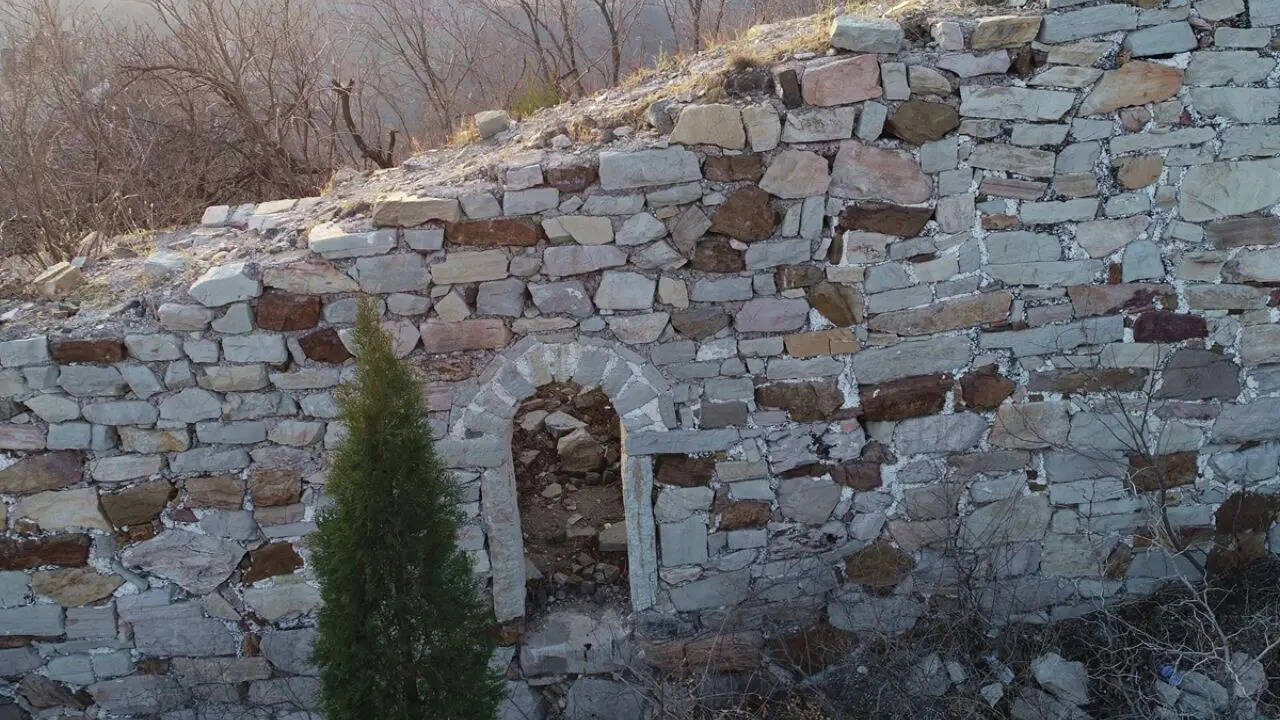
The recent discovery of over 130 "hidden doors" along the Great Wall has fundamentally changed how we view the defense strategy of ancient China. These weren't just exits; they were tactical traps. Some were designed so that from the outside, they looked identical to the surrounding masonry. From the inside, however, they were thin enough for a soldier to kick through in a moment of crisis.
Imagine the psychological horror for a Mongol raider. You are scouting what looks like a solid, impenetrable cliff of stone. Suddenly, the rock itself "breaks." A dozen Ming soldiers burst through a wall that didn't exist seconds ago. They strike, they vanish, and the "wall" closes behind them.
This isn't a theory anymore. Archeologists using high-resolution digital scanning found these doorways hidden in plain sight. They are masterpieces of camouflage. The outer layer of bricks was laid with such precision that the seams were invisible to the naked eye. It was the ultimate "stealth" technology of the middle ages.
The Problem with Perfection
We have spent decades restoring the Great Wall to make it look like a postcard. In doing so, we nearly erased the very things that made it a functional machine of war. The "dry" facts of history often ignore the gritty reality of maintenance.
Take the "vivid" discovery of ancient kitchens and armories buried within the hollowed sections of the towers. For centuries, historians assumed these towers were merely lookout posts. We were wrong. They were miniature cities. Archeologists recently unearthed fire pits, cooking utensils, and even evidence of localized irrigation systems designed to keep soldiers alive during months-long sieges.
Think about the logistical nightmare of feeding a garrison on a mountain ridge where nothing grows. The Wall wasn't just a barrier; it was a lifeline. These hidden chambers held the grain, the water, and the gunpowder that kept the empire from collapsing. When you walk these stones today, you aren't just walking on a border. You are walking on a multi-generational survival vault.
The Language of the Bricks
To understand the Wall, you have to look at the individual bricks. Some of them bear stamps—names of the artisans who made them, the dates they were fired, and the officials responsible for their quality. This wasn't for vanity. It was for accountability. If a section of the wall collapsed, the government knew exactly whose head to take.
This culture of high-stakes precision led to innovations we are only now deciphering. Researchers found that the mortar used in many of the hidden sections contained a secret ingredient: sticky rice. This organic additive created a chemical bond with the lime that is arguably stronger and more water-resistant than modern cement.
It’s a strange, humbling thought. The Great Wall stands today not just because of stone, but because of the same rice that fed the people building it. The wall is literally held together by the food of the nation.
The Hidden Doors of the Mind
Why did it take 400 years to find these passages? The answer lies in our own perspective. We looked at the Wall as a fence. A fence is meant to keep things out. But the Ming generals viewed the Wall as a filter.
They needed to be able to send scouts behind enemy lines to gather intelligence. They needed to move horses through "secret gates" to flank invaders. These passages were the valves of the empire, allowing the Great Wall to breathe and react.
Consider the "hidden" scout holes found in the most treacherous, vertical sections of the mountains. These are tiny slits, barely wide enough for a human eye, angled in a way that allows a sentry to see for miles while remaining completely invisible from below. They are the ancient equivalent of a periscope.
While exploring a newly mapped section near the "Wild Wall" areas—parts of the structure that haven't been touched by modern mortar—you can feel the shift in energy. The restored sections feel like a museum. The wild sections feel like a wound. The stones are cracked, overtaken by scrub brush and roots, but in those cracks, the secrets are closer to the surface.
I found myself tracing the edge of what looked like a vertical seam in the brickwork. It was too straight to be a natural crack. It was one of the hidden doors, now sealed by four centuries of sediment and silence. I pushed against it, knowing it wouldn't move, yet half-expecting to hear the clank of bronze armor on the other side.
The Weight of the Silence
The discovery of these 130 doors is just the beginning. Estimates suggest there could be hundreds more, buried under landslides or hidden behind the "modern" facades built during the 20th-century restoration projects.
The Great Wall is teaching us a lesson about our own arrogance. We thought we had mapped every inch. We thought we understood its purpose. But the Wall is a master of misdirection. It allowed us to see what it wanted us to see—a giant, static obstacle—while hiding its true, lethal complexity within.
History isn't a list of dates. It’s a collection of hidden doors.
We spend our lives building walls—around our homes, our borders, and our hearts. We think of them as permanent, solid things. But the men who built the Great Wall knew better. They knew that a wall that cannot open is a wall that eventually breaks. They built the exits into the foundation. They built the ability to change, to strike, and to survive into the very stones.
The dragon isn't just sleeping. It’s waiting. Every time we find a new passage or a buried kitchen, the dragon whispers another secret about what it takes to endure. It isn't about being the strongest or the tallest. It’s about being the most adaptable.
As the sun sets over the ridge, casting long, jagged shadows across the battlements, the Wall seems to ripple. The orange light catches the seams of the hidden doors, highlighting the ghost of a passage that shouldn't exist. For a moment, the 400-year silence is broken by the wind whistling through a scout hole, a sound like a low, haunting flute. It’s the sound of a secret finally being told.
The Wall is still watching. And now, finally, we are starting to see it back.