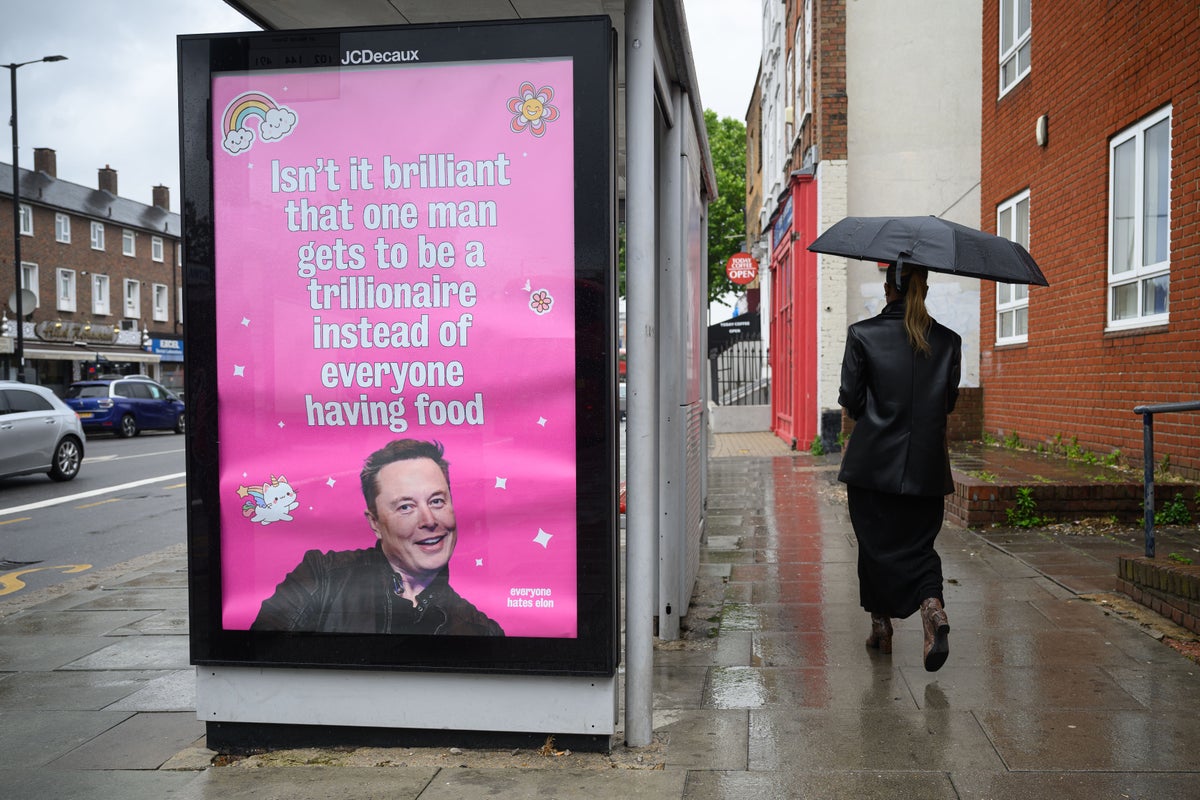
Elon Musk is officially the world's first trillionaire. Last week, SpaceX went public on Wall Street in a colossal initial public offering that brought in $75 billion, valuing the rocket-and-AI empire at over $2.1 trillion. Musk marked the occasion by ringing the Nasdaq bell from Starbase in South Texas, declaring that the float would help "take the fiction out of science fiction" and build an inspiring, multiplanetary future.
Don't buy the hype. Beneath the corporate speeches about Martian colonies and orbital data centers lies a much grimmer reality. The SpaceX IPO isn't just a win for tech investors. It's a flashing red light for the American political system. By concentrating an unprecedented mountain of wealth and critical infrastructure in the hands of one highly erratic individual, this financial milestone creates a direct threat to democratic governance.
We aren't just dealing with a wealthy CEO anymore. We're dealing with someone who functions like a parallel government.
The Myth of the Inspiring Multiverse
Musk wants you to think this money is going straight to human progress. He talks about building city-sized bases on Mars, deploying massive solar-power arrays in orbit, and outperforming traditional tech giants in the artificial intelligence race. For thousands of retail investors who bought shares at the initial $135 price, it feels like funding a sci-fi utopia.
The financial engineering behind this listing tells a different story. To achieve this stratospheric valuation, Musk recently merged SpaceX with xAI, his artificial intelligence venture. Senator Elizabeth Warren pointed out the obvious conflict here, writing a scathing letter to the Securities and Exchange Commission to complain that Musk essentially sat in a room with himself to negotiate how much his own companies were worth. The joint venture has already reported $8.7 billion in losses between early 2025 and the first quarter of 2026.
Regular people are footing the bill for these losses. SpaceX reportedly pressured index fund managers to fast-track the stock into major market indexes, bypassing standard waiting periods. Because of that move, millions of ordinary workers with 401k plans and retirement funds are now automatically buying into a highly speculative stock, providing a massive exit window for connected insiders, venture capitalists, and political allies.
Sovereign Power in Private Hands
Economist Gabriel Zucman recently warned that extreme wealth is always an extreme power. It's the power to crush market competition, dictate public conversations, and rewrite the rules of policy. Musk doesn't just have money. He owns the actual infrastructure of modern life.
Consider what his empire currently controls. Through his ownership of X, he directs how hundreds of millions of people get their news, routinely adjusting algorithms to amplify preferred political talking points while penalizing critical journalists. Through Starlink, a subsidiary of SpaceX, he owns the dominant satellite internet infrastructure on Earth. He has already used that power to alter global military outcomes, choosing when to enable or disable internet access during critical phases of the war in Ukraine.
Government reliance on SpaceX has turned into total dependency. The company takes in billions from federal contracts. NASA relies almost entirely on Musk's rockets to ferry astronauts and cargo. When a single businessman can veto a military operation or ground the federal space program on a whim, he ceases to be a government contractor. He becomes a sovereign peer.
The Death of Democratic Accountability
Democracy requires accountability. If you dislike a politician, you can vote them out. If a public agency fails, Congress can investigate it and strip its funding. But nobody voted for Musk, and nobody can fire him.
His involvement in federal operations shows a total disregard for oversight. Public Citizen recently discovered that over 70% of the government offices targeted for budget cuts by Musk's political initiatives overlapped directly with his own business interests. While his companies raked in fresh government contracts, his political allies worked to slash the regulatory agencies responsible for policing those exact industries.
Oxfam International released data showing that Musk's personal fortune grew at a rate of over $1 million per minute over the past year. He now holds more wealth than the bottom 46% of the global population combined. A single 10% tax on his fortune could fund global poverty alleviation programs for an entire year, yet current financial frameworks allow this wealth to compound completely untouched by traditional public demands.
Where We Go From Here
The SpaceX IPO proves that our current regulatory playbooks are entirely obsolete. Antitrust laws designed for 19th-century railroad barons can't cope with a billionaire who owns the satellite grid, the dominant social media network, the electric vehicle market, and the premier AI infrastructure simultaneously.
Fixing this requires immediate, aggressive action from the public and regulatory bodies. The SEC must thoroughly investigate the fast-tracked index fund inclusion of SpaceX to ensure regular retirement savers aren't being used as exit liquidity for corporate insiders. Congress needs to establish strict neutrality mandates for satellite communication networks, treating Starlink as a common carrier that cannot legally cut off service based on the political whims of its owner.
Most importantly, federal agencies must actively fund and diversify alternative launch providers to break the current private monopoly on space transport. Relying on a single corporation for national security and scientific progress is a choice. We can choose to diversify our public infrastructure, or we can accept a future where public policy is dictated by private boardrooms.