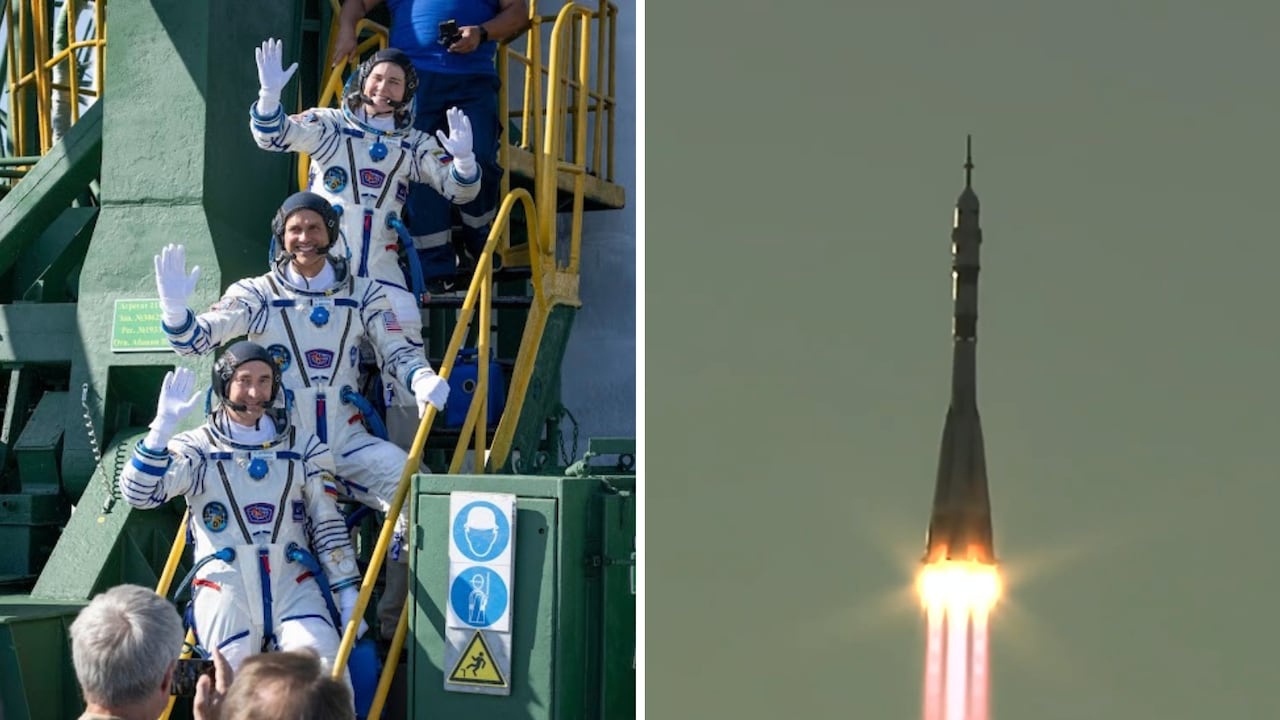
The media recently fawned over another textbook launch from the Baikonur Cosmodrome in Kazakhstan. A Soyuz rocket roared to life, carrying three fresh astronauts to the International Space Station (ISS). The cameras zoomed in on the trembling gantry, the commentators choked up with rehearsed awe, and the headlines celebrated yet another milestone in humanity's joint journey into the cosmos.
It is a beautiful, expensive lie.
The collective obsession with sending humans to the ISS has become the single greatest bottleneck to actual space exploration. For a quarter of a century, we have been trapped in a low-Earth orbit loop, spending billions of dollars annually to watch highly trained scientists perform microgravity experiments that could be done more cheaply and efficiently by automated robotic platforms.
The media covers these launches like we are conquering new frontiers. In reality, we are just running a very expensive, bureaucratic commuter train 250 miles above our heads.
The High Cost of Floating in Circles
The standard defense of the ISS is that it serves as a stepping stone to Mars, a testbed for deep-space life support, and a triumph of international diplomacy.
Let us look at the math.
The ISS costs NASA alone roughly $3 billion a year to operate. By the time the station is decommissioned in the early 2030s, the global taxpayer bill will have cleared $150 billion. If the goal is truly to reach Mars or build permanent lunar bases, sinking trillions of pennies into maintaining a leaking, decades-old habitat in low-Earth orbit (LEO) is an incredibly inefficient way to do it.
Every dollar spent patching up the ISS is a dollar not spent on heavy-lift propulsion systems, advanced robotic landers, or deep-space habitats. We have spent twenty-five years mastering the art of not throwing up in microgravity and figuring out how to recycle urine. Those are solved problems. Continuing to fund this orbital bed-and-breakfast is no longer about science; it is about keeping a bloated geopolitical industrial complex on life support.
Robots Do It Better, Cheaper, and Without the Drama
The dirty secret of space science is that human beings are terrible platforms for delicate research.
Humans are dirty, wet, vibration-heavy disruptions to the microgravity environment. Every time an astronaut sneezes, exercises on a treadmill, or scratches their nose, they introduce micro-vibrations that ruin sensitive materials-science experiments. They require tons of life-support equipment—oxygen generators, water recovery systems, carbon dioxide scrubbers, food storage, and waste management—all of which take up precious mass and volume that could otherwise be used for scientific instruments.
Imagine a scenario where we launched uncrewed, automated free-flying laboratories instead.
Without the need to keep fragile, watery mammals alive, these automated labs would require no heavy shielding against bone density loss, no safety margins for explosive decompression, and no return vehicles. They could stay in orbit for years, controlled by researchers on Earth, quietly churning out breakthroughs in protein crystallization and semiconductor manufacturing at a fraction of the cost.
When the experiment is done, we do not need a multi-million-dollar astronaut recovery mission. We just drop the sample return capsule back to Earth.
The Myth of Orbital Diplomacy
We are told the ISS is a monument to international cooperation, particularly between the United States and Russia. This argument is historically true but functionally dead.
The partnership was originally forged in the 1990s not out of pure scientific idealism, but to keep thousands of out-of-work Soviet rocket scientists from selling their skills to rogue states after the collapse of the USSR. It was a national security program disguised as a science project.
Today, that geopolitical marriage is in a state of hostile, forced cohabitation. Roscosmos has repeatedly threatened to pull out, used the station as a platform for political stunts, and watched its own space program decay due to corruption and lack of funding. The U.S. and its partners are forced to play nice because the station is physically divided into interdependent segments. If Russia pulls the plug on the propulsion that keeps the station from falling out of orbit, the western modules suffer.
This is not diplomacy. It is a mutually assured hostage situation. It drags down Western aerospace policy, tying it to a declining partner rather than allowing it to aggressively fund agile, commercial initiatives.
The Commercial LEO Destiny Illusion
As the ISS nears its inevitable watery grave in the Pacific, the new consensus is that commercial space stations will seamlessly step in to fill the void. Space agencies want to become "anchor tenants" on private outposts run by companies like Axiom Space or Voyager Space.
This is a fundamental misunderstanding of how space economics work.
There is currently no viable, self-sustaining commercial market in low-Earth orbit that does not rely on massive government subsidies. The private space stations currently on the drawing board are banking on NASA writing them massive checks to keep their astronauts up there. Without the government artificially propping up the demand side of the equation, the business model falls apart.
If we want a real space economy, we have to stop subsidizing the orbital equivalent of real estate speculation.
How We Actually Get to the Stars
If we want to break the stagnation, we have to stop celebrating the routine. Here is what a realistic, aggressive space program looks like:
- Deorbit the ISS Ahead of Schedule: Stop spending billions to keep a creaking, 1990s-era tin can in orbit. Let it go. Use those billions to fund heavy-payload propulsion and deep-space infrastructure.
- Automate Low-Earth Orbit: Transition all LEO research to robotic, uncrewed free-fliers. If a private company wants to build a space hotel for billionaires, let them do it on their own dime without taxpayer bailouts.
- Go Straight to the Moon and Mars: If we are going to put humans in harm's way, do it where they can actually build something. We need permanent bases on the lunar surface, closed-loop agricultural systems in partial gravity, and active extraction of water ice.
We have spent a quarter of a century staring down at Earth from 250 miles up, congratulating ourselves on doing the bare minimum. It is time to turn the cameras around, stop looking down, and start looking out. The next time a rocket blasts off from Kazakhstan, it shouldn't be heading to a high-altitude office park. It should be leaving Earth for good.