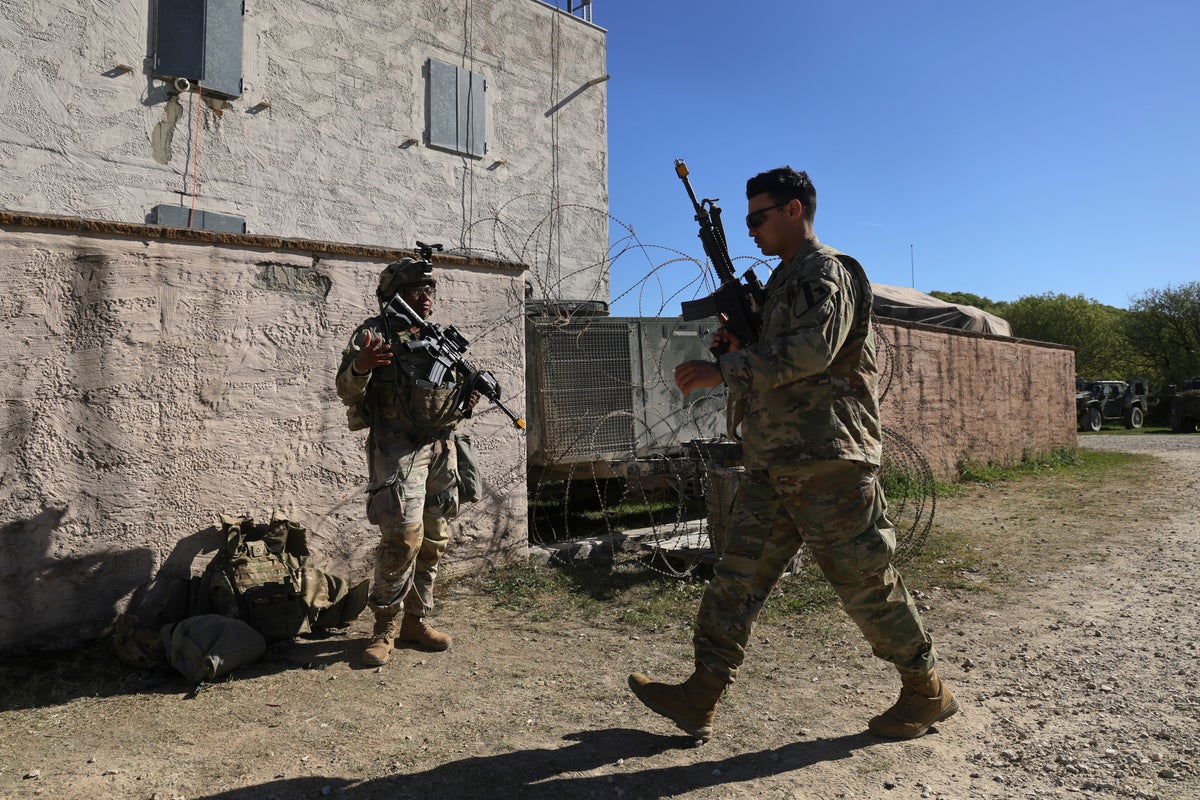
The American security umbrella in Southern Europe is beginning to tear at the seams. In a series of sharp Oval Office remarks on May 1, 2026, President Donald Trump confirmed that he is actively considering the withdrawal of U.S. military forces from Italy and Spain. When asked point-blank if these long-standing deployments were on the chopping block, the President was unequivocal: "Yeah, probably, I probably will. Why shouldn't I? Italy has not been of any help to us and Spain has been horrible, absolutely horrible."
This isn't just another round of "burden-sharing" rhetoric. This is a fundamental breakdown in the transatlantic alliance triggered by a specific, high-stakes conflict: the escalating U.S.-Israeli war against Iran. While Washington demands total alignment and maritime support in the Strait of Hormuz, Rome and Madrid have remained stubbornly on the sidelines. For a President who views foreign policy through the lens of transaction and personal loyalty, that neutrality is being treated as a betrayal.
The Geography of Discontent
The numbers at stake are significant for a region that has served as the Pentagon's primary gateway to the Mediterranean and North Africa for decades. As of late 2025, the U.S. maintains approximately 12,662 active-duty troops in Italy and 3,814 in Spain. These aren't just bodies in barracks; they represent the logistical backbone of American power projection in the Southern Hemisphere.
Key Strategic Assets at Risk
- Naval Station Rota (Spain): The home port for U.S. Aegis destroyers that form the heart of Europe’s ballistic missile defense.
- Morón Air Base (Spain): A vital staging ground for rapid-reaction forces heading into Africa.
- Aviano Air Base (Italy): A critical hub for U.S. Air Forces in Europe, housing F-16 fighter squadrons.
- Sigonella (Italy): The "Hub of the Med," essential for drone operations and maritime surveillance across North Africa and the Middle East.
For Spain, the friction is particularly acute. Prime Minister Pedro Sánchez has positioned himself as the most vocal critic of the Iran campaign among European leaders. This stance has already prompted the Trump administration to float the radical idea of "suspending" Spain from NATO—a move with no legal precedent in the North Atlantic Treaty, but one that signals the depth of the diplomatic rift. Trump’s frustration with Madrid also stems from economics, recently labeling Spain's military spending and financial performance as "absolutely horrendous" while demanding a 5% GDP contribution to defense.
The Meloni Paradox
The fallout with Italy is perhaps more surprising given the previously warm relationship between Trump and Prime Minister Giorgia Meloni. That "cosy" dynamic has soured as Meloni balances her domestic political survival against Washington's demands for combat participation. Trump’s public assessment—that Meloni lacks "courage" on the Iran issue—indicates that ideological kinship is no longer enough to secure the American troop presence.
Italy's defense minister expressed genuine surprise at the latest threats, noting that the country provides extensive basing rights that the U.S. relies on daily. But in the current White House, "basing rights" are viewed as a favor the U.S. does for the host nation, rather than a mutual strategic benefit.
A Systemic Realignment
This southern pivot follows a similar threat directed at Germany and Chancellor Friedrich Merz just 24 hours prior. It appears the administration is conducting a systematic, loyalty-based review of the entire European footprint. The President’s logic is blunt: if a nation won't help secure the Strait of Hormuz or support the offensive against Tehran, they lose the "protection" of a permanent U.S. presence.
| Country | Active-Duty U.S. Troops (Dec 2025) | Primary Role |
|---|---|---|
| Germany | 36,436 | Central European Logistics/Command |
| Italy | 12,662 | Mediterranean Power Projection |
| Spain | 3,814 | Missile Defense & Africa Reach |
The Pentagon has remained in a state of high-alert diplomacy, with officials like Army Secretary Dan Driscoll and Secretary of Defense Pete Hegseth attempting to manage the fallout. While the Department of Defense maintains it "plans for every scenario," the logistical nightmare of relocating over 16,000 personnel and their equipment from Italy and Spain would take years and cost billions.
The Kremlin is Watching
There is a third party in this divorce that stands to gain the most. Trump’s latest threats came shortly after a phone call with Vladimir Putin, who has long sought the reduction of NATO forces on the European continent. By threatening the southern flank, Washington is inadvertently—or perhaps intentionally—creating a vacuum. If the U.S. pulls back from Sigonella and Rota, the Mediterranean becomes a playground for Russian and Chinese naval ambitions.
The European Policy Centre has warned that this tit-for-tat confrontation is a "strategic gift" to Moscow. Even as Germany’s Chief of Defense, Gen. Carsten Breuer, talks about Berlin taking "more responsibility," the reality is that Europe cannot replace the specialized U.S. capabilities in missile defense and heavy airlift overnight.
Washington's ultimatum is clear: join the war or lose the base. For Italy and Spain, the choice is between a deeply unpopular military involvement in Iran or a future where they must defend their own shores for the first time since the 1940s. The Southern Flank, once the bedrock of NATO’s stability, is now the front line of its potential dissolution.
Europe is no longer being asked to pay more; it is being asked to bleed more.


