The ballot papers in Los Angeles County do not smell like smoke, but they should.
Last year, the hillsides above the Pacific Palisades turned into a wall of orange fury. Wildfires ate through millions of dollars of real estate, turning pristine architectural dreams into gray powder. Among the ash was the home of Spencer Pratt. To a generation of television viewers, Pratt was the ultimate reality TV antagonist, the bleach-blonde instigator of MTV’s The Hills who made a career out of manufactured drama. But when your roof collapses into embers, the drama stops being manufactured. The fire stripped away the Hollywood artifice and left behind a furious, displaced citizen who decided the only way to fix a broken city was to run it himself.
For nearly a week after the 2026 mayoral primary polls closed, it looked like his fury was winning.
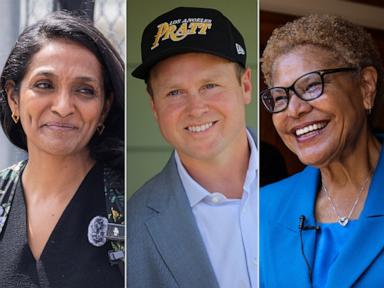
On election night, the initial tally showed the incumbent mayor, Karen Bass, holding a shaky lead. Behind her, sitting comfortably in second place, was Pratt. His campaign had been a blitz of viral videos, social media broadsides, and a platform that promised to sweep the streets clean of homelessness and official complacency. He had captured the raw, exhausted anger of a city that feels like it is slipping through its own fingers. Trailing in a distant third was Nithya Raman, an urban planner and progressive city council member who had entered the race at the absolute last minute.
On that Tuesday night, Raman stood before her supporters. Her voice lacked the theatrical confidence of her rival. She told them that the days ahead might not yield an answer they liked. She danced, but the music felt like a brave face put on for a closing chapter.
Then, the mail trucks started arriving.
The Slow Grind of Paper
To understand Los Angeles, you have to understand its distance. It is a city built on the illusion of immediacy—instant fame, fast cars, immediate gratification—but governed by a crushing, bureaucratic inertia. While other global cities count their votes in hours, California moves with the deliberate pace of a glacier.
Every registered voter in Los Angeles receives a ballot in the mail. If it is postmarked by election day, it counts, even if it takes a week to arrive at the registrar’s office. This decentralized process means that election night is not an ending. It is merely a prologue.
Consider a hypothetical voter named Elena. She lives in a cramped one-bedroom apartment in East Hollywood, working two jobs to keep up with a rent check that devours 60% of her income. She does not watch reality television, and she does not have time to stand in a voting line on a Tuesday morning. She fills out her ballot at her kitchen table at midnight, signs the envelope, and drops it into a blue mailbox on her way to work.
Tens of thousands of Elenas exist across the basin. Their votes do not show up in the early television graphics. They are packed into white plastic crates, stacked high in a warehouse in Norwalk, waiting for human hands to verify signatures and feed paper into scanners.
As the week wore on, those crates began to tell a different story.
With every fresh batch of data released by election officials, Pratt’s lead began to evaporate. One percentage point. Then two. By Sunday evening, the reality star’s six-point cushion had vanished entirely. Raman did not just catch him; she surged past him, buoyed by a wave of late-returned mail ballots from the city's working-class neighborhoods and progressive strongholds.
When the count reached 93%, the math became unyielding. Bass held the top spot at 34.3%. Raman secured the second runoff slot with 28.5%. Pratt, stuck at 25.8%, was out.
The immediate reaction from the political right was swift and predictable. From the digital ether of Truth Social, President Donald Trump—who had endorsed Pratt’s bid to capture a foothold in the nation’s second-largest city—declared the result impossible. He used familiar phrases, calling the slow count a scam and a rigged operation. Pratt himself took to social media, suggesting dark conspiracies about where Raman had suddenly "found" her votes, hinting that the city's unhoused population had somehow tilted the scales.
But there was no mystery. There was only paper. The working people of Los Angeles had simply taken their time to answer.
The Fracture of an Alliance
The departure of Spencer Pratt strips away the celebrity sideshow and leaves Los Angeles with an ideological civil war. The November runoff will not be a contest between a politician and an influencer. It will be a referendum on how a progressive city survives its own crises.
The matchup is complicated by a deeply personal history.
Only a few months ago, Karen Bass and Nithya Raman were allies. Raman had publicly endorsed Bass for re-election. In 2023, the two women stood side-by-side at City Hall, swapping public praise. Bass called Raman the ideal model of a grassroots leader; Raman expressed deep gratitude for Bass’s friendship.
That friendship died hours before the February filing deadline.
Raman’s sudden entry into the race stunned the city's political establishment. Her explanation was simple: the city was at a breaking point, and the current leadership was failing to manage the basic tenets of urban survival. When asked about the betrayal of a former ally, Raman was cold. She stated that the future of Los Angeles should not be discussed in the context of personal friendships, but in the context of the crises on the pavement.
Those crises are visible to anyone who walks outside. Despite Bass overseeing a 17.5% reduction in street encampments through her signature initiatives, nearly 44,000 people remain unhoused across the city. The sidewalks remain buckled. The cost of living continues to skyrocket, forcing families out of the city entirely.
The difference between the two women lies not in their recognition of the pain, but in their philosophy of the cure.
Bass represents the traditional, coalition-building power of the Democratic establishment. Backed by Governor Gavin Newsom and prominent national figures, she operates on compromise, attempting to balance the demands of business owners, homeowner associations, and social justice advocates.
Raman, a democratic socialist who first won her council seat in 2020 by unseating an establishment incumbent, views compromise as a form of stagnation. Her background is in urban planning, holding degrees from Harvard and MIT. Before entering local politics, she founded transparent civic initiatives focused on sanitation and governance. She approaches the city like a machine that requires a complete mechanical overhaul, rather than a tune-up.
The opening salvos of the runoff campaign have already been fired, and they are brutal. Within hours of the final primary tallies, Bass’s campaign strategist released a sharp statement, signaling that the incumbent intends to run hard to the center. They framed Raman as an ideologue who allows encampments near schools and votes against expanding the police force.
Raman has previously defended her record, arguing that anti-camping ordinances are merely short-term visual fixes that shuffle human suffering from one block to the next without solving the root cause of the housing deficit. She has championed strict rent caps and data-driven oversight for homeless initiatives.
The Long Road to November
For the voter looking on, the choice ahead is heavy. The presence of Pratt provided a lightning rod for the city's collective anger, but his elimination forces Angelenos to look past the rhetoric of frustration and choose a concrete path forward.
Can an urban planner convince a weary public that the solution to homelessness is more density and structural reform, even if it takes years to build? Or will the city find comfort in the establishment hands of Bass, who promises stability but represents a status quo that many feel has run out of time?
The slow count of June has proven that the electorate is deeply divided. Neither candidate managed to secure even 35% of the primary vote. To win in November, both Bass and Raman must step outside their comfortable bases and convince the millions of people who live between the hills and the sea that they possess the keys to a city that is functional, affordable, and safe.
The trucks in Norwalk will continue to process the final envelopes of the primary, but the real work has shifted back to the streets. The signs for Spencer Pratt will be taken down from the lawns of the Westside. The ashes of the old fires have settled. What remains is a choice between two distinct visions for the soul of an American metropolis, and a long, hot summer of argument before a single ballot is mailed again.