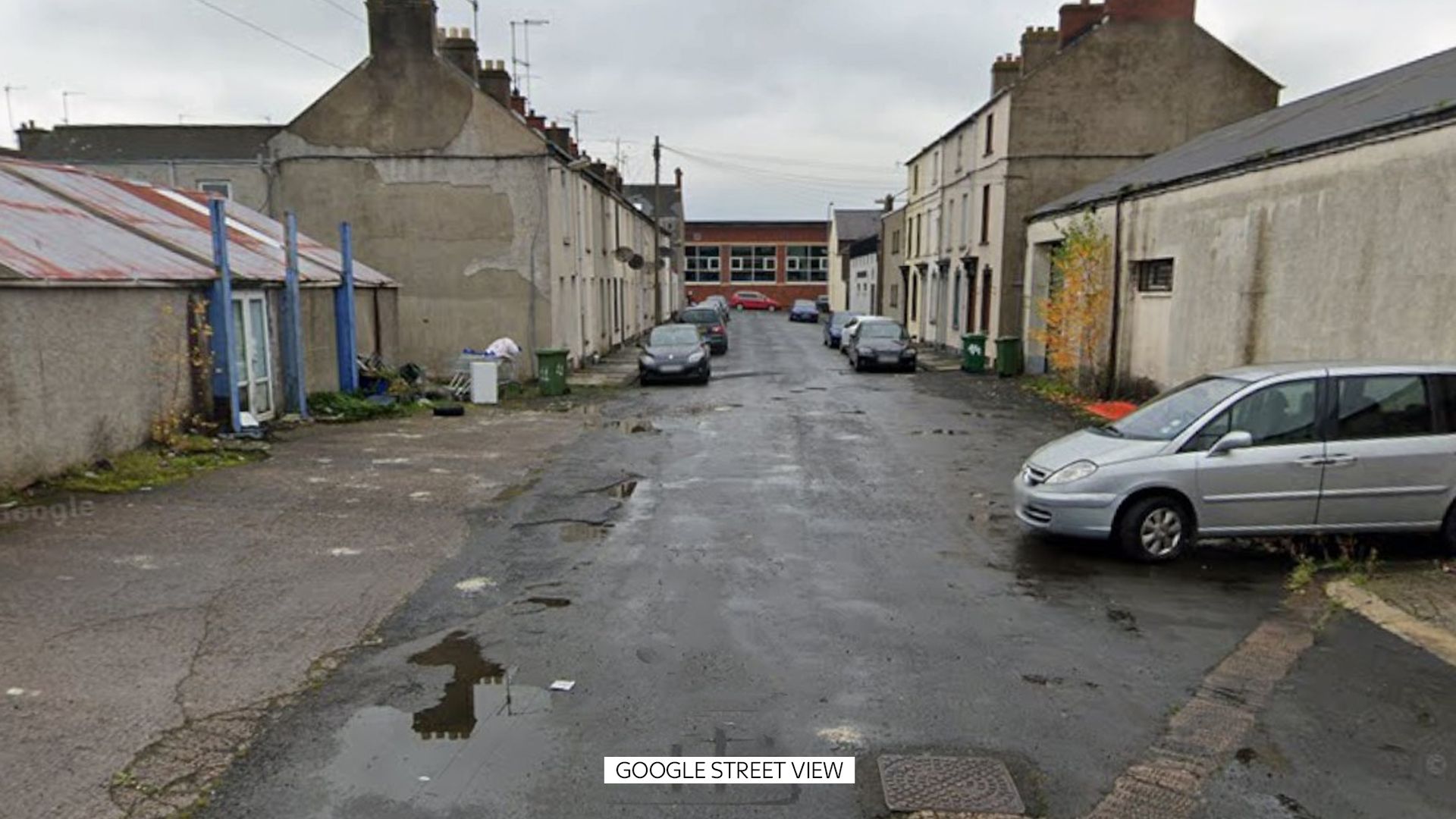
Morning usually arrives in Portadown with a distinct rhythm. The rustle of damp leaves along the Bann, the metallic clatter of shutters rolling up on high street storefronts, the heavy, sweet scent of turf smoke drifting from chimney pots into the damp air. It is a town built on quiet persistence, a place where people know the exact cadence of their neighbors' footsteps against the pavement.
Until the rhythm breaks.
Emergency services do not arrive quietly in the dead of night. They tear through the dark with flashing amber and white lights that slice across bedroom ceilings, casting frantic shadows against wallpaper. Sirens wail, cutting through the heavy County Armagh air with an urgency that forces every sleeping resident to pull back a curtain, heart pounding, wondering whose door the flashing lights are stopping in front of this time.
On a stretch of road just outside town, the night did not just break. It burned.
The Heat of the Unknown
Fire is an aggressive element. It does not negotiate. It consumes.
When the call came in, the details were agonizingly sparse, the kind of fragments that emergency dispatchers pass along when the full picture is still obscured by smoke and chaos. A vehicle ablaze. Flames leaping into the canopy of darkness. The frantic, desperate work of firefighters battling an inferno that turned a familiar machine into a cage of glowing metal.
People often forget how quickly ordinary objects can become terrifying. A car is an extension of daily life. It takes us to work, brings our children to football practice, carries the quiet weight of our private thoughts during the Friday evening commute. We strap ourselves inside them with absolute trust in rubber, steel, and glass.
Then comes the exception.
As the sirens faded and the hiss of cooling water finally replaced the roar of the blaze, the reality of the scene emerged from the wreckage. A body. Inside.
This is the moment where news reports usually retreat into clinical detachment. They use passive verbs. They state that an investigation is underway. They offer badge numbers, jurisdiction names, and cautious confirmations that local authorities are treating the incident with the utmost seriousness. It keeps the horror at a safe distance. It allows us to close the browser tab, pour another cup of coffee, and return to the illusion of our own safety.
But safety is a fragile contract.
The Anatomy of Silence
Consider what happens next in a place like Portadown when a tragedy refuses to be easily categorized.
The police tape goes up. Red and white stripes snapping in the morning wind, marking a boundary between the living and the unthinkable. Forensic teams arrive in white protective suits, moving with mechanical precision among the ash and soot. Every movement is deliberate, searching for answers hidden within the charred skeleton of the vehicle. Was it a mechanical failure? A tragic collision? Something far more deliberate and dark?
The answers do not come quickly. Science takes time. DNA profiling, ballistics, vehicle telemetry analysis, and toxicology reports do not move at the speed of a breaking news notification. They crawl forward in sterile laboratories, piece by agonizing piece.
During that lag between the sirens and the press release, a vacuum opens up. And human nature rushes in to fill it.
Rumors ripple through local coffee shops and across digital screens. People ask questions that have no answers yet. Who was driving? Where were they coming from? Why didn't they get out?
(Note: In reconstructing the emotional weight of such an event, we must rely on the universal behavioral patterns of tight-knit communities facing sudden trauma, even when specific personal identities remain unconfirmed by officials.)
We lean toward narrative because our brains rebel against randomness. We want a cause and effect. We want a villain or a cruel twist of fate, anything to make sense of a charred car on a quiet road. Because accepting that a life can be extinguished in a flash of heat and smoke, without warning or reason, is too terrifying to sit with comfortably.
The Weight We Carry
There is an invisible geography to every town. There are spots where people stop to talk, and spots where people speed up, eager to leave the shadows behind.
That stretch of road in Portadown will carry a new memory now. It will no longer just be asphalt connecting point A to point B. It will be marked in the collective mental map of the community as the place where the unthinkable happened. Drivers will ease their foot off the accelerator as they pass it, glancing sideways through their windows, searching for ghosts in the daylight.
We look for signs. We look for meaning. We look for reassurance that the people we love will make it home tonight when they turn the ignition key.
The investigation continues beneath the surface of official statements. Detectives pore over CCTV footage from nearby junctions, tracing the final known movements of the car. Pathologists look for clues written deep within bone and tissue. Every piece of evidence is a whisper from the past, trying to explain how a routine journey ended in the ultimate silence.
The smoke has long since cleared from the tarmac. The wreckage has been towed away to a secure yard, reduced to twisted fragments of steel waiting for a forensic examiner's final verdict.
Yet the questions remain, hanging heavy in the air like the mist rising off the Bann.
We walk past the spot. We check our own locks. We hold our breath for just a second longer when we see flashing lights in the rearview mirror. And we remember that life is lived on a razor's edge, suspended precariously over an abyss of the unknown.