Silence.
That is the first thing you notice when a ballistic missile arcs toward a modern metropolis, not the explosion, not the siren, not even the frantic vibration of a smartphone on a mahogany desk, because for three endless seconds between the flash in the upper atmosphere and the arrival of the sound wave, an entire city holds its breath in collective, paralyzed disbelief.
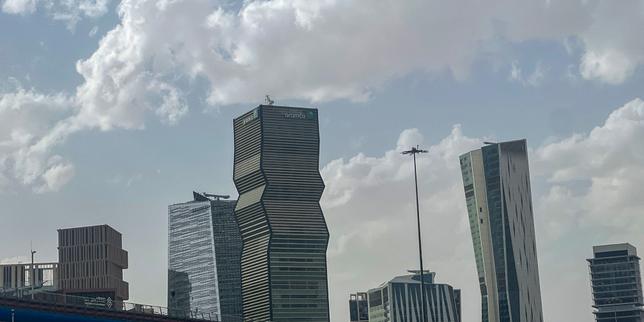
In the King Abdullah Financial District of Riyadh, where angular towers of steel and faceted glass rise out of the desert like a mirage engineered by sovereign wealth, people do not expect the sky to fall. They expect quarterly earnings reports. They expect sovereign fund allocations, fintech conferences, espresso machines hissing in lobby cafes, and the quiet, climate-controlled hum of a nation attempting to reinvent its entire economic destiny before the oil runs out.
Yet on a clear Arabian night, two ballistic missiles tore through that illusion, aimed directly at the financial heart of Saudi Arabia before air defense batteries intercepted them high above the city streets.
The Anatomy of an Invisible Shockwave
To understand what happened over Riyadh, you have to step away from the cold, clinical language of military communiques. A press release will tell you that two ballistic projectiles were neutralized by Patriot defense systems, that debris scattered across residential neighborhoods, and that no casualties were reported. It reads like a weather bulletin. Clean. Contained. Over.
It is never over for the people standing beneath the canopy of fire.
Consider a hypothetical character—let us call him Tariq—a thirty-four-year-old risk analyst who moved back to Riyadh after six years in London, lured by the promise of Vision 2030 and the electric ambition pulsing through the capital's new financial district. Picture Tariq standing near the floor-to-ceiling windows of his apartment just kilometers from the KAFD skyline, nursing a glass of water before midnight. Outside, the city glows in amber and neon, a monument to concrete permanence.
Then the horizon turns magnesium white.
A ballistic missile does not travel like an airplane; it falls like a meteor. Launched from hundreds of kilometers away, it climbs into the thin air at the edge of space before plunging downward at several times the speed of sound. Think of an interceptor missile as trying to hit a supersonic rifle bullet with another rifle bullet in pitch darkness, using only radar echoes and split-second trigonometry to calculate where two trajectories will collide miles above human heads. When they meet, they do not simply vanish. They detonate in a violent, kinetic bloom that turns tons of aerospace aluminum and high explosives into white-hot confetti.
For Tariq, watching that double flash bloom through his window, the abstract concept of geopolitical risk suddenly acquires teeth. A few seconds later, the sonic boom hits the glass, rattling the window frames in their tracks with a deep, visceral thud you feel in your ribcage before your ears even register the noise. Car alarms erupt in unison across three city blocks. Somewhere down the street, a chunk of twisted metal—spent booster casing or shattered warhead housing—crashes onto asphalt, sparking like a downed power line.
What the Sirens Actually Target
Why aim at a financial district?
Military strategists will tell you that the King Abdullah Financial District is a soft target with hard symbolic value. It is not a refinery in the Eastern Province, nor is it an airbase along the southern border. It is a gleaming, crystalline promise made to global investors, multinational banks, and foreign executives: Come here. Build here. Your capital is safe behind these glass walls.
Every skyscraper in KAFD represents a multi-billion-dollar bet on stability. When Houthi militants in Yemen—or any regional adversary operating across the jagged fault lines of Middle Eastern proxy warfare—launch ballistic missiles toward Riyadh's financial core, they are not trying to level a building with two warheads. They know the odds of penetrating a multi-layered air defense shield are slim. They are targeting confidence itself.
Confidence is a fragile currency. You can spend a decade and half a trillion dollars constructing a shimmering urban oasis with air-conditioned skywalks and monorails, and a single night of ballistic interceptions can force every boardroom from Zurich to Singapore to quietly open a spreadsheet labeled Geopolitical Contingency.
I remember the strange, heavy fog that settles over a city the morning after an interception. You walk outside expecting rubble, expecting chaos, and instead you find baristas wiping down counters and traffic moving along King Fahd Road as usual. That contrast is deeply disorienting. On the surface, nothing has changed; the glass towers still catch the morning sun, sharp and unblemished. Underneath, an invisible shift has occurred in how every person in that city relates to the sky above them. You start looking up when a heavy truck rumbles over a bridge. You notice the exact distance between your desk and the interior stairwell. You realize, perhaps with a quiet pang of vulnerability, that modern civilization is separated from raw violence by nothing thicker than a software algorithm running inside a radar trailer on the edge of town.
The Economics of a Shielded Sky
People often ask how a country defends a sprawling metropolis against attacks launched from over a thousand kilometers away, and what happens when those defenses are tested. The answer lies in an expensive, exhausting game of asymmetric arithmetic.
An attacker can assemble a long-range ballistic missile using smuggled components, rudimentary machine shops, and external technical blueprints for a fraction of the cost of modern aerospace engineering. Meanwhile, defending against that single incoming threat requires an integrated network of early-warning satellites, phased-array radars, command centers, and interceptor missiles—such as the American-made Patriot PAC-3 systems deployed around Riyadh—where a single interceptor rocket can cost upwards of three to four million dollars.
Do the math. Two incoming missiles. Two, three, or four interceptors fired to guarantee destruction. In less than sixty seconds, millions of dollars burn away in the upper atmosphere just to preserve the status quo.
This is the hidden tax of regional instability, and it falls squarely on nations trying to pivot away from resource extraction toward a diversified, knowledge-based economy. You cannot build a global tourism hub or a premier regional headquarters for Fortune 500 companies while your airspace is intermittently contested. Every multinational firm considering relocating its regional hub to Riyadh weighs tax incentives and sovereign contracts against the insurance premiums required to cover executive staff in a city within range of ballistic fire.
Consider what happens next in the quiet rooms where those decisions are made. Nobody cancels a multi-year infrastructure deal overnight because two missiles were shot down. Life goes on, contracts get signed, and cranes keep swinging over the desert. Yet risk committees demand higher returns to compensate for uncertainty. Supply chains build in extra redundancies. Security consultants suddenly find their calendars booked solid for six months. The financial district remains standing, untouched by the blast, yet subtly altered by the mere fact that the attack was attempted.
Living Inside the Paradox
There is a profound psychological tension in living inside a modern boomtown situated on the edge of a long-running regional conflict. Historically, cities under threat looked like fortresses—thick stone walls, narrow windows, darkened streets under curfew. Riyadh today is the exact opposite: an open, luminous, hyper-modern expanse built on radical optimism.
That optimism is not naive; it is deliberate. During the Gulf War in 1991, when Scud missiles first streaked toward Riyadh, residents taped cardboard over their windows and huddled in basements listening to shortwave radios. Three decades later, during these interceptions, thousands of people walked out onto their balconies with iPhones raised, filming streaks of light crisscrossing the night sky and uploading the footage to social media within seconds.
Part of that reaction comes from trust in an air defense network that has intercepted hundreds of incoming drones and missiles over the past several years. When a shield holds time after time, fear gradually curdles into a strange, detached familiarity. People watch an interception the way coastal residents watch a hurricane offshore—tracking the path, checking the alerts, and hoping the eye stays out at sea.
Still, familiarity is not immunity. When metallic debris falls into residential courtyards, puncturing roofs and shattering windshields in quiet neighborhoods where children sleep, the illusion of distance collapses. Even a successful interception carries gravity. Everything that goes up into the mesosphere must eventually come down, and physics does not care whether a falling chunk of steel belonged to the attacker or the defender.
The Weight of a Quiet Morning
By noon the following day, the Saudi Ministry of Defense releases its formal statement confirming the interception above the capital, condemning the attack on civilian infrastructure, and reassuring the public that life continues uninterrupted. International wire services pick up the dispatch, condense it into four paragraphs, and push it across news tickers between currency exchange rates and oil futures.
Brent crude ticks up half a percent, then settles back down. The markets shrug. To global algorithms trading on supply and demand, a thwarted attack that leaves oil terminals untouched is barely a ripple.
Yet for the people riding the high-speed elevators inside the King Abdullah Financial District that afternoon, looking out through tinted glass at the endless beige horizon stretching toward the horizon, the world feels slightly less solid than it did twenty-four hours earlier. They drink their coffee, review their portfolios, and draft memos about sustainable urban growth and digital transformation, all while knowing that miles away across the desert, someone is already welding the next fuselage, fueling the next booster, and calculating the trajectory back toward the glass towers.
The sirens stop, the smoke drifts away on the desert wind, and the skyline gleams untouched in the afternoon glare—a pristine monument of steel and ambition standing beneath a sky that will never quite feel empty again.