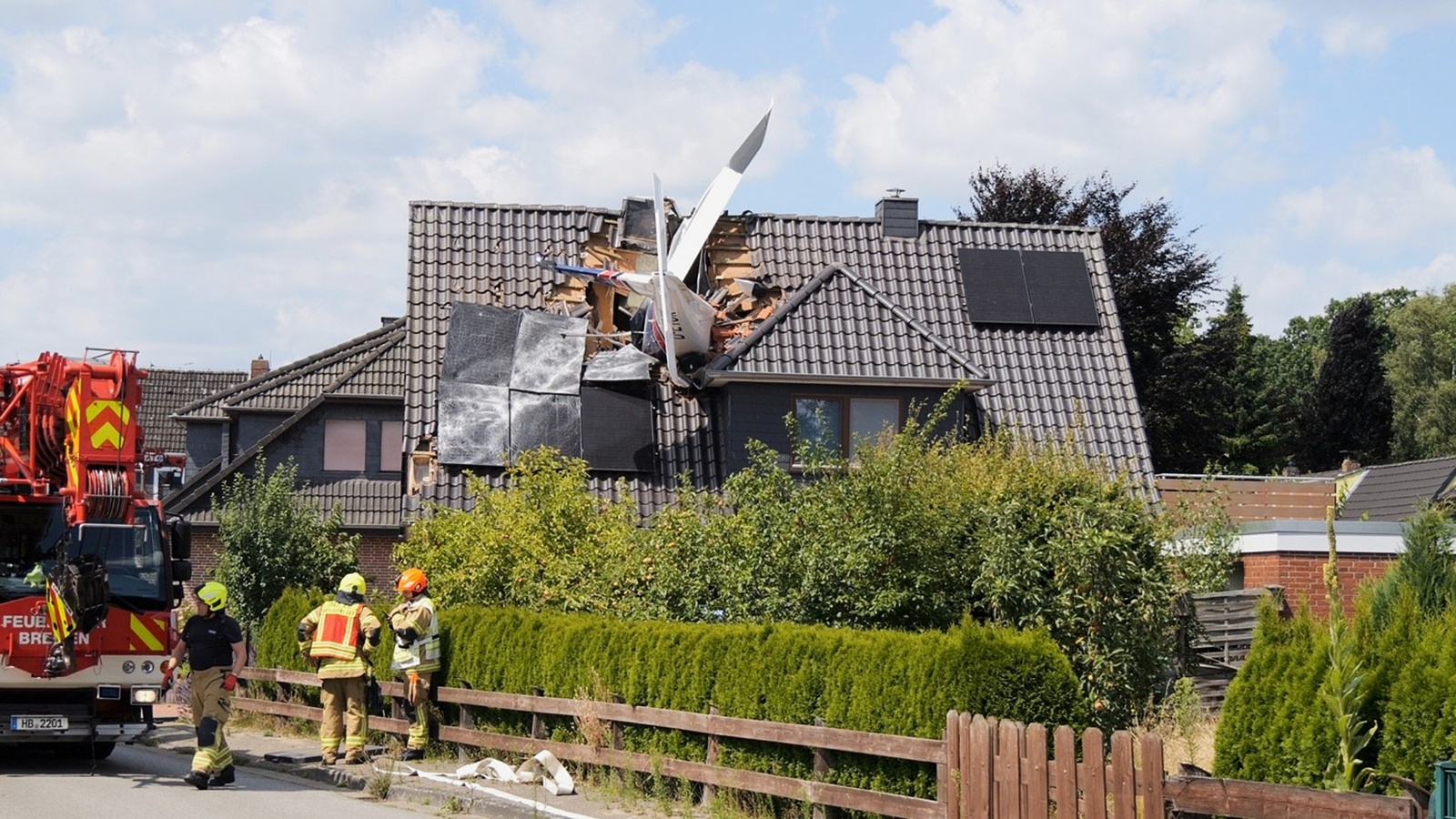
Quiet mornings in Ganderkesee usually belong to the wind rustling through the North German plain and the distant hum of traffic on local roads. On a Saturday that began like any other, that stillness shattered. A residential neighborhood in Lower Saxony transformed into the epicenter of a sudden nightmare when a small aircraft plummeted from the sky and embedded itself directly into the roof of a single-family home.
The transition from peace to catastrophe takes mere seconds.
According to police authorities in nearby Oldenburg, the light aircraft lost altitude for reasons still entirely unknown. There was no grand warning. No dramatic distress call echoing through public airwaves ahead of time. Just an abrupt, violent intersection of aviation and domestic life. The plane carried two people on board. When emergency services cut through the chaos to secure the site, the devastating human toll began to surface: at least one life was lost, and rescue personnel scrambled through the debris searching for a second individual.
Consider the sheer improbability of the geometry. The earth is vast, open fields stretch for miles across Lower Saxony, yet gravity chose a populated street. A roof designed to shelter a family from rain and wind became the final barrier for a falling machine.
Miraculously, the residents of the home were not inside when the impact occurred. They were elsewhere, entirely unaware that their private sanctuary was absorbing an aviation disaster. That single detail—a matter of timing, of being five minutes late or leaving ten minutes early—stands as the thin red line between total tragedy and a harrowing structural loss.
Yet the shockwaves of such an event do not respect property lines. Within a one-hundred-meter radius, authorities ordered immediate evacuations. Families were rushed away from their living rooms and kitchens, thrust onto the asphalt with little more than the clothes on their backs. Power lines along the entire stretch of the road were abruptly killed, plunging the neighborhood into an eerie, functional darkness as emergency vehicles flooded the lane.
Crisis intervention teams were rapidly deployed. Their role is specialized, dealing not with twisted metal or leaking fuel, but with the invisible wounds carved into the psyches of those who watched the sky fall into their backyard. Neighbors stood behind police tape, staring up at a fuselage jutting out of roof tiles, confronting the sudden fragility of the ground beneath their feet.
An investigation by regional authorities and aviation experts is now underway to untangle the mechanics of the descent. Wind patterns, mechanical failure, or sudden medical emergencies in the cockpit will all be weighed, measured, and analyzed. Investigators will look at data logs and wreckage vectors.
Data cannot capture the sound. It cannot measure the immediate terror of a neighborhood jolted out of a lazy weekend morning.
As night falls over Ganderkesee, the blinking red lights of emergency responders illuminate the shattered roof tiles. The road remains dark, sealed off from the world. Two people boarded a small aircraft with hopes, plans, and destinations, only to collide with an empty house on a quiet German street. The investigation will eventually yield an explanation, but the quiet of that neighborhood will take a very long time to return.