The asphalt of Havana smelled of melted tar and sea salt on the morning of October 14, 1960. For decades, the local attendants at the Esso service station on the Avenida de Menocal had wiped down windshields, checked oil dipsticks, and pumped fuel derived from crude that arrived at the Belot refinery across the bay. The station was a small cog in the sprawling machinery of Standard Oil, the American corporate titan.
By sunset, the signs were being painted over.
Fidel Castro’s young revolutionary government had run out of patience with American industry. With a signature on a decree, the refinery, the storage terminals, and 117 service stations vanished from the company’s balance sheets. They were absorbed into the newborn state enterprise, Unión Cuba-Petróleo. No checks were written. No handshakes were exchanged. The Americans packed their briefcases, boarded flights back to Miami or Houston, and left behind assets valued by the U.S. government a few years later at exactly $71.6 million.
For more than six decades, that number sat in the ledger books of corporate history like a fossil frozen in amber. Standard Oil became Exxon Mobil. The Soviet Union fell, Cuba survived on rations, and the service stations grew rusted and sun-bleached under the Caribbean glare.
Then came a quiet Tuesday in Washington.
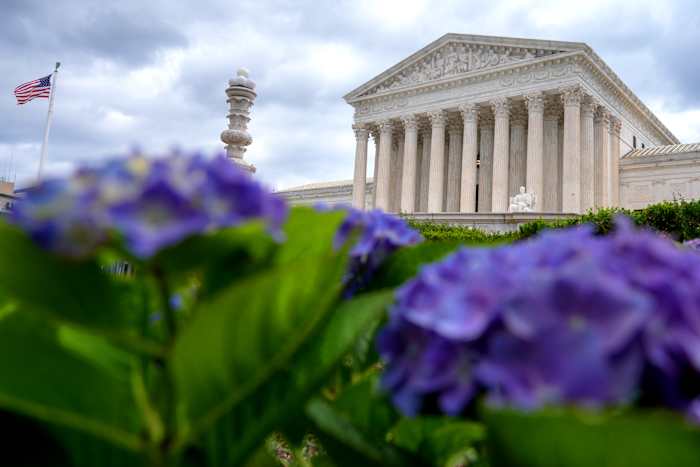
The United States Supreme Court, in a sharp 6-3 decision, stripped away the legal armor that has protected Cuba’s state-owned enterprises from American lawsuits for generations. The ruling allows Exxon Mobil to drag Cuba’s state oil company and its commercial conglomerates into a federal courtroom. The corporate titan is finally coming to collect on a debt that has been compounding interest since the height of the Cold War.
To understand why this matters, you have to look past the monolithic name of Exxon Mobil and look at how international law actually operates. For centuries, a bedrock principle known as foreign sovereign immunity has governed global relations. It is a simple concept: you cannot sue a foreign government in your own domestic courts. If an American citizen has a grievance against France, they cannot simply file a lawsuit in Ohio. If they could, global trade would collapse under the weight of retaliatory litigation.
But in 1996, Congress grew tired of the rules.
Following an incident where Cuban fighter jets shot down two civilian aircraft operated by Miami-based exiles, lawmakers drafted the Helms-Burton Act. Deep inside that legislation sat Title III. It gave American citizens and corporations the explicit right to sue any entity—including foreign companies or state-owned industries—that "traffics" in property stolen by the Cuban government.
For twenty-three years, Title III was a ghost law. Every American president, from Bill Clinton to Barack Obama, looked at the chaos it would unleash on international allies and chose to sign a waiver every six months, keeping the provision frozen. They feared it would alienate European and Canadian partners who had invested heavily in modern Cuba.
The freeze broke in May 2019. The Trump administration, seeking to choke the financial life out of Havana, let the suspension lapse. Exxon Mobil filed its lawsuit the very same day.
The legal battleground centers on companies like Corporación CIMEX, a massive Cuban state-run conglomerate that handles everything from retail stores to financial remittances, and Unión Cuba-Petróleo. Exxon Mobil alleges that these enterprises are actively profiting from the infrastructure built by Standard Oil generations ago. Every time a delivery truck fills its tank or a state-owned refinery processes a barrel of crude using those legacy sites, the company argues, Cuba is trafficking in stolen goods.
Cuba’s defense relied entirely on the traditional shield of sovereign immunity. They argued that the 1996 law did not explicitly smash the ancient legal protections foreign states enjoy in American courts. A lower court agreed with them.
Writing for the conservative majority, Justice Brett Kavanaugh rejected that view completely. He argued that it would make little sense for Congress to give the executive branch the power to greenlight these lawsuits while simultaneously allowing foreign states to escape through a sovereign immunity trapdoor.
In a pointed dissent, Justice Elena Kagan, representing the court's three liberals, argued that the text of the 1996 law simply lacked the precise language required to dismantle that immunity. The law, she suggested, did not bridge the gap.
The immediate financial stakes are staggering. That original $71.6 million claim from 1960 has been accumulating a six percent annual interest rate for sixty-six years. Today, that math pushes the valuation past $3 billion. Because the Helms-Burton Act allows for treble damages—a legal mechanism that multiplies the penalty by three to punish willful non-compliance—the total liability could theoretical soar toward $9 billion.
Cuba does not have $9 billion to spare. The island nation is currently enduring its worst economic crisis since the collapse of the Soviet bloc, crippled by chronic fuel shortages, food scarcity, and rolling electricity blackouts.
The real power of the Supreme Court's decision is not the immediate transfer of billions from Havana to Irving, Texas. It is the precedent it sets for the thousands of others waiting in the wings. Exxon Mobil is not an isolated case. The U.S. Foreign Claims Settlement Commission has certified nearly 6,000 distinct claims from American individuals and businesses whose homes, sugar mills, hotels, and small shops were seized during the revolution. These claims total roughly $1.9 billion before interest.
Consider a hypothetical family: descendants of an exile who owned a modest cigar factory in Camagüey, now watching a European hotel chain or a Cuban state enterprise operate on the ground where their grandfather once paid workers. For decades, their anger was a private family grievance. Now, it is a viable lawsuit in a federal district court.
This ruling acts as a financial blockade enforced by the judiciary. Any foreign corporation—whether a Spanish hotel group, a Canadian mining firm, or a French logistics giant—must now weigh the benefits of doing business in Cuba against the risk of being sued in the United States and seeing their American assets seized to satisfy a multi-million-dollar judgment.
The long-term consequence is the slow, deliberate untethering of Cuba from global commerce. By turning the American legal system into a collection agency for historical grievances, the court has ensured that the ghosts of 1960 will continue to dictate the economic realities of the Caribbean for decades to come.
The service station on Avenida de Menocal still stands, its pumps modified to dispense state-rationed fuel to ancient Soviet Ladas and crumbling American Chevrolets. The paint is peeling, and the original Standard Oil logos are long gone, buried beneath decades of state propaganda and socialist murals. The physical property remains anchored to the Cuban soil, but its economic value has just been repossessed in a courtroom twelve hundred miles away.