The fluorescent light in a Jerusalem apartment kitchen hums at a frequency that only becomes audible at three in the morning.
On the table sits a cold glass of tea, a stack of crumpled newspapers, and a pocket calculator. Across from each other sit two people who have spent the last twenty years building a life together, now divided by the arithmetic of a single number. Sixty-one.
In the mathematics of the Knesset, Israel’s 120-seat parliament, sixty-one is not merely a majority. It is oxygen. Without it, a government cannot breathe, a budget cannot pass, and a prime minister cannot govern. For years, outsiders have read the dry dispatches about Israeli elections as an endless, dizzying loop of coalition negotiations, proportional representation, and party splintering. They see percentages and seat projections. They miss the sound of the refrigerator humming in the dark while ordinary people try to figure out whether their children will be drafted, whether their taxes will fund a neighbor's seminary, and whether their country will still recognize itself by sunrise.
Consider a hypothetical family—let us call them the Mizrahis—living in a modest walk-up in Beersheba. Avi, forty-eight, runs a mid-sized logistics firm that has spent the past three years navigating supply-chain shocks, reserve duty call-ups, and rising interest rates. His wife, Yael, teaches high school civics, a job that has quietly transformed from explaining how democracy works to defending why it still matters. When they walk into the local elementary school to drop their paper slips into the blue ballot box, they are not voting for a candidate in the way an American or a Briton understands it. They are throwing a single pebble into a shifting mosaic, knowing full well that the final picture will be assembled behind closed doors weeks after the polls close.
No single party in Israel’s seventy-eight-year history has ever won an outright majority. Not once. The system was designed at the birth of the state to ensure that every voice—secular, ultra-Orthodox, Arab, nationalist, socialist—had a seat at the table. Think of it like a crowded family dinner where everyone has veto power over the menu, and nobody is allowed to leave until the bill is paid. With a 3.25 percent electoral threshold, a party needs roughly four seats just to enter the room. Once inside, the real game begins.
And right now, that game comes down to four distinct paths, four competing visions of who holds the keys to the Prime Minister’s Office in Jerusalem—and what Avi and Yael’s life will look like depending on which door swings open.
The Fortress Holds
Walk through the bustling Machane Yehuda market in Jerusalem on a Friday afternoon, and you can feel the gravitational pull of the first scenario before you ever see a polling chart. The air smells of roasted coffee, warm rugelach, and diesel exhaust. Here, loyalty is not an abstract political preference; it is memory, identity, and survival.
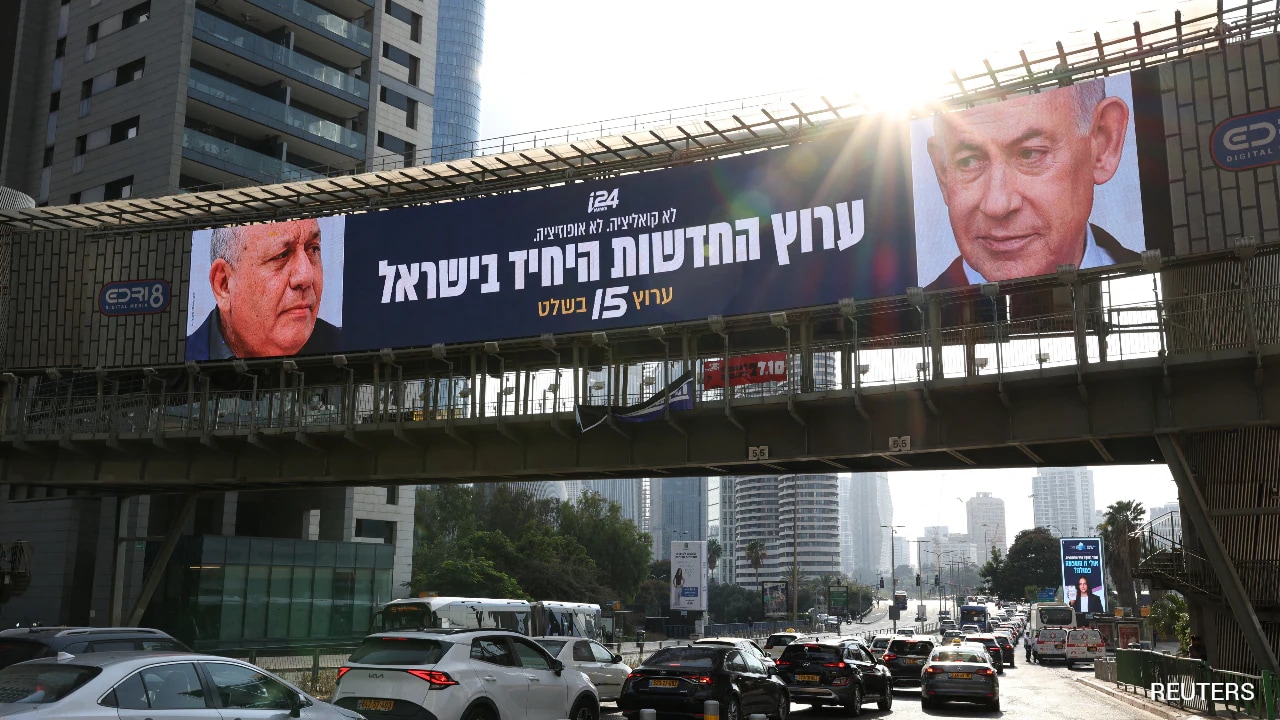
In this first outcome, the incumbent right-wing and religious bloc—anchored by Benjamin Netanyahu’s Likud alongside its ultra-Orthodox and religious-nationalist partners—manages to scrape together those elusive sixty-one seats. On paper, pundits repeatedly write the political obituary of this coalition, pointing to public exhaustion, ongoing legal battles, and bitter disputes over military conscription. Yet dismissing the durability of this bloc is like betting against the tide because you dislike getting your shoes wet.
If this coalition holds, the consequences ripple straight into Avi’s logistics warehouse in Beersheba. Under this government, the balance of power stays firmly tilted toward the coalition’s ideological flanks. Subsidies for Haredi institutions remain intact, keeping the fragile peace with ultra-Orthodox leadership, even as secular reservists like Avi’s twenty-two-year-old son shoulder hundreds of days of military service. Meanwhile, judicial overhaul legislation—paused during moments of acute national crisis—finds new oxygen, promising to reshape the balance between the Knesset and the Supreme Court.
For voters who back this path, the choice is clear and unsentimental. They view a unified right-wing government as the only bulwark against international pressure and regional instability. They do not want an experimental coalition held together by duct tape and mutual hatred of one man. They want continuity, strength, and leaders who speak the language of deterrence without apology. Yet for Yael, grading papers at her kitchen table, a continued right-wing majority feels like watching a train accelerate toward a bend where the tracks haven't been inspected.
The Big Tent Rises Again
A forty-five-minute drive west down Highway 1 brings you to Tel Aviv, where the humidity clings to your skin and the political mood shifts like wind off the Mediterranean. Sit at a sidewalk café on Rothschild Boulevard, and you will hear the second scenario debated with fierce, caffeinated urgency.
Here, the dream is an anti-Netanyahu coalition—a broad, ideologically contradictory alliance spanning center-left liberals, secular centrists, and disaffected right-wingers who believe the current leadership has outlived its mandate. We saw a version of this happen in 2021, when Naftali Bennett and Yair Lapid stitched together eight wildly disparate parties, including, for the first time in Israeli history, an independent Arab party, Ra'am. That government lasted barely a year before collapsing under the weight of its own contradictions, yet its brief existence proved that the impossible could be done.
To understand how a big-tent coalition works, imagine trying to drive a car where one person controls the steering wheel, another operates the pedals, and a third insists on reading a map from 1995. It moves, sometimes surprisingly fast, until someone spots a fork in the road.
If this bloc captures sixty-one seats, the immediate relief among Israel’s secular middle class and high-tech sector—which accounts for roughly a fifth of the country’s GDP and over half of its exports—would be palpable. Foreign investors, rattled by years of institutional uncertainty, would exhale. International diplomatic ties, particularly with Washington and European capitals, would likely warm overnight. Legislation would quickly pivot toward universal military or national service, aiming to ease the crushing burden on reserve soldiers like Avi’s son.
Yet honesty demands admitting what keeps Yael awake at night when she considers this scenario. A coalition united primarily by what it opposes struggles terribly when forced to decide what it actually stands for. What happens when a crisis erupts in the West Bank, or when the budget requires cutting billions from sacred cows? Without a shared ideological core, every Tuesday afternoon vote becomes an existential threat. The big tent keeps the rain out, right up until the wind blows from two directions at once.
The Kingmakers in the Margins
There is a third possibility, one that rarely makes headlines in foreign newspapers until the exact moment it detonates every carefully laid plan.
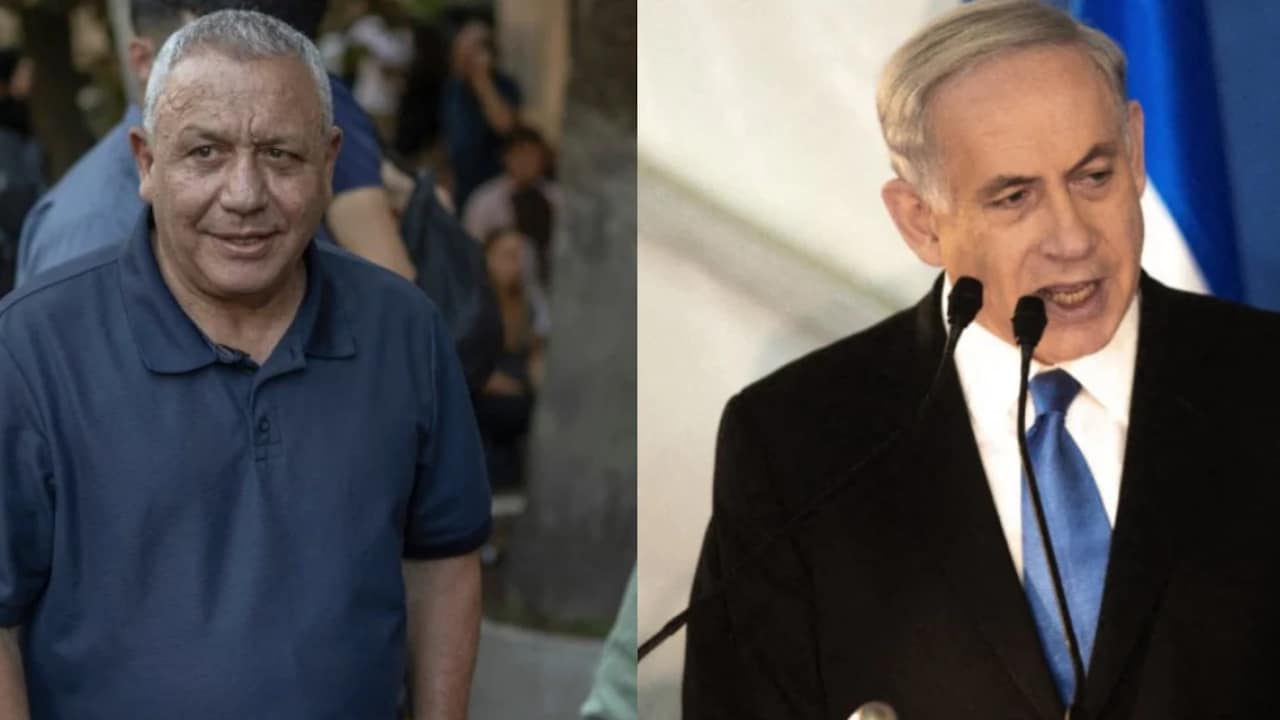
In Israel’s proportional system, the giants do not always decide the winner. Often, the fate of the nation rests in the hands of a mid-sized faction sitting squarely in the center-right—leaders like Avigdor Lieberman, Benny Gantz, or a resurgent national-liberal movement—who refuse to pledge allegiance to either camp until the ballots are counted.
Think of this as the auction house scenario. Neither the right-wing religious bloc nor the center-left opposition reaches sixty-one seats on its own. Both stand at fifty-five, fifty-six, fifty-seven—stranded just shy of the shoreline. Suddenly, a party holding six or seven seats becomes the most valuable real estate in the Middle East.
I remember standing outside the Knesset plaza during a previous deadlock, watching the black sedans pull up to the VIP entrance at midnight. Reporters huddled under umbrellas in the cold Jerusalem drizzle, refreshing their phones every ten seconds, trying to read the body language of aides walking out of closed-door meetings. Nobody was talking about grand visions of peace or sweeping economic philosophy. They were trading ministries like baseball cards. Finance. Defense. Interior. Education.
For Avi and Yael, this scenario is both fascinating and deeply unsettling. On one hand, a kingmaker party can enforce moderation, blocking extreme legislation from either flank and demanding pragmatic compromises on the economy and public security. On the other hand, it hands disproportionate power to a faction that may have won less than ten percent of the national vote. Democracy begins to feel less like the will of the people and more like a high-stakes poker game played with someone else’s chips.
The Abyss of Repeat Ballots
Then there is the fourth scenario. Nobody campaigns for it. Every politician swears they will prevent it. And yet, like a recurring fever, Israel knows it all too well.
Deadlock.
Between April 2019 and November 2022, Israelis went to the polls five times in less than four years. Five campaigns. Five sets of billions of shekels burned on billboards, television ads, and administrative costs. Five stretches of caretaker governments legally barred from passing new state budgets or making long-term strategic appointments while the world kept spinning.
How does a country end up trapped in an electoral loop? It happens when mutual vetoes cancel out every possible mathematical combination. One party refuses to sit with Netanyahu; another refuses to sit with Arab factions; a third refuses to compromise on religious status-quo laws. You run the numbers on the pocket calculator at three in the morning, and every equation ends in fifty-nine or sixty. Never sixty-one.
Exhaustion sets in.
In Beersheba, Avi stops watching the evening news. Not out of apathy, which is a luxury, but out of self-preservation. When a democracy runs on caretaker budgets, hospitals delay new wings, municipalities freeze infrastructure projects, and small business owners like Avi hold off on hiring because nobody knows what tax policy will exist six months from now. Voter turnout begins to erode, not everywhere equally, but selectively—tilting the outcome toward the most disciplined, ideological blocs while the exhausted center stays home.
Why the Arithmetic Matters Beyond the Borders
It is tempting, from thousands of miles away, to treat Israeli coalition politics as an exotic parlor game—a quirky parliamentary puzzle best left to political scientists and regional correspondents. That would be a mistake.
The decisions forged inside those 120 seats determine the trajectory of the entire Eastern Mediterranean. They dictate whether regional normalization agreements expand or freeze, how Gaza and Lebanon are managed, how tens of billions of dollars in defense and technology partnerships flow, and what kind of society Israel chooses to be as it approaches its eighth decade. Is it a liberal democracy anchored by independent courts and broad civic inclusion, or a nationalist-religious state where traditional institutions yield to majoritarian will?
That question is not theoretical. It lives in the tremor of Yael’s voice when a student asks whether their vote actually changes anything, and she has to look them in the eye and tell them the truth.
Yes, it matters. Even when the system feels broken. Especially when the system feels broken.
Back in that quiet Jerusalem kitchen, the blue glow of dawn finally begins to bleed through the blinds, turning the black windowpane gray. The tea is cold. The newspaper is folded back to the election map, creased along the fault lines of a country still arguing over its own definition. Down the hall, a bedroom door creaks open, and the small, rhythmic footsteps of a child pad across the tile floor toward the light, waiting to see what kind of morning the adults have built.