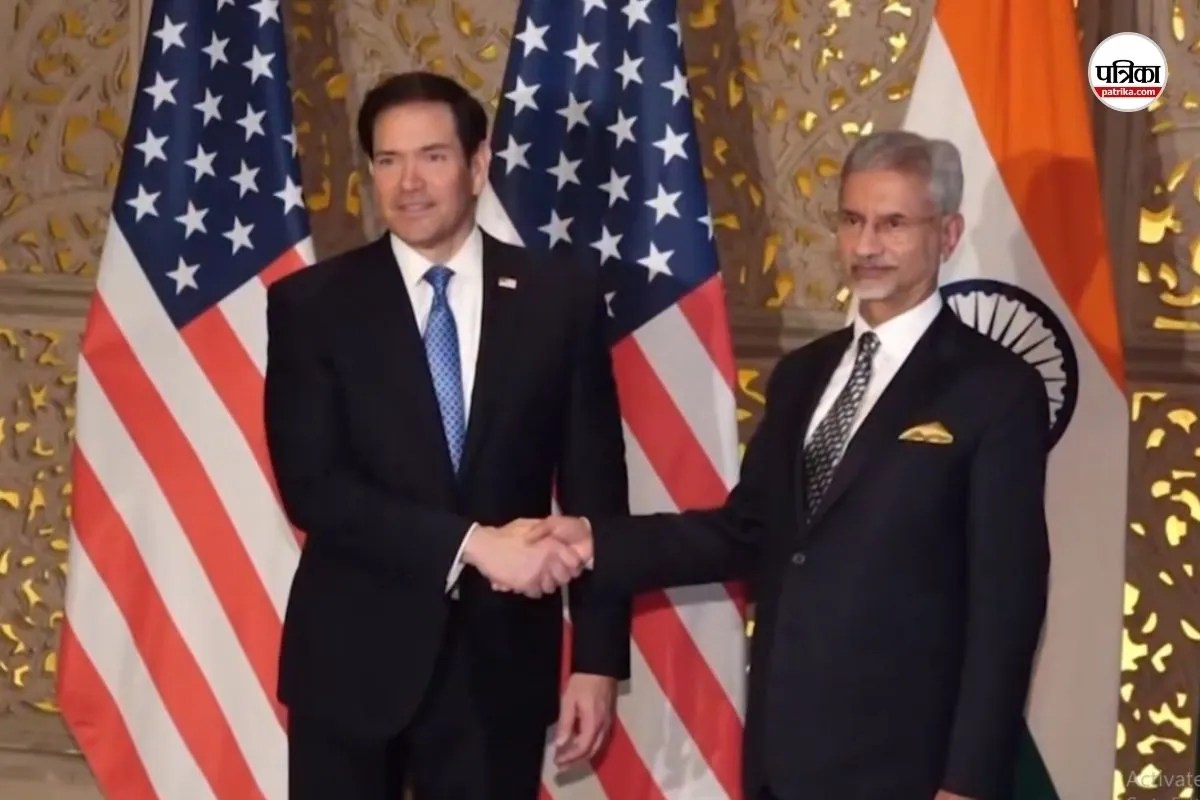
Two rivals sit at the same table. Cameras flash. A foreign minister says "dialogue, not troops." Headlines treat it as a breakthrough.
It isn't.
Read the lazy consensus around summits where figures like Marco Rubio and Sergey Lavrov share a room while S. Jaishankar urges talks over military force. The story writes itself every time: Look, adversaries are talking! Diplomacy is working!
That reading is comforting. It is also shallow.
A table does not create peace. A microphone does not erase strategic friction. When great powers or rival blocs sit across from one another and hear a call to resolve disputes through negotiation rather than arms, nobody in that room suddenly forgets their core interests. They simply adjust their posture for the cameras—and for the next round of pressure.
The Myth of the Magic Table
Pundits love theater. Put two sharp-edged geopolitical figures in the same hall, add a seasoned diplomat advocating restraint and dialogue, and commentators start grading the seating chart like a sports scorecard.
Watch how the standard coverage plays out. First comes the dramatic framing: two opposing camps face off. Next comes the moralizing takeaway: talk beats gunfire, patience beats escalation, and middle powers or strategic swing states point the way out of conflict.
I have spent years watching high-stakes negotiations collapse right after warm press statements. I have seen teams burn months drafting joint communiques while the underlying dispute quietly hardened behind closed doors. A polite exchange at a multilateral forum rarely resolves a zero-sum clash over security, spheres of influence, or economic leverage. Often, it just buys time.
Let's get precise about what diplomacy actually is. In international relations, diplomacy is not a substitute for power. It is a transmission belt for power. As realists from Hans Morgenthau to Henry Kissinger argued—and as modern practitioners know well—talks succeed when both sides recognize the cost of fighting or walking away. When one side believes time or force favors its position, "let's talk" can easily become a stalling tactic.
Consider the phrase "dialogue instead of military action." As a moral appeal, it sounds unimpeachable. As a strategy, it is incomplete. Military pressure and diplomatic negotiation are not opposite poles on a neat moral scale. They are two levers on the same machine. A country with credible deterrence negotiates from strength. A country calling for talks without leverage risks being treated as a helpful messenger rather than a decisive broker.
Imagine a scenario where two border rivals agree to hold regular talks while both keep troop rotations near the frontier and expand defense procurement. Talks continue for years. Nothing blows up immediately, yet nothing fundamental is settled either. Calm headlines mask unresolved friction.
That is the trap the lazy consensus misses. It mistakes activity for progress.
Why "Talk Instead of Force" Is Only Half the Equation
When S. Jaishankar or any other foreign minister urges dialogue over military escalation, they are speaking from a specific strategic vantage point—one shaped by sovereignty, multi-alignment, trade exposure, and the desire to avoid being dragged into someone else's war.
That stance makes sense for a state trying to protect its autonomy in a fractured world. It is smart positioning. It is not a universal formula that forces warring parties to lay down their arms.
Ask the wrong question, and you get useless answers. Most readers look at a headline like that and ask: Does this mean tensions are cooling down?
A sharper question is: What changes on the ground tomorrow morning because these people spoke today?
Usually, very little.
What People Actually Want to Know—And Why the Usual Answers Fail
When a high-profile meeting like this hits the news, search behavior follows a predictable pattern. People want quick certainty in an uncertain world. Here is how the common questions stack up against reality.
- "Are adversaries moving toward a peace deal?" Almost certainly not from a single table appearance. Serious settlements require painful concessions, verification mechanisms, and domestic political cover. Photo-ops and broad calls for talks do not provide those.
- "Does calling for dialogue mean military force is off the table?" No. States routinely talk at the diplomatic table while funding arms, hardening supply chains, and preparing contingencies. Talk lowers the immediate temperature; it does not remove deterrence.
- "Can an outside voice or strategic partner talk both sides into compromise?" Only up to a point. Mediators and non-aligned powers can keep channels open, lower miscalculation risks, and protect trade lanes. They cannot manufacture trust between rivals whose core security fears collide.
The blunt truth is uncomfortable for anyone who wants neat resolutions: talks without leverage are just noise.
The Mechanics Behind High-Stakes Diplomacy
To understand why a call for dialogue matters—and where its limits sit—strip away the slogans and look at the mechanics.
1. Signaling Without Commitment
A meeting in a shared venue lets officials test tone, read body language, and send signals without binding their governments. Saying "talk rather than fight" signals moderation to domestic audiences and international partners. It costs almost nothing in the short term.
2. Asymmetric Stakes
Washington, Moscow, New Delhi, and other major capitals do not face identical risks in every theater. One capital may prioritize alliance credibility; another may prioritize energy security, regional stability, or economic autonomy; another may prioritize buffer zones and strategic depth. When stakes are asymmetric, a shared call for dialogue can mean completely different things to each party in the room.
3. The Credibility Test
Words only move behavior when backed by consequences. If a party believes walking away from talks carries zero real penalty—or that holding out yields better terms—polite persuasion hits a wall. Real breakthroughs happen when the status quo becomes too expensive for the key players to keep.
Where This Contrarian View Can Go Wrong
Fairness requires admitting the blind spot in my own argument. If you treat every diplomatic statement as cynical theater, you can miss real inflection points.
History shows that backchannels, face-saving formulas, and repeated low-grade contacts sometimes lay quiet groundwork before a surprise thaw. Dismissing every call for dialogue as empty posturing can blind observers to subtle shifts in tone, trade-offs, or crisis guardrails. Even when a meeting produces no grand treaty, preventing a miscalculation still has real value.
So the error isn't caring about dialogue. The error is pretending a single meeting—or a single well-phrased plea for talks—solves deep structural rivalry on its own.
What Actually Works When Tensions Run High
If you follow geopolitics, run a global business, or make decisions exposed to international shocks, stop reacting to summit optics. Do this instead:
- Track actions, not speeches. Watch sanctions enforcement, defense budgets, logistics routes, and diplomatic follow-through over the next 90 days. Speeches are cheap; resource allocation tells the truth.
- Map incentives, not intentions. Ask what each side gains or loses if talks succeed versus if talks drag on. Stalemate often serves someone's interest.
- Price in friction early. Build supply-chain redundancy, currency buffers, and scenario plans assuming disputes linger longer than headlines suggest. Hope is not a risk-management strategy.
- Separate crisis management from conflict resolution. Keeping lines open to stop a spark from becoming a fire is smart. Assuming that stops the underlying rivalry is naive.
A room full of heavyweights and a clear call for talks over force can keep a conversation alive. It cannot force history to bend.


