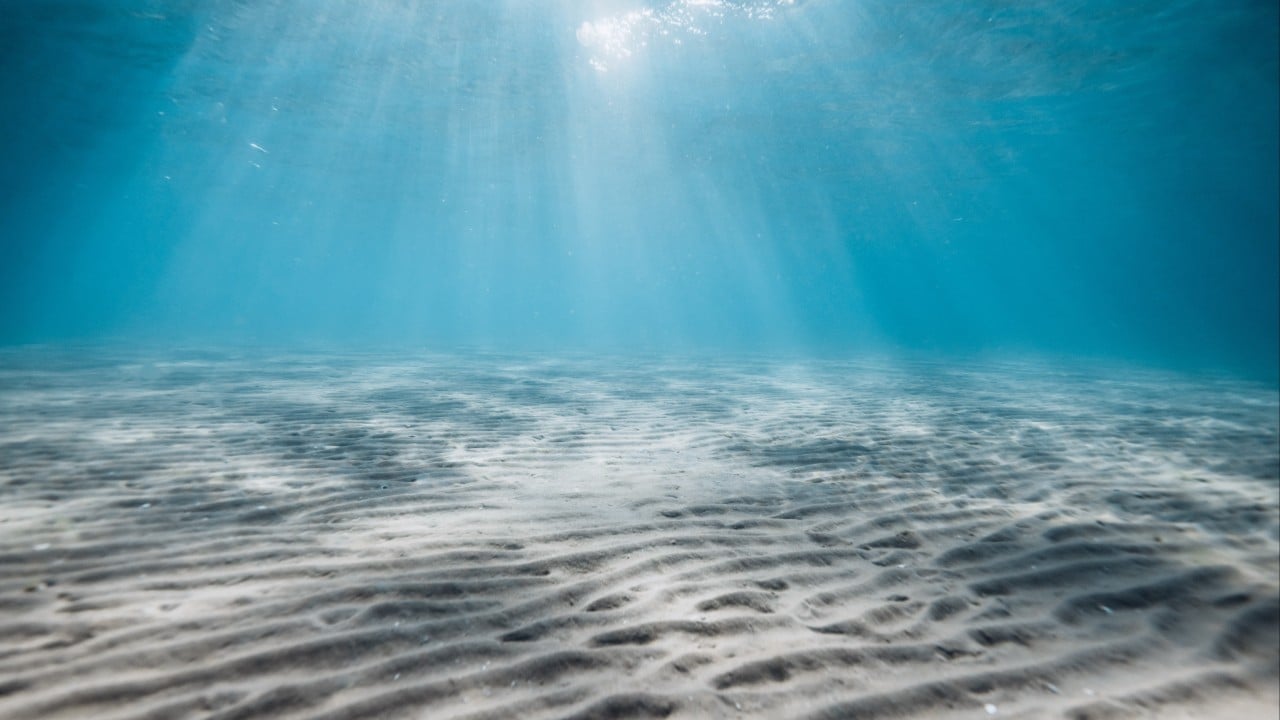
Salt stings the back of your throat when you stand at the edge of a deep-water trench, looking out over a midnight-blue expanse that seems to go on forever. To anyone standing there, the ocean looks infinite. Untouchable. A blue blanket hiding a quiet, ancient world where nothing much changes.
We think of the sea as a sanctuary.
We are wrong.
Four miles straight down, where the sun has never touched water and the pressure is enough to crush a submarine into scrap metal, the floor is paved with treasure. Potato-sized nodules of nickel, cobalt, copper, and manganese lie scattered across the abyssal plains like dark, metallic gravel. They grew there over millions of years, atom by atom, feeding on minerals sinking from the surface. They are the vitamins of the modern electric age. Every battery in every electric vehicle, every wind turbine rotor, and every advanced defense system hungers for these elements.
And someone has to go down and get them. Or so the argument goes.
Meet Chen, a hypothetical deep-sea mining engineer sitting in a dimly lit control room in Qingdao. Outside his window, the Yellow Sea laps quietly against the concrete piers. Inside, bathed in the blue glow of a dozen monitors, Chen is staring at a monitor showing a monstrous, tracked vehicle crawling across the pitch-black floor of the Clarion-Clipperton Zone in the central Pacific. The machine weighs more than a locomotive. As its treads chew into sediment that hasn't been disturbed since the dinosaurs walked the earth, it kicks up plumes of suffocating silt. Behind it, a massive vertical pipe slurps up the mineral-rich nodules, sending them roaring up through four miles of open water to a waiting extraction vessel.
Chen loves his work. He believes he is building the green future. He looks at his screen and sees the raw materials of wind farms and zero-carbon grids.
He does not see the geopolitical tripwire he is stepping on.
Because while Chen's drill is grinding away at international seabed, thousands of miles away in Washington and Beijing, lawyers and diplomats are sweating over a different kind of pressure. A legal pressure. A sovereign pressure.
Here is what most people miss about the oceans. We treat the high seas as a global commons, a wild frontier where anyone with enough money can stake a claim. But the United Nations Convention on the Law of the Sea, known widely as UNCLOS, drew a different map. It established the International Seabed Authority, giving it a mandate to manage the floor of the deep ocean on behalf of all humankind.
Except for one glaring, monumental contradiction.
The United States never ratified UNCLOS.
Read that again. The world's leading superpower, a nation driving the rush for critical minerals, sits outside the very treaty that governs the international seabed. It is a legal ghost in international waters. American companies want to mine the deep. They have the technology, the capital, and the desperate need for supply chains independent of foreign dominance. Yet, by operating outside the treaty framework, their actions exist in a legal gray zone that other nations view not just as unregulated, but as fundamentally illegal.
And this is where the plot thickens. This is where a study published by legal scholars and policy analysts stops being an academic PDF and starts reading like a declaration of economic warfare.
Could China sanction the United States over illegal international seabed mining?
A study says yes.
The logic is as cold as the water four miles down. If American firms or corporations backed by US interests begin dredging the international seabed without authorization from the International Seabed Authority—an organization where Beijing holds immense strategic influence—they are, under international law, pillaging a global commons.
Imagine the retaliation. It won't start with warships firing missiles. That belongs in Hollywood. Real modern conflict is fought in tariff codes, port restrictions, asset freezes, and retaliatory sanctions. China dominates the processing of critical minerals globally. If US entities pull raw manganese and cobalt from the seabed illegally, Beijing has the legal scaffolding, courtesy of international environmental and maritime law, to slap severe sanctions on any shipping line, insurance company, or financial institution touching those minerals.
The supply chain snaps. The batteries don't get built.
Consider what happens next.
The energy transition stalls. Wall Street panics. Washington retaliates with its own trade barriers. A race for green energy turns into a scramble for seabed turf, fought with legal briefs and economic blockades. All because we couldn't agree on who owns the dirt at the bottom of the world.
We have a habit of treating environmental law like boring paperwork, something to be skimmed by lawyers with too much coffee on a Tuesday morning. But law is armor. Law is a weapon. When you strip away the bureaucratic jargon, international maritime law is a loaded pistol waiting for someone to give it an excuse to fire.
The ocean floor is not a vacuum. Every scoop of sediment brought to the surface carries an ecological cost we barely understand—smothering unique benthic life forms, disrupting ancient carbon sinks, and releasing noise pollution that deafens whales across ocean basins. But the human cost, the economic fallout of nations weaponizing the seabed against one another, might be even more devastating.
We are standing at a precipice. On one side lies our hunger for a clean energy future, driving us deeper into the dark, unknown reaches of the planet. On the other lies a fragmented, paranoid global order where every resource extraction is viewed as an act of aggression.
Chen turns off his monitor in Qingdao, rubbing his tired eyes. The shift is over. The machine four miles down keeps crawling, blind and heavy, chewing through a silent world, completely unaware of the storm it is brewing right above the surface.
The water is deep. The stakes are higher. And we are running out of time to figure out who owns the bottom of the world before we tear the top apart fighting over it.


