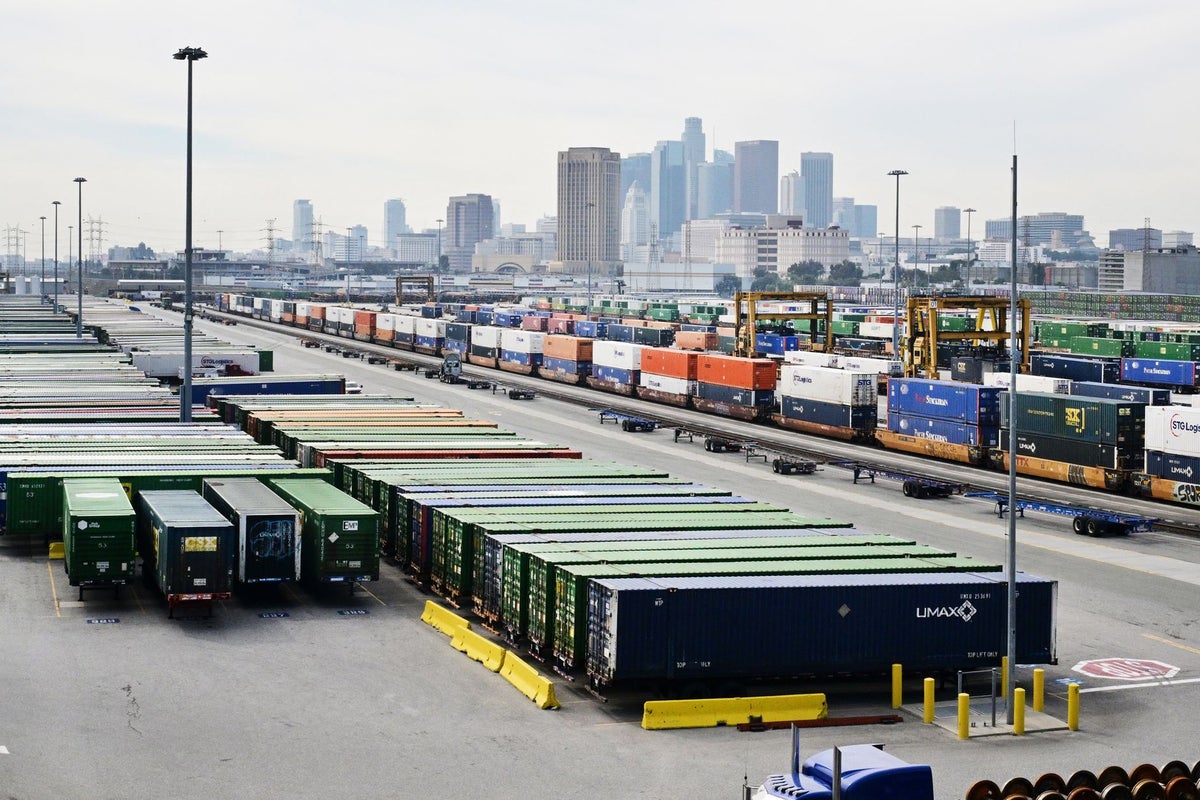
The steel floor of a freight car on a midsummer afternoon in South Texas does not just absorb heat. It becomes an furnace.
Inside, the air turns thick, wet, and impossible to breathe. There are no windows. There is no breeze. There is only the dark, locked interior of a metal box sitting motionless on a spur of track while the sun beats down from above.
When federal agents finally broke the seal on a rail car in San Antonio, they found seven bodies. Seven human beings who had paid thousands of dollars for the promise of a quiet passage North, only to be left to suffocate when the logistics of human transportation went wrong.
Last week, federal prosecutors unsealed an indictment charging eleven people for their roles in that operation and a network of connected smuggling rings. The indictment lists charges of conspiracy, reckless endangerment, and illegal transportation resulting in death. On paper, it reads like a standard federal criminal docket. Numbers, dates, charges, names.
Behind those legal documents lies an ecosystem built entirely on desperation and logistics.
The Business of Freight and Flesh
Human smuggling across the southern border has shifted dramatically over the past decade. What once operated as small-scale, localized guide networks—often referred to as coyoteros—has transformed into a heavily structured, multi-tiered business model.
Traffickers treat human cargo with the same cold calculations used by commercial shipping firms. They calculate weight, route efficiency, fuel costs, and law enforcement detection probabilities.
To understand how seven people ended up locked inside a freight car, you have to look at how the supply chain works. A family in Central America or southern Mexico sells livestock, mortgages land, or borrows from local lenders to secure passage. The price tag often ranges between eight thousand and fifteen thousand dollars per person.
That money flows upward through a chain of brokers, safehouse managers, drivers, and lookouts. Each layer takes a fee. Each layer delegates risk downward to the person carrying out the physical transfer.
The safehouses are often ordinary suburban houses or rural mobile homes tucked away in border towns like Laredo, McAllen, or Eagle Pass. Dozens of people are crowded into small rooms without adequate water or sanitation, waiting for their assigned slot in a northbound vehicle.
Then comes the transit phase.
Sometimes it is the back of a tractor-trailer. Sometimes it is a locked shipping container loaded onto a northbound train. In either case, the people inside are entirely dependent on individuals who view them not as passengers, but as inventory.
Inside the Sealed Car
Imagine the physics of a steel container parked in the Texas sun.
When the exterior temperature hits ninety-five degrees Fahrenheit, the internal temperature of an unventilated steel box can breach one hundred and thirty degrees in less than an hour. Humidity spikes as trapped occupants sweat and panic. As oxygen depletes, carbon dioxide builds up.
Confusion sets in first. Then severe cramps, heat exhaustion, and heat stroke.
The occupants beat on the steel walls, but the walls of a freight yard are thick, and trains move through industrial corridors where heavy machinery drowns out human voices.
When law enforcement officers finally opened the doors, the scene was a disaster of human suffering. Seven people dead. Others barely conscious, suffering from severe organ damage caused by extreme hyperthermia.
The eleven individuals named in the indictment filled distinct roles in this operation. Some were recruiters who gathered migrants in Mexico. Others were local drivers who moved people from river crossings to storage locations. A few were the coordinators who arranged for access to rail cars and commercial trucks.
For the organizers, a single successful shipment generates hundreds of thousands of dollars in profit. A failed shipment—even one that results in multiple deaths—is treated as an operational loss. A bad batch of inventory.
The Illusion of Enforcement
When the Department of Justice announces an indictment against eleven smugglers, it is framed as a major victory against criminal cartels. Prosecutors stand at podiums. Press releases detail the statutory maximum sentences, which can include life in prison or the death penalty.
It feels like justice. But it rarely alters the underlying market.
The fundamental flaw in treating human smuggling purely as a law enforcement issue is that it ignores the economic vacuum driving the supply chain. As long as millions of people face extreme poverty, violence, or political collapse in their home countries, the demand for passage will remain infinite. And as long as legal avenues for entry remain narrow and slow, people will pay illicit operators to find a way through.
When law enforcement breaks one network, another immediately fills the gap. The profit margins are too high for the market to remain vacant for long.
Increased border security often increases the danger of the journey rather than stopping it. As traditional crossing routes near urban ports of entry become heavily monitored with cameras, drones, and ground sensors, smugglers push their clients into ever more remote and dangerous terrain. They shift from foot treks through the desert to high-risk, sealed-container transit via commercial rail and highway freight.
The human cost rises in direct proportion to the complexity of the route.
The Names Beyond the Docket
Courts process defendants. They weigh evidence, listen to wiretap recordings, examine cell phone location data, and evaluate testimony from cooperating witnesses. The eleven people indicted in Texas will have their day in court. Some will take plea deals. Others may go to trial.
The legal system will fulfill its function.
Yet the seven people who died inside that rail car remain largely invisible in the public consciousness. Their names appear briefly in regional newspapers before fading beneath the relentless tide of daily news cycles.
They left home with specific, modest goals. To send money back so a daughter could attend school. To buy medicine for an aging parent. To escape extortion from local gangs. They paid their savings to men who made promises about safe passage and comfortable transport.
Instead, their journey ended in a desolate rail yard, surrounded by hot iron and silence.
The indictments brought down by federal authorities serve as a necessary reminder that those who profit from human misery can be held accountable. But as long as the underlying machinery of the smuggling economy remains profitable and intact, another steel door will be locked somewhere along the tracks tomorrow.