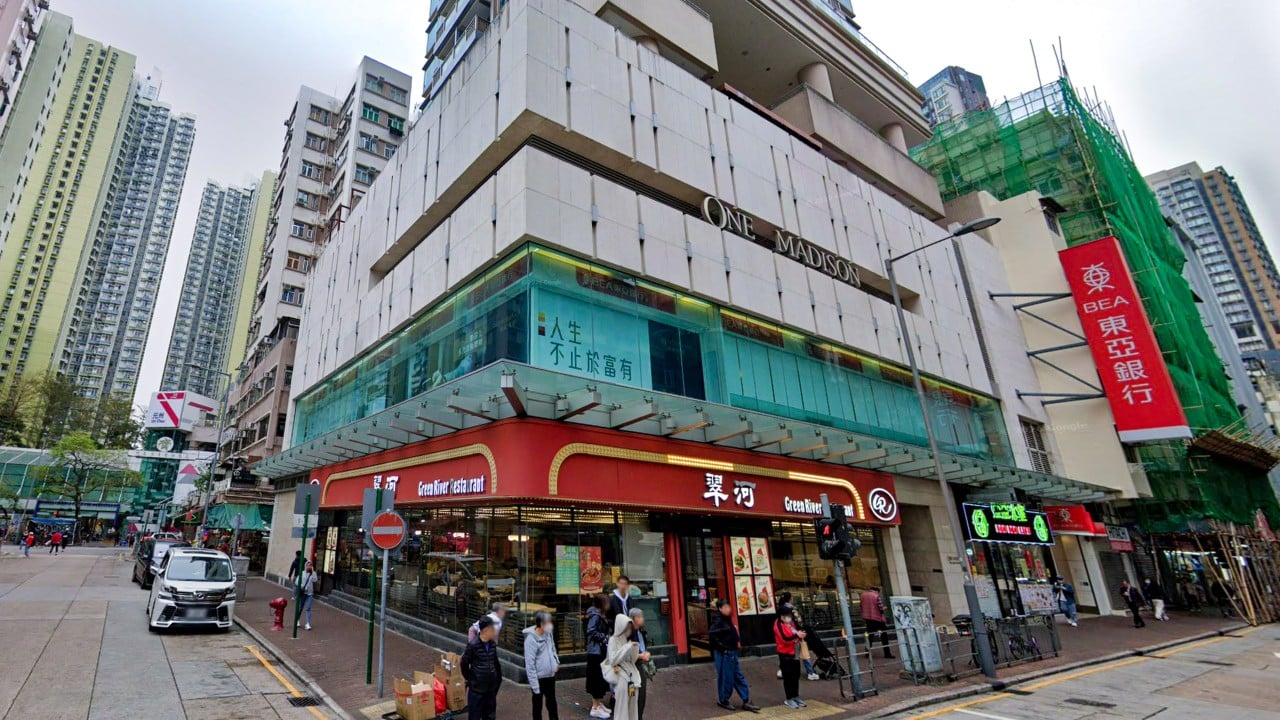
The air in the apartment block was heavy. It carried a scent that did not belong to the bustling rhythm of Hong Kong, that relentless hum of sizzling woks, rattling MTR trains, and the murmurs of seven million souls living stacked against one another like books on an overfilled shelf.
It was a smell that whispered of absence.
Neighbors on the floor had noticed it first. Days blurred into one another. In a city where life moves at a speed that forces people to look down at their phones rather than across the hallway at their neighbor’s door, a strange odor is often the last messenger to arrive before anyone asks if you are okay. When the police finally forced open the metal gate of the flat, they stepped into a silence that felt absolute.
Inside lay an elderly man, his life quietly extinguished in the shadows of a home he had likely occupied for decades. In the same stifling space, his wife was found alive, though barely. Dehydrated, disoriented, and marooned in her own living room, she was rushed to the hospital, suddenly thrust from silent isolation into the sterile glare of an emergency ward.
How does a tragedy of this magnitude happen in a place so crowded you can hear your neighbor turning the page of a newspaper through the concrete?
To understand, you have to look past the police tape and the brief newspaper blurbs that reduce a human lifetime to a single column inch. You have to look at the geometry of modern urban survival.
Hong Kong is a vertical labyrinth. Concrete towers pierce the clouds, housing hundreds of families within a single square block. On paper, everyone is connected. In reality, modern architecture often builds walls of indifference. We share elevators, mailboxes, and ventilation shafts, yet we remain profound strangers.
Consider the rhythm of aging in a metropolis that never learned how to slow down.
For many elderly couples, the world shrinks over time. The apartment door becomes a frontier too difficult to cross. Stairs become vertical cliffs; the street below becomes a roaring river of noise and danger. Their universe contracts from the entire territory down to a single living room, then to a chair, and finally, to each other.
They become their own ecosystem. They manage their frailties in private. They share quiet meals, fading memories, and the unspoken agreement that they will look after one another until the machinery gives out.
Until it gives out at the same time.
Or, worse, until one goes silently, leaving the other stranded without the physical strength to dial a phone, shout for help, or unlock a door.
In this specific flat, that fragile ecosystem shattered. One partner slipped away into the quiet dark. The other remained, trapped by immobility and grief, drifting through the hours in a daze of silence. Days passed. The mail piled up. The world outside kept rushing toward the Star Ferry, oblivious to the quiet catastrophe unfolding behind a locked wooden door.
This is not just an isolated incident involving two forgotten names in a police blotter. It is a symptom of a broader, quieter epidemic sweeping through the world’s hyper-dense cities: urban isolation among the elderly.
We talk endlessly about housing prices, infrastructure, and GDP growth. We measure our success in neon signs and skyline dominance. Yet, we rarely measure the depth of the void that opens up when a society grows old faster than its community bonds can adapt.
In traditional neighborhoods of decades past, neighbors knew when old Mrs. Wong didn't come out to water her jade plant in the morning. They knocked. They asked. They cared, not out of professional obligation, but because proximity demanded a basic level of human recognition. Today, the very design of our high-rises—secure, coded, gated, and soundproofed—locks us away from the lives of the people living twenty feet from our beds.
When the news broke, the initial public reaction followed a predictable script. Expressions of shock. Murmurs about how sad it is. A momentary flicker of unease before everyone scrolls down to the next headline, returning to their morning milk tea and commute.
We look away because confronting the reality of aging alone in a crowd is terrifying. It forces us to ask uncomfortable questions about our own trajectories. Who will notice when our steps grow too quiet? Who will check the mail when the boxes overflow?
The surviving wife now faces a reality far more daunting than physical recovery. She has returned to a home where the ghost of her companion lingers in every empty room, her physical anchor violently removed by circumstance. She sits in a hospital bed, surrounded by monitors and nurses, but the loneliness she feels is structural, permanent, and heavy.
We cannot legislate neighborly love. We cannot mandate empathy through municipal code. But we can change how we inhabit the spaces we share.
It begins with the simple act of breaking the script. A nod in the hallway. A deliberate knock on a neighbor's door just to ask if they need a carton of milk or a loaf of bread. A willingness to look up from the glowing glass in our hands and acknowledge that human beings live on the other side of our walls.
Because the true tragedy of the flat on that quiet afternoon was not just that an old man died, or that his wife suffered in silence.
The tragedy was that in a city of seven million people, it took a bad smell to remind us that they were even there.