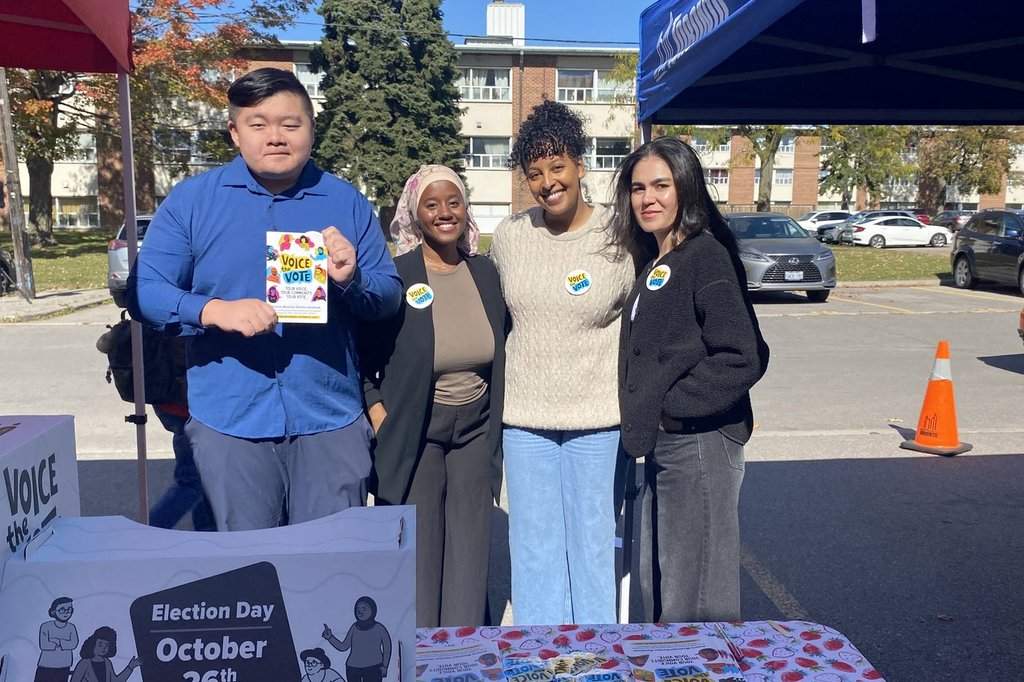
The coffee in the paper cup had gone cold hours ago. Outside the small community center in Toronto, rain drummed a steady, indifferent rhythm against the glass. Inside, beneath the harsh hum of fluorescent lights, Maria sat at a folding table with a stack of pamphlets that nobody was taking.
She knew the neighborhood. She knew the names of the children playing street hockey two blocks over, the names of the shopkeepers wrestling with rising commercial rents, the quiet anxieties of families stretching their paychecks until they snapped. She also knew that when election day arrived next week, a staggering number of her neighbors wouldn't bother to walk through those doors. For an alternative perspective, read: this related article.
Voter apathy is often described in sterile terms by political scientists—a drop in participation, a statistical variance, a failure of civic engagement. But on the ground, it looks like a kitchen table piled with bills, a shift worker exhausted from a twelve-hour day, or a young renter who feels invisible to City Hall. It feels like exhaustion.
To understand why a city stops voting, you have to look at the invisible disconnect between municipal policy and daily survival. When a resident feels that their neighborhood is changing without their consent—that transit lines bypass them, that green spaces shrink while concrete towers multiply, and that no matter who holds office, their grocery bill climbs—democracy begins to feel less like a tool and more like an empty promise. Related coverage on this matter has been shared by NBC News.
Community organizations across Toronto have stepped into this breach. Not with high-powered advertising campaigns or slick political consultants, but with sneakers on pavement and warm soup at grassroots meetings. They are trying to rebuild a bridge that has rotted from neglect.
Consider what happens when a grassroots group goes door-to-door in a high-rise apartment building where voter turnout traditionally hovers in the single digits. They don't talk about municipal governance structures or procedural bylaws. They talk about the elevator that has been broken for three weeks. They talk about the lack of safe crossing zones for school children. They connect the abstract concept of a ballot to the very concrete reality of a functioning neighborhood.
This is where the true battle for civic participation is fought. It is intensely local, deeply personal, and agonizingly slow.
Elections are won and lost in the margins. In many Toronto ridings, the margin of victory can be smaller than the seating capacity of a single neighborhood cafe. Yet, entire demographics remain systematically sidelined. Young voters, low-income earners, and immigrant communities frequently face structural barriers that go far beyond apathy. Language hurdles, rigid work schedules that do not accommodate polling hours, and a profound distrust of institutions that have historically ignored them all conspire to keep people away from the ballot box.
When people stop believing their voice matters, politicians stop listening. It becomes a self-fulfilling prophecy. Services dwindle in low-turnout areas, which deepens the cynicism, which drives turnout even lower.
Breaking this cycle requires more than a reminder postcard in the mail. It requires trusted messengers.
In a housing co-op in the city's west end, local organizers set up a pop-up kitchen last Tuesday. There were no microphones or podiums. Just food, warmth, and a conversation about what was broken and who had the power to fix it. A young man named David, who had never voted in a municipal election in his life, stood by the counter holding a registration form.
He didn't care about party platforms. He cared that his rent had jumped by an unsustainable amount and that his bus route had been cut. When someone showed him that his vote was a direct lever against those exact frustrations, his perspective shifted.
The work being done by these grassroots coalitions is not glamorous. It is exhausting, underfunded, and rarely makes the evening news. But it is the lifeblood of a functioning city. They are translating the dry language of civic budgets into the vernacular of everyday life.
Democracy was never meant to be a spectator sport handed down from City Hall. It is an argument among neighbors about the kind of place they want to live in. When the silence at the ballot box deepens, it drowns out the very voices that need to be heard the most.
The rain outside the community center finally slowed to a mist. Maria packed up her remaining pamphlets, her fingers stiff with fatigue, but she smiled as David walked out the door with a voter information guide tucked safely inside his jacket. The city is vast, complicated, and often frustratingly slow to change, but democracy, at its core, still belongs to the people who show up to claim it.