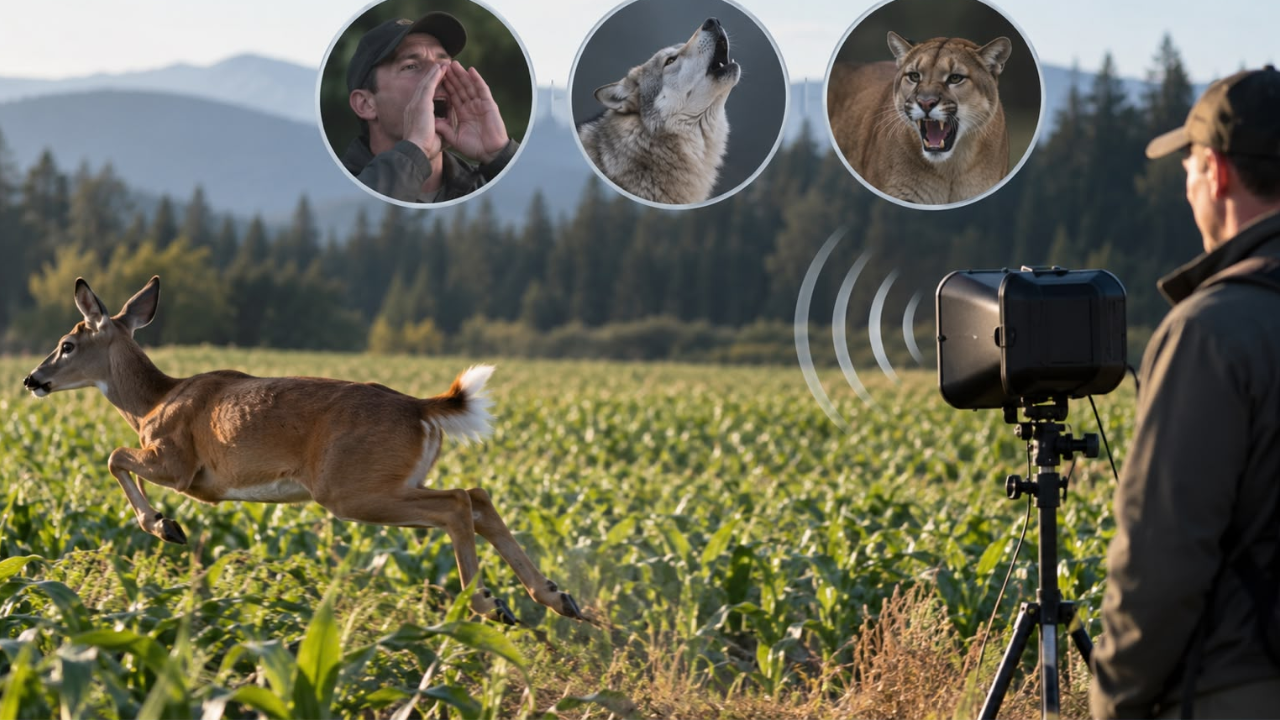
Every spring, suburban neighborhoods transform into amateur sound stages. Well-meaning property owners march out onto manicured lawns, clapping their hands, banging pots together, and screaming bloody murder at mild-mannered ungulates. The conventional wisdom peddled by garden forums and lazy extension office pamphlets is simple: scare them, and they will stay away.
It is absolute garbage. For a more detailed analysis into similar topics, we recommend: this related article.
I have spent the better part of two decades consulting on wildlife mitigation for commercial orchards, sprawling estates, and municipal green spaces. I have watched otherwise rational people spend tens of thousands of dollars on motion-activated sprinklers, ultrasonic noisemakers, and automated air cannons. The result is always the same. Within a fortnight, the local herd learns to graze peacefully right beneath the strobe lights while the noise cannon fires directly into their ears.
The standard narrative tells you that deer habituation is an unfortunate side effect of wildlife encountering human spaces. The truth is much worse. You are not scaring the deer. You are training them. By relying on unpredictable, short-term auditory and visual frights, you are running a high-end habituation academy that turns nervous woodland creatures into brazen, urbanized vacuum cleaners. For broader details on this development, comprehensive reporting can be read on Glamour.
The Biology of Indifference
To understand why human shouts and noise gadgets fail, you have to look past the panicked Facebook posts and examine how a cervid processes threat. A white-tailed or mule deer is a prey species with a neurological system optimized for one thing: energy conservation.
Every time a deer startles, its sympathetic nervous system floods its body with adrenaline. Heart rates spike. Cortisol surges. This physiological response is remarkably expensive in terms of metabolic energy. If an animal reacted with full-blown panic to every single harmless twig snap or loud human voice in its territory, it would literally starve to death within a month.
Evolution has hardwired these animals with a built-in filter called sensory adaptation. When a novel stimulus occurs—like a sudden shout or the mechanical hiss of a motion sprinkler—the deer investigates. If that stimulus is not followed by a tangible, physical consequence, the brain categorizes it as background noise.
You are teaching the deer that your voice has no teeth.
When you stand on your porch yelling at a doe eating your hostas, you are performing a biological cost-benefit analysis for her. On one side of the ledger: a high-calorie buffet of fertilized, watered perennial vegetation. On the other side: an annoying noise made by an upright ape standing fifty feet away behind a pane of glass or a cedar deck. She does the math in milliseconds. The hostas win every single time.
Why the Lazy Consensus Fails
The competitor article gets the symptom right and the mechanism entirely backwards. It claims that human shouts scare best because we are apex predators, but that habituation soon blunts the effect.
That premise crumbles under basic ecological scrutiny. Humans are not apex predators in modern suburbia. We are inefficient, stationary hazards. An apex predator hunts with stealth, patience, and lethal precision. A suburbanite yells from a sliding glass door while wearing a bathrobe, then goes back inside to watch television.
Deer are not stupid. They possess sophisticated spatial memory and generational cultural transmission. Mothers teach their fawns where the easy food is and which perceived threats are entirely toothless. When you rely on noise and motion alone, you create a boy-who-cried-wolf scenario across the entire local population.
Worse yet, you are disrupting the very predators that would do the job for you. Coyote packs, bobcats, and domestic dogs pose real physical threats to deer, particularly fawns. When you clutter the acoustic landscape with human shouting and cheap electronic deterrents, you mask the movement of actual predators, paradoxically making your yard a safer haven for browsers looking to escape real danger in the deeper woods.
The Uncomfortable Reality of Physical Exclusion
If you want to stop feeding the neighborhood wildlife, you have to abandon the fantasy of the magic bullet. There is no spray, no sound, and no light that will permanently alter a starving or convenience-driven herbivore's behavior without physical consequence.
The only method that reliably alters deer feeding patterns is absolute physical exclusion. I am talking about high-tensile fencing. Not the decorative three-foot picket fence you bought at the big box store to mark your property line. Deer can clear an eight-foot vertical barrier with room to spare if they are motivated, and they are always motivated by the smell of well-watered turf grass.
If you live in a high-density deer corridor, anything under eight feet is a suggestion, not a boundary. Slanted double-fencing works wonders if you lack the vertical clearance for a single towering barrier, as the optical confusion of depth prevents them from calculating a safe jump.
I know what you are thinking. Fences are expensive. Fences ruin the view. Fences are an admission of defeat against nature.
Good. Let that discomfort sink in. Gardening in a high-density wildlife zone is an exercise in ecological management, not interior design. If you refuse to install proper physical barriers, you must accept that your landscaping is a public pantry. Shouting into the night air makes you feel like you are doing something, but it is just emotional self-soothing.
The Olfactory Fallacy
Let us address the snake oil of the deterrent industry: commercial scent repellents. Walk into any nursery and you will see shelves lined with bottles containing putrescent egg solids, dried blood, coyote urine, and garlic oil.
The marketing promises that these concoctions will trigger an innate fear response. The reality is far more mundane. Scent repellents work through habituation degradation, meaning they degrade rapidly in the sun, wash away in the first morning dew, and require constant reapplication after every rain event.
More importantly, habituation strikes again. A deer might back off for twenty-four hours when confronted with the pungent stench of rotting animal protein. By day three, when hunger overrides caution, they test the boundary. By day five, they are happily munching your prize-winning roses while seasoning them with the very blood-meal spray you applied to keep them away.
Chemical deterrents are a tax on the hopeful. They operate on an intermittent reinforcement schedule, which is precisely the psychological mechanism that keeps gamblers pulling slot machine handles. Every once in a while, it rains right after you spray, or the wind shifts, and you think the product worked. In reality, the deer just moved to your neighbor's yard for a few days before returning.
Redefining the Problem
You are asking the wrong question when you search for ways to scare deer away. You should not be asking how to frighten them. You should be asking how to make your property economically unviable for them to visit.
Deer operate on a strict marginal value theorem. They forage to maximize caloric intake while minimizing energy expenditure and predation risk. If your yard requires them to navigate complex physical barriers or offers nothing worth the caloric expenditure of entry, they pass you by.
This means changing your planting palette. Stop fighting local ecology by planting candy-store ornamentals in open areas. Shift toward plants with high secondary compounds—resinous herbs, heavily textured leaves, toxic alkaloids, and plants with strong aromatic profiles like lavender, rosemary, boxwood, and ornamental grasses.
When you curate a landscape that respects local browsing pressures rather than fighting them with noise and fury, you reclaim your sanity.
Put down the pots. Stop embarrassing yourself on the back patio. Build a real fence, or learn to love sharing your hostas.