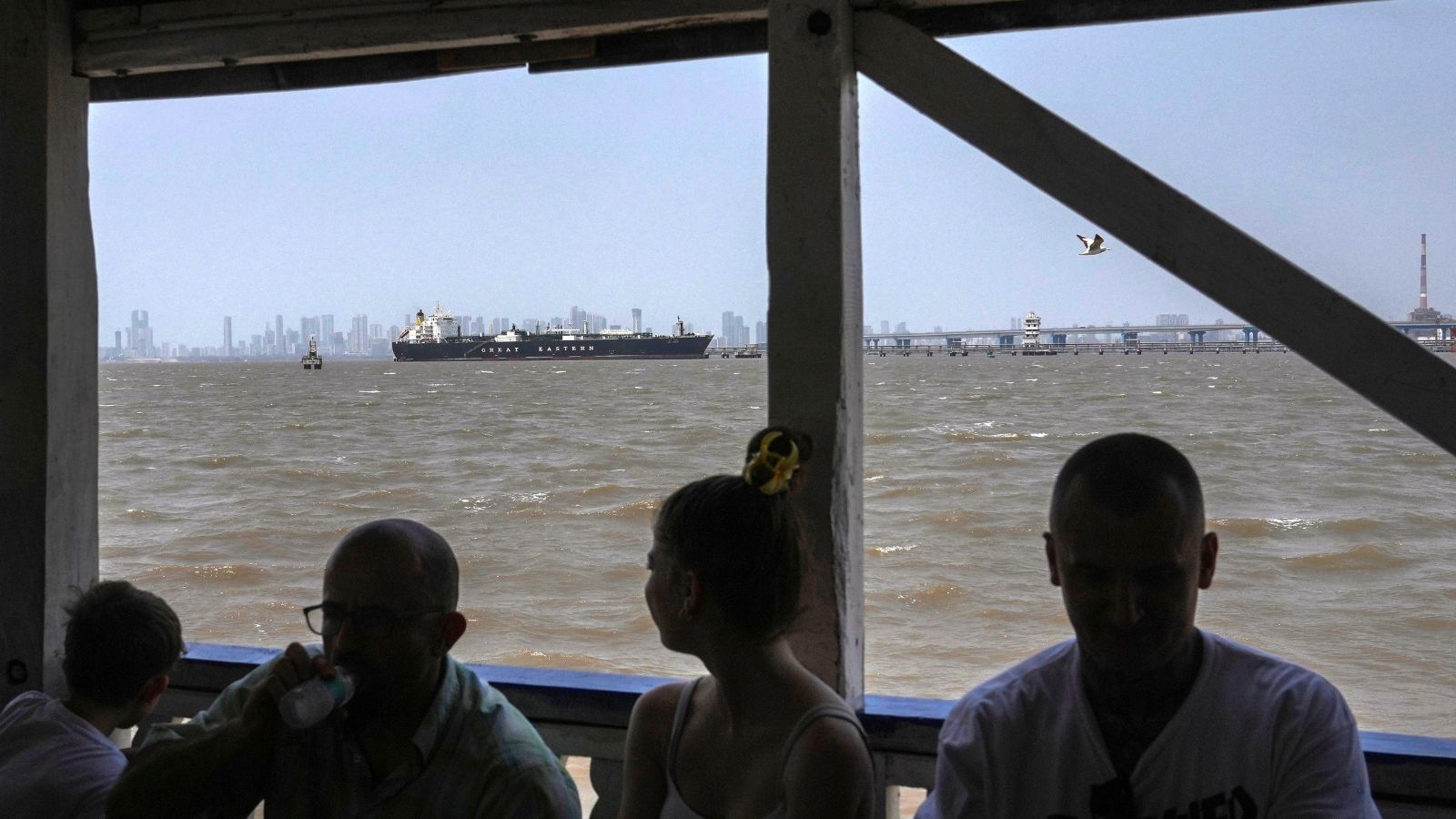
The headlines are screaming "dangerous escalation" and "terrorist attack" because that is exactly what the United Arab Emirates wants you to believe. When a drone strikes a merchant vessel like the MV Chem Pluto or any Indian-linked ship off the coast of Oman, the knee-jerk reaction from global media is to parrot the official diplomatic cables. They frame it as a sudden fracture in maritime security. They paint a picture of a "new" threat.
They are wrong.
Calling this a "terrorist attack" isn't a security assessment; it’s a branding exercise. For years, the UAE has positioned itself as the untouchable logistics hub of the world, anchored by Jebel Ali and the myth of regional stability. When steel meets explosives 200 nautical miles off the coast, that myth bleeds. The outrage we are seeing isn't about the sanctity of international law. It is about protecting the insurance premiums and the transit fees that keep the Gulf’s non-oil economy breathing.
The Myth of the Random Target
The competitor narratives suggest these ships are innocent bystanders caught in a chaotic crossfire. Look at the data instead. Modern maritime strikes are surgical. They are based on sophisticated intelligence regarding ship ownership, management, and destination.
When the UAE uses the "terrorist" label, they are trying to strip the event of its geopolitical context. In reality, these strikes are state-sponsored—or state-proxied—signals. Labeling a state-level military action as "terrorism" is a deliberate attempt to lower the status of the adversary and bait the West into a kinetic response.
If you are a shipping executive, you don't need "solidarity." You need to understand that your vessel is a floating pawn. The "escalation" isn't an accident; it’s the intended outcome of a regional power play where the UAE, Iran, and India are all recalculating their leverage.
Why India is the Reluctant Protagonist
New Delhi’s response is often described as "cautious" or "measured." The truth is far more cynical. India is caught in a trap of its own making. It wants to be the "Net Security Provider" in the Indian Ocean, yet it remains desperately dependent on the very energy corridors that are currently under fire.
The UAE is pushing India to take a harder stance because Abu Dhabi doesn't want to do the heavy lifting alone. By terming the strike a "terrorist attack," the UAE is essentially trying to trigger India's "War on Terror" reflex. They want Indian destroyers patrolling the Arabian Sea to protect UAE-linked trade interests under the guise of mutual security.
I have watched maritime boards for two decades. Whenever a regional power starts screaming about "international norms," it’s usually because their private equity stakes in port infrastructure are at risk. India knows this. They are dragging their feet because they understand that a permanent naval presence in these waters is a bottomless money pit that benefits the Gulf more than it benefits Mumbai.
The Insurance Trap
Let's talk about the money. The "terrorist" label has a specific function in the world of Lloyd’s of London and global reinsurance.
- War Risk Surcharges: By classifying these incidents as terrorism or war-like acts, insurers can instantly trigger "War Risk" clauses.
- The "Safe Port" Clause: If the UAE can't maintain the image of a safe region, the entire "Safe Port" legal framework for shipping contracts collapses.
- Diversion Costs: Every ship that decides to bypass the Arabian Sea and head around the Cape of Good Hope adds millions in fuel and weeks in time.
The UAE’s rhetoric is a desperate attempt to keep the "War Risk" premiums from becoming a permanent tax on their existence. They aren't worried about the crew of an Indian ship; they are worried about the "additional premium" area on the maritime insurance map expanding to swallow their entire coastline.
The Failure of Maritime "Law"
The "lazy consensus" is that we need more international cooperation and a stricter adherence to the UN Convention on the Law of the Sea (UNCLOS).
Wake up. UNCLOS is a ghost.
In the modern Arabian Sea, the "rules-based order" is a polite fiction we tell ourselves so we don't have to admit that the ocean is returning to a state of privateering. The UAE’s appeal to these laws is a sign of weakness, not strength. When you have the power to stop a drone, you stop it. When you don't, you call a press conference and talk about "norms."
The Hard Reality for Global Trade
If you're waiting for the "escalation" to end, you're fundamentally misunderstanding the new era of trade. We are no longer in a period of globalized peace. We are in a period of "weaponized interdependence."
The Arabian Sea is the first major laboratory for this. If a country wants to hurt a rival's economy without starting a land war, they hit a tanker. It’s cheap. It’s effective. And thanks to the UAE’s predictable outcry, it’s guaranteed to get global attention.
Stop asking when the "terrorism" will stop. It isn't terrorism. It’s a low-cost, high-yield military strategy that is here to stay. The UAE’s branding exercise won't change the trajectory of a single drone.
The only "dangerous escalation" here is the delusion that words like "terrorism" can still protect a cargo ship in a contested sea. They can't. The era of the safe passage is over, and no amount of diplomatic theater will bring it back.
Accept the risk or change the route.