Silence. That is the first thing that happens when an ambulance stalls on a rutted red-clay track outside a Congolese village.
No sirens. No flashing blue lights. Just the cicadas sawing at the humid air, the smell of wet earth and woodsmoke, and the heavy, suffocating weight of knowing that a single drop of blood from the wrong person can turn a neighbor into a vector of one of the deadliest pathogens known to medicine.
Then comes the sound of footsteps running not toward the vehicle to greet help, but away from it—or worse, toward it with machetes, stones, and anger sharpened by years of fear, rumors, and grief.
A nurse lies dead. Another health worker is severely injured after responding to an Ebola case in the Democratic Republic of the Congo.
Read that headline again. Strip away the diplomatic phrasing and the clinical detachment of a wire report. What you are left with is an inversion of moral logic so sharp it draws blood: the people walking into the fire to pull others out are being hunted in the dark.
To understand why a nurse dies while trying to stop an Ebola outbreak in Congo, you have to stop looking at the virus for a moment and look at the human terrain around it. Ebola is terrifying—hemorrhagic fever, organ failure, high mortality rates depending on the strain and how fast care arrives—but a virus has no malice. It is a strand of genetic code following biological imperatives. Fear, on the other hand, has memory. Rumor has momentum. And trauma passed down through decades of instability turns a stranger in white protective gear into a suspect.
The Invisible Frontline in the Forest
To make sense of what unfolds on the ground, consider a hypothetical composite scenario—a fictionalized reconstruction drawn from documented patterns of outbreak responses across eastern and central Congo. Let us call the nurse Amara and her colleague, a contact tracer and rapid-response worker, Daniel. They are not real individuals from a single incident, nor do they represent any specific victim; they are a lens through which to see the daily calculus of a response team.
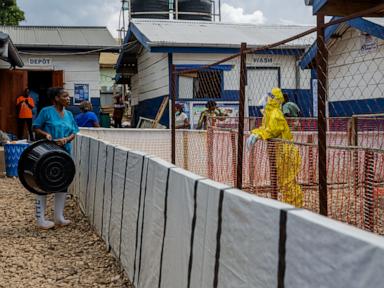
At dawn, Amara checks her gear in a room that already feels warm before the sun clears the canopy. Double gloves. Gown. Mask. Goggles. Boots that hold the red mud like magnets. Every piece of equipment is designed to keep Ebola out of her body, yet every layer creates a wall between her humanity and the people she came to save.
Imagine trying to comfort a mother whose child has a high fever when you look like an astronaut descending from another planet. You cannot offer a bare hand. You cannot hug. You speak through fabric and plastic while sweat runs into your eyes, stinging like salt. Now imagine that for months—or years—armed groups, political distrust, and misinformation have told this community that clinics are traps, that ambulances bring death rather than healing, or that outsiders profit from crisis while local families bury their dead without traditional rites.
When Amara and Daniel pull up near a reported case, they are not arriving on neutral ground. They are stepping into an information war layered on top of a medical emergency.
Suddenly, shouting breaks out near the edge of the compound. A crowd gathers faster than expected. Stones fly. Someone swings a blade. Daniel throws himself between Amara and the surge, taking a blow that leaves him badly hurt, while Amara never makes it back to the vehicle alive.
This is the part of outbreak response that rarely makes it into statistical dashboards: the moment public health stops being a logistics problem and becomes a survival test.
Why People Turn on the Ones Who Come to Help
It is tempting—and dangerously lazy—to label every attack on health workers as sheer madness or simple hostility toward science. When you have stood in a clinic where supplies ran out twice in a month, or watched neighbors vanish into isolation centers only to hear rumors that nobody comes out alive, skepticism does not feel like ignorance. To a frightened person, skepticism feels like self-defense.
Over successive Ebola flare-ups in the Democratic Republic of the Congo, responders have faced a recurring paradox. The faster teams isolate cases, trace contacts, and conduct safe and dignified burials, the faster transmission chains break. Yet those exact measures collide with deep cultural norms around caring for sick relatives and honoring the dead. When a family is told they cannot wash or embrace a loved one—and when armed actors or local agitators exploit that grief—anger finds a target.
Health workers are visible. They carry equipment. They arrive from outside. They become lightning rods for everything people cannot control: war, poverty, displacement, abandonment by distant capitals, and the sheer terror of a disease that bleeds families dry.
I have sat in rooms where people asked, almost incredulously, how anyone could possibly resist a vaccine or an isolation unit during an Ebola outbreak. That question comes from a place of relative safety. When you have never watched three relatives fall ill in ten days while armed men tax the road outside your village, your definition of threat looks very different from the World Health Organization's.
Admitting that does not excuse violence. Killing a nurse is an atrocity. Severely injuring a health worker trying to contain a lethal virus is a wound inflicted on the entire community, whether the attackers realize it or not. Still, if we refuse to understand the fear that fuels distrust, we will keep sending brave people into ambushes without fixing the ground beneath their feet.
What Dies When a Health Worker Is Killed
Think of an outbreak response like a fire line cut through dry brush. You do not need to douse every single spark by hand if you can clear a barrier that stops the flames from jumping to the next ridge.
Ebola spreads through direct contact with bodily fluids of symptomatic patients or contaminated surfaces and remains. Stopping it requires speed and trust in roughly equal measure. You need clinicians like Amara to stabilize patients and manage symptoms so survival rates climb. You need field workers like Daniel to find every person who shared a cup, a room, or a ride with an infected person over the past three weeks.
When a nurse is killed and another responder is severely injured, the damage ripples outward in concentric circles.
First is the immediate human loss—a family mourning a daughter, a son, a partner who chose a job where the risks are brutal and the pay often arrives late or uncertainly. A severe injury to a colleague means surgeries, long recovery, trauma that lingers long after physical wounds scar over.
Second is operational paralysis. Teams pull back to reassess security. Vehicles stay parked. Contact tracing slows down or stops in the exact neighborhood where a chain of transmission may be actively burning. Every lost day gives the virus more time to move along footpaths, market routes, and river crossings.
Third is psychological contagion. Other nurses, drivers, community communicators, and local clinic staff watch what happened. Courage is real, and many show up again tomorrow anyway, but fear accumulates. Burnout turns into quiet attrition. Over time, local health systems lose the very people who know the language, the terrain, and the shortcuts through the bush.
A Metaphor for Fragile Armor
Picture a lighthouse keeper tending a lamp on a rocky coast during a storm.
To give a rough metaphor for how fragile an outbreak response can be: the keeper does not control the wind or the tide. The keeper's job is to keep the glass clean and the flame steady so ships do not smash against the reef. If someone attacks the lighthouse—smashing the glass, extinguishing the lamp, injuring the keeper—the storm does not suddenly become gentler. The rocks do not move out of the way. The darkness simply gets deeper, and every vessel heading toward shore loses its warning.
A nurse or contact tracer in an Ebola zone is that keeper. Their protective suit is not invulnerability; it is thin armor around a mortal human being trying to hold back a storm.
The Myth of the "Contained" Crisis
People far from eastern and central Congo often treat an Ebola incident as a distant story—sad, dramatic, geographically sealed off.
Pathogens do not read borders the way governments do. While the vast majority of outbreaks are contained through relentless, dangerous field work, every delay, every broken chain of contact tracing, and every violent disruption increases the window of opportunity for wider spread. Even when an outbreak stays localized, the human cost is borne by people whose lives matter just as much as anyone's in a major capital.
There is also a deeper lesson here about modern global health. We love talking about breakthroughs—vaccines, monoclonal antibody treatments, rapid diagnostics, high-tech surveillance. Those tools are extraordinary. When treatments reach patients early, survival chances improve dramatically compared to older outbreaks.
Yet a vial of vaccine sitting in a cold-chain cooler does nothing on its own. A diagnostic test cannot swab a patient by itself. A treatment protocol cannot walk three miles through mud to reach a feverish child unless a human being carries it there and earns enough trust to be let through the door.
Technology without human access and community trust is like a sports car with no fuel line. It looks impressive on paper, and it goes nowhere when the road turns rough.
Fixing the Broken Link Between Care and Trust
If violence against health workers is not an accident of nature, what actually reduces it?
Experience across repeated crises points to uncomfortable truths rather than quick fixes. Heavy armed escorts alone are a double-edged sword: soldiers can deter an immediate attack in one spot, yet armed uniforms can also heighten tension and make a medical mission look like a military operation in communities that already distrust armed men.
Real protection starts long before an ambulance reaches a village. It requires:
- Authentic local leadership: Working through respected elders, local health committees, religious leaders, and community members who already have credibility before a crisis hits—not showing up only when bodies are piling up.
- Transparent, honest communication: Telling people clearly what is known and what is unknown, explaining why isolation or safe burial rules exist without talking down to grieving families, and addressing rumors head-on instead of dismissing them.
- Integrated local health care: Strengthening everyday clinics so communities see health workers as people who treat malaria, childbirth complications, and routine illnesses year-round, not strangers who appear only during emergencies.
- Dignity in every interaction: Respecting cultural practices wherever safe adaptations are possible, listening to complaints about rough treatment or broken promises, and treating families as partners rather than obstacles.
None of this is easy. None of it works overnight. When gunfire cracks in the distance or a rumor spreads like wildfire through a market, calm dialogue takes enormous discipline. Still, every time responders build genuine bridgework with a community, the odds of both survival and safety rise together.
What We Owe the Ones Who Stay
There is a quiet heartbreak in realizing how little recognition frontline health workers receive until tragedy strikes. Most days, their work is invisible: a temperature checked, a form filled out carefully in the heat, a tense conversation de-escalated at a doorway, a family persuaded to let a sick relative get care.
When a nurse is killed and another health worker is severely injured responding to Ebola in Congo, the story should not end with a casualty count and a statement of regret. It should force a reckoning with what we ask of people who step into danger for strangers.
They put on the suit. They walk into the heat. They face the virus, the exhaustion, and sometimes the very fear they came to push back.
In the quiet after the shouting stops, only the rain on the leaves remains—and the empty space where someone who came to heal should still be standing.