Mainstream political commentary just swallowed a massive piece of political theater whole.
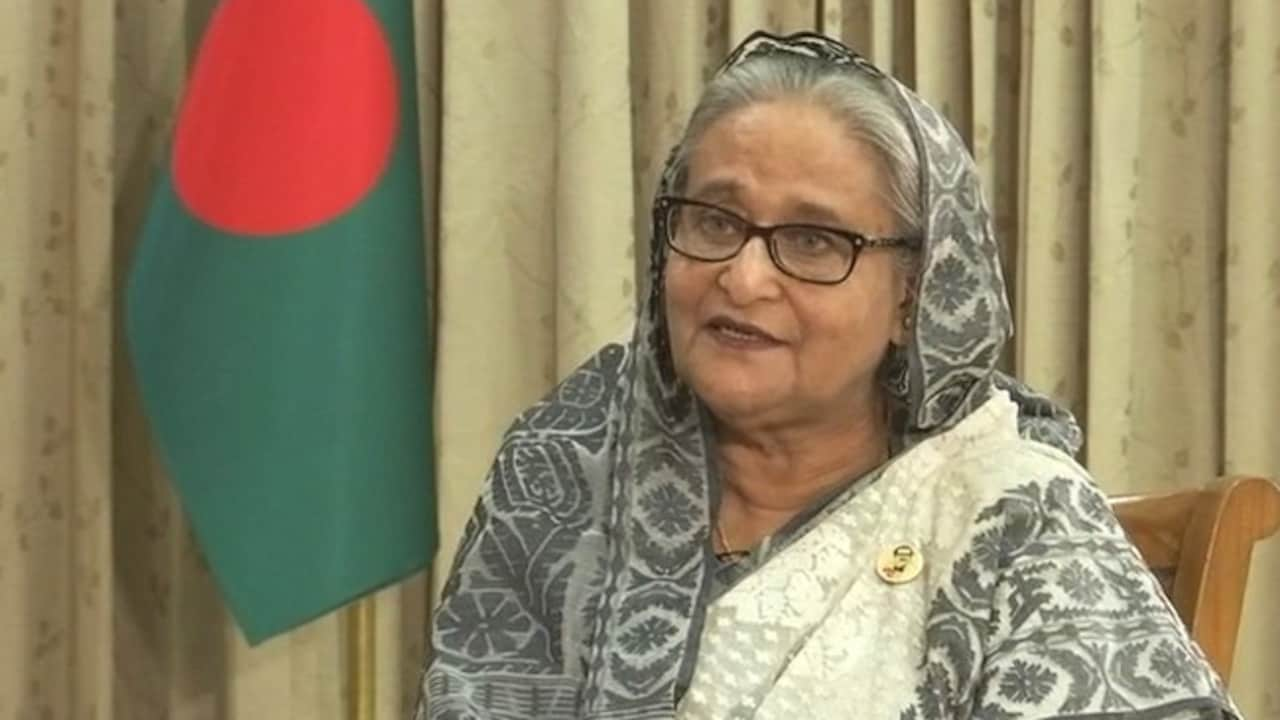
When deposed Bangladeshi Prime Minister Sheikh Hasina recently told NDTV that the question regarding her return to Bangladesh "isn't when, but how," regional editors immediately fired up their coverage engines. Pundits spent days dissecting logistics, extradition treaties, security protocols, and hypothetical election timelines. They treated a calculated psychological operation like a literal travel itinerary.
Here is the blunt truth that diplomatic correspondents are too polite to print. Sheikh Hasina is not coming back to govern Bangladesh. She knows it. New Delhi knows it. And the interim administration in Dhaka certainly knows it.
By framing her exile in India as a mere logistical hurdle rather than a permanent political obituary, Hasina executed a textbook authoritarian survival maneuver. She shifted the narrative from her ouster to her inevitability. Meanwhile, the regional media took the bait, amplifying a phantom comeback while ignoring the actual structural shifts reshaping South Asian geopolitics.
If you want to understand what is actually happening between Dhaka, New Delhi, and the remnants of the Awami League, stop analyzing flight paths and extradition clauses. You are asking the wrong question entirely.
The Anatomy Of A Phantom Comeback
In decades of tracking South Asian political crises, one pattern repeats with exhausting predictability. When a long-standing strongman or dominant party leader is unseated by a mass uprising, their immediate objective is never governance. Their immediate objective is preventing total organizational collapse among their remaining loyalists.
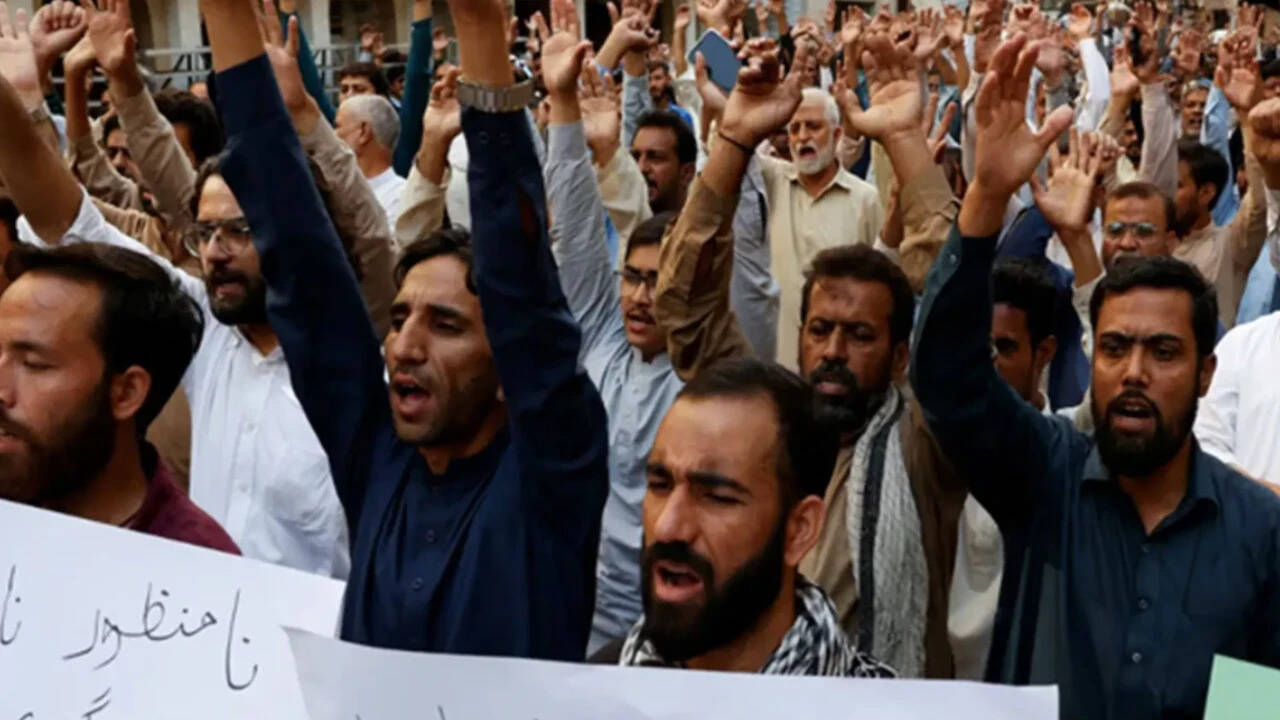
During the July and August 2024 student-led uprising that ended her 15-year uninterrupted rule, Hasina’s departure aboard a military aircraft to India created an instant power vacuum. Within weeks, senior Awami League figures went underground, fled abroad, or faced sweeping legal charges. A political party built entirely around a single personality cannot survive if its rank-and-file believe the leader has permanently abandoned them.
Enter the "not when, but how" soundbite.
Political scientists who study regime transitions—scholars like Barbara Geddes and Milan Svolik—have extensively documented how exiled autocrats maintain leverage from abroad. The illusion of an imminent return serves three cold, mechanical functions:
- Freezing Defections: Mid-level party operatives in Bangladesh are currently deciding whether to cut deals with new political realities or stay loyal. Suggesting a return is merely a matter of mechanics keeps them paralyzed in place.
- Destabilizing Investor Confidence: Foreign capital hates political ambiguity. By keeping the specter of an Awami League counter-revolution alive in international headlines, Hasina complicates the interim government's efforts to stabilize Bangladesh's bruised economy and garment sector.
- Forcing Diplomatic Friction: Every time Hasina speaks from Indian soil, it forces Dhaka to issue formal protests and puts New Delhi in an awkward diplomatic bind.
The mainstream coverage treated Hasina's quote as a breaking news scoop about her personal intentions. In reality, it was an information weapon aimed directly at the psychological stability of Dhaka’s streets.
Why The "How" Is A Mathematical Impossibility
Let us strip away the rhetoric and look at the hard, verifiable mechanics of what a physical return to Bangladesh would actually require. When commentators debate "how" Sheikh Hasina could return, they routinely ignore three insurmountable walls.
1. The Legal Fortress In Dhaka
This is not 1981, when Hasina returned from exile following the assassination of her father, Sheikh Mujibur Rahman, to rebuild an opposition movement against a military regime. Today, she faces hundreds of criminal cases across Bangladesh, including charges of crimes against humanity filed before the International Crimes Tribunal—ironically, the very court her own administration weaponized against political rivals during her tenure.
Setting foot on Bangladeshi soil does not mean stepping onto a campaign stage. It means immediate arrest, asset freezes, and years spent inside a courtroom under maximum-security detention. No political strategist in the world views voluntary life imprisonment as a viable path to electoral victory.
2. The Collapse Of The Coercive Apparatus
Authoritarian regimes do not fall because protesters get loud; they fall when the security apparatus refuses to shoot. Hasina’s 15-year grip on power relied heavily on loyalist leadership within the police, the Rapid Action Battalion (RAB), and key intelligence directorates.
That machinery has been dismantled, purged, and restructured. Even if Hasina somehow bypassed border controls tomorrow, the state institutions required to protect her from public fury no longer answer to her phone calls.
3. The Generational Rupture
Western and regional analysts often view Bangladeshi politics through an outdated binary—the Awami League versus the Bangladesh Nationalist Party (BNP). That binary died in the streets of Dhaka in 2024. Over two-thirds of Bangladesh’s population is under the age of 35. For Generation Z voters, the 1971 Liberation War narrative that anchored Hasina’s legitimacy is history, not lived experience. Their lived experience is contested elections in 2014, 2018, and 2024, inflation, and state crackdowns. You cannot campaign on nostalgia when the electorate views your era as an economic and democratic dead end.
New Delhi’s Quiet Exit Strategy
The most glaring blind spot in competitor coverage is the assumption that India wants to engineer Hasina’s return.
For fifteen years, Indian foreign policy toward Dhaka operated on a single-basket strategy. New Delhi bet everything on Sheikh Hasina because she delivered on India’s core security demands—shutting down cross-border insurgent camps in Northeast India and expanding transit corridors. In exchange, India turned a blind eye to Dhaka’s democratic backsliding.
That bet went bust in August 2024. Now, New Delhi is stuck with a high-profile houseguest whose mere presence poisons bilateral relations with a crucial neighbor sharing a 4,096-kilometer border.
Indian diplomats are pragmatists, not sentimentalists. While New Delhi will never hand Hasina over to face execution or humiliation in Dhaka—doing so would destroy India’s credibility as a reliable partner to every other leader in South Asia—India has zero interest in sponsoring an insurgency or destabilizing a neighbor that handles billions of dollars in bilateral trade.
Notice the subtle shift in New Delhi’s posture. Indian officials have quietly opened channels with the interim government led by Muhammad Yunus, discussed water-sharing and power grids, and emphasized "people-to-people ties" rather than party-to-party loyalty. When Hasina gives interviews claiming her return is a matter of "how," she isn't speaking with New Delhi’s blessing. She is subtly trying to box India into continuing its diplomatic cover for her.
Dismantling The "People Also Ask" Fallacies
When a story like this trends, search engines fill up with predictable, surface-level questions. Most of them rest on completely flawed premises. Let’s break them down honestly.
Will India extradite Sheikh Hasina to Bangladesh?
No. Stop asking this. Yes, India and Bangladesh signed an extradition treaty in 2013 (and amended it in 2016 to remove the requirement for prima facie evidence). However, the treaty explicitly contains a political offense exception. New Delhi can legally block any extradition request simply by classifying the charges against Hasina as politically motivated. Treaties in South Asia are subordinate to national security interests, and handing over a longtime ally would be geopolitical suicide for New Delhi.
Can the Awami League win the next election if Hasina returns?
The premise itself is broken. Before worrying about winning an election, the Awami League faces an existential battle over whether it will even be allowed to register and contest polls without a top-to-bottom leadership purge. As long as Hasina remains the face of the party, the Awami League remains toxic to the broad coalition of students, civil society groups, and rival parties currently shaping Bangladesh’s political rules.
Is Bangladesh heading toward instability without her?
This is the favorite talking point of lobbyists who spent years defending Hasina’s human rights record in Washington and Brussels. The argument claims that without a strongwoman at the helm, Bangladesh will instantly collapse into extremism or economic ruin. Imagine a scenario where a CEO runs a company for 15 years, suppresses every potential successor, cooks the financial books to hide bad debt, and then flees when the board discovers the shortfall—only to claim the company cannot survive without their leadership. That is the exact logic being peddled here. Stability bought through suppressed elections and opaque banking loans was never stability; it was deferred chaos.
What Actually Matters Now
To be completely candid, my thesis has one clear vulnerability. South Asian politics has a stubborn habit of resurrecting leaders whom pundits have already buried. Both Hasina and her longtime rival Khaleda Zia survived arrests, exile attempts, and military-backed caretaker regimes in 2007 and 2008 only to return to the prime minister’s office. History warns against declaring any South Asian political dynasty permanently dead.
Yet relying on 2008 muscle memory ignores how fundamentally the ground has shifted. In 2008, the military intervened from the top down, leaving party structures intact. In 2024, the collapse came from the bottom up, shattering the ideological foundation of the ruling party.
If you are an investor, a policy analyst, or an observer trying to read the tea leaves in Dhaka, ignore the interviews coming out of New Delhi. Watch these three metrics instead:
- Awami League Internal Rebellion: Watch for mid-tier leaders inside Bangladesh who publicly break with Hasina and apologize for past abuses to form a reformed party faction. Until that happens, the party remains a non-factor.
- Central Bank Reserve Recovery: Follow the Bangladesh Bank’s efforts to recover billions in allegedly laundered state bank loans. Financial accountability, not political speeches, will determine whether the interim government keeps public trust.
- Border Trade Volume: Track freight movement at the Benapole-Petrapole land port. As long as goods keep moving smoothly between India and Bangladesh, you know that New Delhi and Dhaka have reached a quiet, functional understanding—regardless of what Hasina says on television.
Sheikh Hasina mastered the art of controlling the headline cycle for over a decade, and her latest interview proves she hasn't lost her touch for generating noise.
Stop confusing noise with leverage. The gate to Dhaka isn't waiting for a key; it has already been welded shut from the inside.