The crane does not care about history. It only cares about weight.
High above the tarmac at the logistics hub, the steel cable groans under the strain of a massive concrete barrier, hoisting it onto the flatbed of a heavy truck. For years, these slabs of reinforced gray stone—ubiquitous sentinels known to everyone simply as blast walls—carved the city into jagged parcels of security and suspicion. Now, piece by piece, they are being lifted away. The American logistics footprint is shrinking. The convoys roll toward the southern borders or north toward the Kurdish regional perimeter, tires crunching on gravel that has absorbed two decades of dust, diesel, and broken promises.
To a casual observer watching the satellite feeds or reading the brief communiques dispatched from foreign capitals, it looks like an ending. A chapter closing. A clean break from a protracted theater of intervention.
Down on the street, the math looks entirely different.
Tariq does not need a Pentagon press release to understand power. He sweeps the front stoop of his small grocery shop in a crowded Baghdad neighborhood, the morning heat already shimmering off the asphalt like a restless ghost. At fifty-eight years old, he has survived an ocean of transitions. He survived the shock and awe of the initial invasion, the sectarian conflagrations that turned his childhood memories into smoking ruins, the black flag of ISIS sweeping across the northern horizon, and the endless parade of diplomats shaking hands in air-conditioned rooms while the electricity grid sputtered and died.
He watches a white pickup truck idle at the corner. The windows are heavily tinted, the license plates missing. Two men sit inside in civilian clothes, drinking sweet tea from paper cups. They carry no foreign insignia. They wear no standard-issue camouflage. But everyone on the block knows whose eyes are behind those dark glass panes.
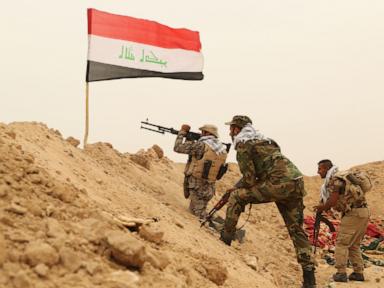
When the last foreign boots board the transport planes and the formal military missions wind down into skeletal advisory roles, the physical vacuum left behind does not remain empty for long. In the lexicon of statecraft, nature abhors a vacuum. In the reality of the Middle East, politics abhors a vacuum even more. And long before the final shipping container was sealed, the armed factions that operate parallel to the state made their intentions unmistakably clear: the troops may pack their duffel bags, but the weapons are not going anywhere.
To understand why those barrels remain pointed toward an uncertain future, one must look past the diplomatic handshakes and examine the architecture of survival that has taken root across Iraq over the last twenty years.
Consider how an armed group evolves. In the early days of chaos following the collapse of the old regime, these factions formed as defensive cells, neighborhood patrols, or ideological resistance movements. Over time, as the state struggled to monopolize violence or deliver basic security, these groups adapted. They institutionalized. They became embedded within the machinery of the government itself, drawing state salaries while maintaining independent chains of command, secret armories, and external loyalties.
Think of it like a subterranean root system beneath a cracked concrete sidewalk. You can pave over the surface, paint new lines, and declare the street safe for pedestrian traffic. But beneath the bitumen, the roots continue to drink from deep aquifers. They grow thick, woody, and resilient. When pressure comes from above, the roots do not break; they push the concrete upward, fracturing the surface anew.
The militias operating across Iraq today are those roots. They are woven into the state’s security apparatus through official auxiliary brigades, yet they answer to commanders whose allegiances transcend national borders. When foreign forces scale down their presence, these factions do not see an opportunity to disarm. They see an opportunity to consolidate. They view their arsenals not as temporary tools of an emergency, but as permanent insurance policies against a volatile future.
The logic of their retention is brutally pragmatic. In a region where political survival is measured in caliber and tonnage, giving up a rocket launcher or a drone stockpile is treated as an existential mistake. The weapons are currency. They are leverage at the ballot box, protection at the border customs posts, and security for economic conglomerates that control everything from transport lines to real estate development.
Yet, translating this high-level geopolitical calculus into the daily reality of ordinary citizens reveals a stark emotional toll.
Fatima, a university student studying computer science, feels the weight of this permanence every time she navigates a checkpoint on her way to campus. The soldiers standing there wear the uniform of the official security forces, but everyone knows the whispered rumors of who truly pulls the strings behind the scenes. There is an unspoken etiquette to daily life now. You learn which topics to avoid at the dinner table. You learn which neighborhoods transform into armed enclaves after dark. You learn to smile, nod, and keep your head down.
"We are tired of being caught between giants," Fatima says quietly, sitting in a dimly lit cafe where the generator hums its monotonous baseline against the city's ambient noise. "Every time they sign a new agreement or announce a withdrawal, we hold our breath. They leave, but the guns stay. And if the guns stay, nothing has really changed for us. We are just waiting for the next storm."
That weariness is the defining emotional texture of contemporary life in cities touched by protracted conflict. It is a fatigue born of perpetual uncertainty. People do not dream of grand political revolutions anymore; they dream of steady electricity, clean water, and the simple luxury of walking down a street without calculating which faction controls the corner.
When foreign military planners draft their exit strategies, they often view withdrawal through a narrow lens of metrics and timelines. Units redeployed. Equipment inventoried. Logistics lines closed. It is a neat, administrative accounting of departure. But history is rarely neat. It bleeds across the margins.
When the last transport aircraft lifts off the runway, banking steeply into the twilight as its jet wash stirs up the desert sand, the silence it leaves behind is deceptive. Down below, in the alleyways of ancient cities and the sprawling concrete suburbs, the real power dynamics remain locked in place, cold and unyielding.
The militias have made their signal clear. They are rooted in the soil, funded by the economy, and armed for whatever tomorrow brings. The uniforms change, the flags are folded and packed into canvas bags, and the foreign advisors fade into the background. But the steel remains.
And Tariq, standing on his stoop as the evening call to prayer begins to echo across the rooftops from a dozen competing loudspeakers, watches the unmarked pickup truck finally turn the corner and disappear into the gathering dusk. He closes his shop door, turns the heavy iron lock, and prepares for another night in the shadow of the weapons that refuse to leave.