A Quiet Room in November
The fluorescent lights in a county election warehouse don't flicker like they do in the movies, but they do hum. It is a low, persistent sound, like a collective holding of breath. Inside, rows of metal folding tables stretch toward concrete walls, stacked high with plastic tubs, paper receipts, and wooden pencils.
Picture an election worker on a cold midnight in early winter. Let's call her Sarah. She isn't a political operative. She doesn't hold a degree in international relations or cybersecurity. She is a semi-retired bookkeeper who takes two weeks off every two years because she believes, with a quiet and stubborn conviction, that counting pieces of paper is how a community stays whole. Her thumbs are stained with purple ink. Her coffee has been cold since eight o'clock.
When a head of state stands before a wall of television cameras and declares that an foreign power has breached the sanctuary of the vote, the shockwave does not land first in foreign capitals or foreign ministry briefing rooms. It lands right there, on the concrete floor of that county warehouse.
It changes the room. Suddenly, every sealed plastic bin looks vulnerable. Every line of code running inside a tabulating machine feels like an open door. The simple act of marking a circle with a black pen ceases to be a civic duty and becomes a point of geopolitical friction.
Accusations Across the Pacific
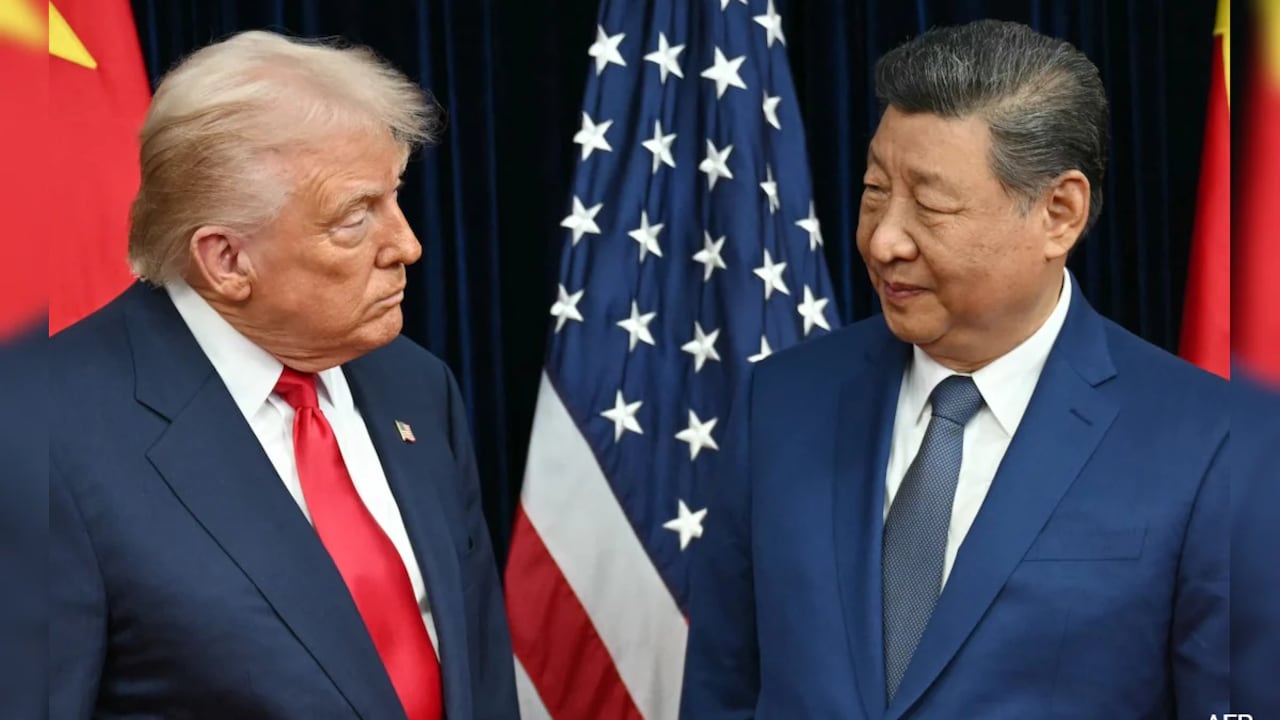
The rhetoric erupted again when Donald Trump publicly asserted that Beijing actively moved to sway the outcome of the 2020 United States presidential election. Calling the alleged foreign operation a catastrophe for American sovereignty, his statements reignited a fierce global argument over who, exactly, holds the keys to the voting booth.
In Beijing, officials responded with swift, practiced rejection. Spokepeople for the Chinese Foreign Ministry maintained that China holds to a strict policy of non-interference in the internal affairs of other nations. They framed the accusations as groundless, a standard political football passed back and forth to score domestic points during a polarized era.
This exchange is not merely a spat between global superpowers. It is a fundamental conflict over the currency of modern democracy: trust.
When claims of foreign meddling are made, they exist in a strange, intangible space. Unlike an armed invasion or an economic embargo, digital influence and covert interference are inherently invisible to the average citizen. You cannot see a malicious packet of data traveling through a router. You cannot touch a coordinated social media campaign designed to inflame local anxieties.
Because these threats are invisible, they are infinitely elastic. They can be magnified or dismissed depending entirely on who is speaking and who is listening.
The Architecture of Suspicion
Consider how trust works inside a neighborhood.
If your neighbor tells you that someone broke into your shed, your immediate reaction is to check the lock. Even if you find the padlock intact, the doubt remains. Did they have a key? Did they leave something behind? The physical reality of the undamaged shed matters less than the psychological shift that occurred the moment the sentence was spoken.
Multiply that neighborhood shed by one hundred and fifty million voters.
When national leaders trade allegations of electoral manipulation, the impact ripples through several distinct layers of society:
- The Institutional Layer: Intelligence agencies are forced to reallocate resources to trace ghost signals, auditing hardware and software to prove a negative—that something didn't happen.
- The Diplomatic Layer: Bilateral relations between nuclear-armed economies freeze further, turning trade, climate, and security talks into secondary concerns behind mutual paranoia.
- The Human Layer: The voter at the kitchen table begins to wonder if their individual voice carries any weight at all against the backdrop of international cyber warfare.
The human layer is where the real damage accumulates. Democracy relies on a silent contract: you accept an outcome you dislike today because you trust you can try again tomorrow. When that trust corrodes, the entire structure sways.
Facts, Shadow, and the Intelligence Gap
To navigate this terrain without losing our footing, we have to look closely at what intelligence assessments actually say versus how those findings are translated onto news screens.
In official reports concerning foreign election influence, intelligence analysts distinguish sharply between two types of activity:
- Operations against infrastructure: Direct cyberattacks aimed at altering vote tallies, corrupting voter registration databases, or disabling voting machines.
- Influence operations: Propaganda campaigns, state-backed media messaging, and social media activity aimed at shaping public opinion, sowing discord, and eroding faith in democratic processes.
Multiple federal security agencies have repeatedly confirmed that there was no evidence of foreign powers altering actual votes or compromising the mechanical integrity of the 2020 ballot count.
Yet, influence operations are real, ongoing, and practiced by numerous foreign actors daily. They do not need to hack a single voting machine if they can successfully hack the public mind. By simply stoking existing divisions and feeding narratives of corruption, an adversary achieves its goal without ever touching a ballot.
The accusation itself becomes the payload.
The View from the Floor
Back in the county warehouse, Sarah places another stack of ballots into an archival box. She tapes the box shut with heavy red security tape, signs her name across the seam, and hands the marker to her co-worker, a man from down the street who votes for the opposite party.
They sign the tape together. That shared signature across the seam is a tiny, local miracle. It is a physical proof of trust happening in real time.
When international headlines scream about intercontinental interference and nightmares at the ballot box, they rarely capture this reality. They miss the mundane, rigorous, and intensely human safeguards built into the system by hundreds of thousands of ordinary people who show up every cycle.
The debate between Washington and Beijing will continue to headline news cycles and dominate press briefings. Allegations will be made, denials will be issued, and strategic narratives will be deployed.
The defense against psychological warfare does not begin in high-level diplomatic summits or in classified server rooms. It begins with a clear-eyed refusal to panic. It lives in the understanding that while foreign powers may seek to divide, the choice to fracture ultimately belongs to us.
The hum of the warehouse lights carries on into the morning. The boxes are sealed, the signatures are dry, and the count stands.