The air in the Brooklyn Jewish Children’s Museum usually carries a specific, high-pitched resonance. It is the sound of school groups—bright, chaotic, and brimming with the kind of unbridled curiosity that only exists before the world gets its teeth into you. It is a sound that feels permanent. We assume it will always be there, a natural byproduct of a city that never stops moving.
But in the quiet corners of a digital world most of us never see, that sound was being measured. Not for its joy, but for its vulnerability.
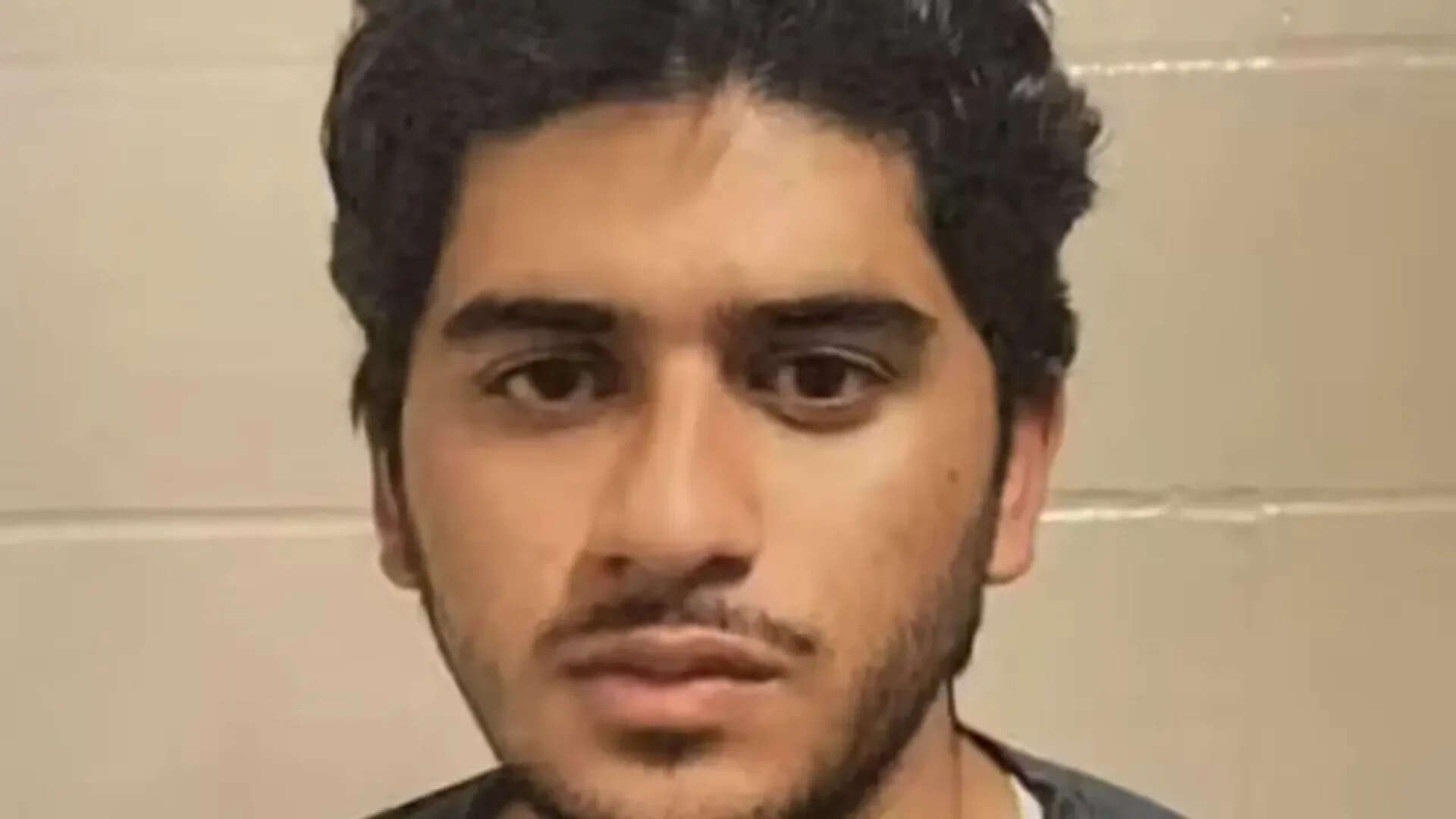
A 20-year-old man named Muhammad Shahzeb Khan, a Pakistani national living in Canada, wasn’t looking at the museum as a cultural landmark or a place of learning. He was looking at it as a target. He wasn’t just planning a crime; he was orchestrating a slaughter designed to echo across the globe in the name of ISIS.
The facts of the case are cold. He was arrested in Quebec. He intended to use AR-style rifles. He chose the anniversary of October 7th to maximize the psychic damage. He pleaded guilty. These are the skeleton of the story, but the muscle and blood lie in the terrifying proximity of the "almost."
The Logistics of Hate
To understand how a young man ends up in a rental car crossing the border with a trunk full of intent, you have to look at the mechanics of radicalization. It is rarely a lightning bolt. It is a slow, steady drip of poison.
Khan didn't just wake up and decide to attack Brooklyn. He spent months in encrypted chat rooms, communicating with people he believed were fellow ISIS supporters. In reality, he was speaking to undercover law enforcement officers. This is the invisible war. While we are checking our emails or ordering coffee, there is a constant, silent friction between those seeking to tear the social fabric and those stitching it back together in the dark.
He was meticulous. He didn't want a small headline. He told the undercover agents he wanted to create the largest attack on U.S. soil since 9/11. He spoke about "slaughtering" and "cleansing."
Consider a hypothetical mother, let's call her Sarah, walking her seven-year-old toward that museum on a crisp October morning. She is thinking about the school project due on Friday or whether she remembered to pack an extra juice box. She is entirely unaware that a thousand miles away, a man is calculating the exact GPS coordinates of the door she is about to enter.
That is the true nature of modern terror. It isn't a battlefield with clear lines. It is the intrusion of the unthinkable into the mundane.
The Border and the Blade
The plan involved more than just Brooklyn. Khan’s ambitions were sprawling. He had scouted locations, identified the densest crowds, and sought out the most symbolic dates. He was looking for the "highest kill count."
When we talk about national security, the conversation often gets bogged down in the dry language of policy and "robust" border "synergy." We lose the human stakes in the jargon. But the reality was a man in a car, fueled by a distorted ideology, driving toward a city of eight million people with the express purpose of turning a sanctuary into a cemetery.
He was intercepted in Ormstown, Quebec, just 12 miles from the United States border.
Think about that distance. Twelve miles. It is the length of a long morning run. It is a fifteen-minute drive on a clear highway. That is how close the "almost" came to becoming the "is."
The interception wasn't a stroke of luck. It was the result of a massive, multi-agency net that had been tightening around Khan for months. The FBI and the Royal Canadian Mounted Police weren't just reacting; they were narrating his downfall before he even realized he was the protagonist of a tragedy.
The Weight of the Guilty Plea
When Khan stood in court and entered his guilty plea to attempting to provide material support to a designated foreign terrorist organization, it wasn't just a legal formality. It was a concession.
The weight of the evidence—the transcripts of his bloodthirsty ambitions, the logistical maps, the radicalized rhetoric—was undeniable. A guilty plea often feels like a period at the end of a long sentence, but for the communities targeted, it is more like a shaky breath. It is the realization that the system worked, but the system is only human.
Why do we care so much about the specific target? Why the Jewish Children’s Museum?
Terrorism thrives on the destruction of innocence. It seeks the places where we feel safest and turns them into theaters of fear. By targeting a Jewish center on the anniversary of one of the most traumatic events in modern Jewish history, Khan wasn't just trying to kill individuals. He was trying to kill a sense of belonging. He wanted to send a message that no matter where you are—even in the heart of Brooklyn, surrounded by the laughter of children—you are not safe.
The Architecture of Prevention
We often ask how this happens. How does a 20-year-old become so untethered from his own humanity that he views a child’s museum as a tactical objective?
The answer is uncomfortable. It lies in the digital silos we’ve built. The internet, for all its power to connect, has also created perfect breeding grounds for the lonely and the lost to find a sense of purpose in destruction. For Khan, ISIS wasn't just a group; it was a script that gave his life a dark, distorted meaning.
But if the internet is the weapon, it is also the shield.
The undercover operation that caught him utilized the same tools he used to plot. Law enforcement has had to become as agile and "cutting-edge" (to use a term I’d rather avoid, but which fits the sharp nature of the task) as the threats they face. They have to live in the same encrypted shadows, waiting for a slip-up, a boast, or a request for a rifle.
The Silence We Keep
Now, the museum remains open. The school groups still arrive. The high-pitched resonance of children playing continues to bounce off the walls.
Most of the people walking past those exhibits today will never know Muhammad Shahzeb Khan’s name. They won't know about the rental car stopped in Quebec or the encrypted messages that detailed their potential demise. And in a way, that is the ultimate victory.
The goal of terror is to change the way we live. It wants us to look at our neighbors with suspicion. It wants us to double-lock our doors and stay away from the crowds. When an attack is thwarted, the victory isn't just in the arrest; it’s in the preservation of the ordinary.
The real story isn't the man who failed. It’s the city that got to keep its Tuesday morning.
It’s the fact that Sarah and her son got to finish their tour, complain about the subway being late, and go home to a dinner that wasn't interrupted by breaking news. We live our lives in the gap between the threats that exist and the ones that reach us. Sometimes, that gap is miles wide. Other times, it’s only twelve miles of Canadian highway.
We move forward, not because the shadows have disappeared, but because there are people standing in them, holding a line we rarely have to see. The silence in the wake of a stopped plot isn't a void. It’s the sound of a thousand lives continuing, uninterrupted, unaware of how close they came to becoming a memory.
The museum doors swing open. A child laughs. The world keeps turning, stubborn and loud.


