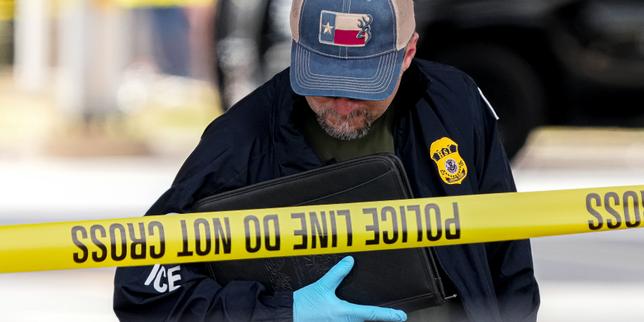
Another violent encounter on Texas soil involving Immigration and Customs Enforcement leaves a man fighting for his life in a hospital ward, reigniting a bitter debate over the militarization of domestic immigration policing. When federal agents discharge firearms during routine or targeted operations in residential neighborhoods, the immediate aftermath is rarely just a localized criminal investigation. It becomes a flashpoint exposing the immense friction between federal authority and civilian safety. Behind the brief headline of a critically wounded suspect lies an expansive, opaque machinery of enforcement that operates with minimal local oversight, extraordinary legal protections, and a persistent propensity for escalation.
To understand why a routine enforcement operation devolves into gunfire, one must examine the institutional transformation of immigration enforcement over the past two decades. What was once primarily a civil administrative agency has steadily acquired the tactical posture, weaponry, and operational ethos of a domestic military force. Officers and agents undergo specialized tactical training that emphasizes threat mitigation in high-stress environments. Yet, when that tactical mindset is applied to crowded apartment complexes, suburban streets, and rural communities across Texas, the margin for error shrinks to zero. A startled movement, a language barrier, or a misunderstood command can transform an administrative arrest into a shooting in seconds.
Texas occupies a unique and volatile position in this equation. As the epicenter of federal immigration enforcement activity, the state hosts thousands of federal personnel operating across expansive borders and deep interior corridors. Local police departments frequently find themselves legally and logistically sidelined when federal operations unfold in their jurisdictions. Under the doctrine of federal supremacy, local law enforcement agencies possess limited authority to investigate or regulate federal personnel acting in the performance of their official duties. This jurisdictional wall creates an accountability vacuum where internal agency reviews replace transparent public scrutiny.
The legal architecture shielding federal officers further complicates accountability. Qualified immunity and federal officer defense statutes erect towering barriers against civil litigation and criminal prosecution when things go wrong. If an ordinary citizen shoots someone during an altercation, the legal consequences are immediate and severe. When a federal agent fires a weapon in the line of duty, the incident triggers a labyrinthine internal review process managed by the Department of Homeland Security Office of Inspector General alongside the agency's own internal affairs division. Months pass in administrative silence. Public transparency remains an afterthought, filtered through official press releases that rarely capture the chaotic reality on the ground.
Community relations suffer catastrophic damage in the wake of such incidents. Trust between immigrant communities—both documented and undocumented—and local institutions disintegrates entirely. When residents witness federal agents deploying deadly force in their neighborhoods, fear supplants cooperation. Witnesses become reluctant to speak with investigators, victims hesitate to report crimes, and a pervasive climate of terror takes root. This chilling effect extends far beyond the immediate circle of the victim's family, poisoning public safety dynamics across entire cities and counties.
The Architecture of Escalation
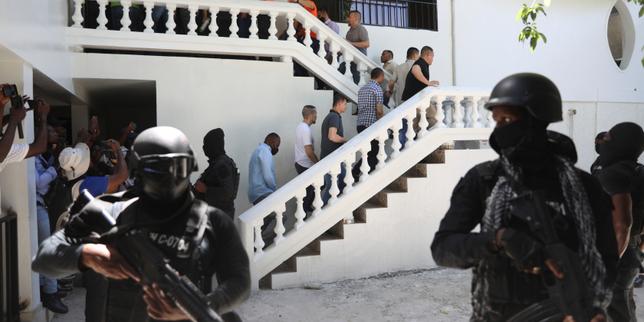
Modern immigration enforcement operations rarely resemble the quiet administrative summons of decades past. Today's warrant executions and targeted sweeps often mirror tactical narcotics raids. Agents wear heavy tactical vests, carry assault-style rifles, and operate in coordinated teams designed for maximum deterrence and rapid containment. This operational posture changes the psychological dynamic of every encounter.
When residents are confronted by armed personnel clad in tactical gear bearing vague federal insignia, panic is a natural human response. Individuals waking up to aggressive pounding on their doors or sudden ambushes in parking lots often react with instinctual flight or defensive posture. Agents, conditioned to expect violent resistance in high-stakes environments, interpret those same panic responses as actionable threats. The result is a dangerous feedback loop where both sides act out of acute fear, exponentially increasing the probability of tragedy.
Critics of current enforcement tactics argue that the agency has suffered from mission creep, absorbing paramilitary capabilities without the corresponding institutional safeguards or community policing training required for civilian environments. Local police departments, for all their well-documented flaws, spend years training officers in de-escalation, crisis communication, and community engagement. Federal immigration task forces, by contrast, focus intensely on apprehension metrics, target acquisition, and tactical dominance. When you train an agency exclusively as a hammer, every community interaction begins to look like a nail.
Immunity and the Federal Shield
The question of accountability sits at the absolute core of the ongoing controversy. When an ICE agent pulls the trigger, the path to justice is fraught with procedural obstacles designed to protect federal actors from state-level interference. Under the Supremacy Clause of the United States Constitution, federal officers performing their duties are generally immune from state criminal prosecution if they reasonably believed their actions were necessary to execute their federal responsibilities.
This immunity doctrine creates a profound imbalance in the justice system. District attorneys in Texas counties where these shootings occur frequently find their hands tied. Launching a grand jury investigation into a federal agent requires overcoming significant legal hurdles, and federal prosecutors at the Department of Justice rarely bring criminal charges against immigration personnel unless public outcry reaches an undeniable threshold. Internal administrative discipline, when it occurs at all, remains hidden behind privacy exemptions and personnel regulations. The public is left to wonder whether an agent who used excessive force faced any professional consequences whatsoever.
Civil remedies are equally illusory. The Supreme Court has repeatedly curtailed Bivens actions—the judicial mechanism allowing citizens to sue federal officers for constitutional violations. Suing an individual ICE agent in civil court for excessive force is an uphill battle nearly guaranteed to stall out on qualified immunity grounds. Consequently, victims and their families are often left with no meaningful recourse through the courts, deepening their sense of disenfranchisement and grief.
The Texas Borderlands Pressure Cooker
Texas is not merely a geographic location for federal immigration policy; it is the primary testing ground where national political rhetoric collides with brutal on-the-ground realities. State leadership frequently pushes aggressive local interdiction strategies, creating a crowded ecosystem where state troopers, National Guard units, county sheriff deputies, and federal immigration agents operate in close physical proximity.
This operational congestion breeds confusion and heightened tension. Multiple agencies with differing chains of command, overlapping jurisdictions, and distinct rules of engagement operate simultaneously across the state. In this environment, communication lapses are common, and the risk of friendly fire or catastrophic misidentification rises exponentially. A neighborhood raid conducted without advanced coordination with local police can easily be mistaken for a criminal assault by terrified residents, prompting armed interventions that pit different layers of law enforcement against one another.
Furthermore, the political climate in Texas charges every enforcement action with ideological significance. For state officials, aggressive immigration enforcement is framed as an existential defense of sovereignty. For immigrant advocacy organizations and civil rights attorneys, it represents an ongoing humanitarian crisis marked by unchecked federal power and frequent civil rights abuses. In the middle of this partisan warzone stand ordinary people trying to live their lives, vulnerable to the collateral damage of a broken system.
Civilian Collateral in the Domestic War
Every time an enforcement operation goes disastrously wrong, the human cost extends far beyond the immediate physical injuries. Consider the family members who witness the trauma, the neighbors who watch armed agents swarm their apartment complex, and the children who grow up associating law enforcement with terror rather than protection.
The man shot in Texas is now the focal point of a profound moral inquiry. Was his apprehension proportionate to the force deployed? Did the agents involved exhaust every possible alternative before reaching for their firearms? Did institutional pressure to meet arrest quotas encourage reckless tactical shortcuts? These questions demand rigorous, transparent answers—answers that rarely materialize from internal bureaucratic investigations.
As long as immigration enforcement relies on militarized tactics, shielded by sweeping legal immunities, and divorced from local community accountability, these tragedies will recur. Reform proposals ranging from mandatory body-worn cameras for all federal agents to independent civilian oversight boards face fierce institutional resistance from an agency accustomed to operating in the shadows. Until systemic changes dismantle the wall of impunity protecting federal enforcement operations, communities across Texas and the broader American interior will continue to bear the dangerous burden of unchecked federal firepower.