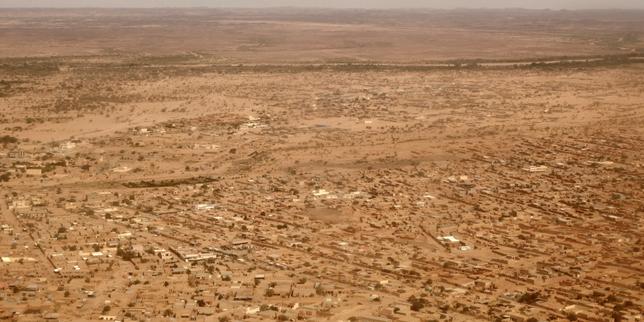
Dust. That is the first thing you remember when you step off a tarmac in West Africa during the harmattan season, a fine, ochre grit that coats your teeth, settles into the creases of your notebooks, and makes every conversation feel slightly temporary.
I spent years listening to diplomats speak in clean, air-conditioned rooms about sovereignty, red lines, and zero tolerance for ransom. Outside those windows, out where the asphalt frays into scrubland and the heat shimmers like spilled gasoline, a very different ledger was being kept. Names rarely appeared in official communiqués. Instead, there were whispers about go-betweens who knew which cousin spoke to which commander, which satellite phone was still charged, and which dusty airstrip could take a small twin-engine plane without alerting radar.
Chérif Ould Taher sits right at the center of those whispers. To read a standard wire report about recent hostage releases in the Sahel is to watch a magician show you the dove appearing in the hat while keeping both sleeves tightly buttoned. A foreign national steps onto a runway. A statement is read. Relief washes over a distant capital. Yet the actual machinery that pulled a human being out of a desert hideout—the phone calls at three in the morning, the cash bundled in canvas bags, the quiet nods between men who officially want each other dead—remains mostly off-camera.
Why does a figure like Chérif Ould Taher become indispensable in a conflict where every faction claims moral or ideological purity? Because when formal diplomacy hits a brick wall of mutual hatred, survival depends on translation. Not just language translation, though knowing the dialects and kinship webs of Mali and its neighbors matters enormously. Translation of intent. Translation of fear. Translation of price.
Let me be upfront with you: parts of this story are inherently murky. Intelligence agencies guard their sources like dragons guard gold, armed groups splinter and rebrand faster than journalists can update maps, and intermediaries survive precisely by staying ambiguous. If someone tells you they have a neat, complete diagram of every dollar and every handshake behind a Sahelian hostage release, they are either selling something or guessing. Still, we can trace the patterns. We can look at how these negotiations actually breathe.
To see how the invisible architecture works without pretending to peek inside a real negotiation room, consider a hypothetical scenario. Imagine a humanitarian engineer—let's call him Mathieu, purely as a stand-in for the dozens of aid workers, travelers, and contractors who have vanished along desert roads over the years—taken near the edge of a dry riverbed in northern Mali. His captors belong to an armed faction operating far from state control. Foreign embassies issue stern condemnations. Families back home refresh news feeds with trembling thumbs, praying for a sign of life while officials debate policy.
Where does a breakthrough come from when official channels are frozen? Often, it starts with someone who belongs to no embassy and wears no uniform, yet knows the terrain in his bones. In the Sahel, local lineage, tribal ties, and cross-border familiarity often carry more weight than formal titles. An intermediary can carry a message where a soldier would draw fire. He can sit on a woven mat in the shade of an acacia tree, drink sweet tea poured from high above the glass, and ask questions that diplomats cannot ask out loud without looking weak.
That is the paradox that makes figures like Chérif Ould Taher so controversial—and so sought after. Critics and security analysts look at the ecosystem of hostage mediation in Mali and see a dangerous moral hazard. Every time money changes hands, or prisoners are quietly swapped, or an armed group gains breathing room and legitimacy, the incentive to kidnap again grows stronger. A single release can buy weapons, fuel, or prestige for fighters who terrorize local villages the rest of the year.
I have sat across from grieving relatives who did not care about geopolitical theory. They cared about whether their brother had water today. They cared whether he was sick. And when you stand in a living room thousands of miles from the Sahara, watching a mother clutch a faded photograph, abstract debates about "not negotiating with terrorists" start to sound very cold.
Think of the Sahel like a dry riverbed during a flash flood. Water rushes into every crack, carving new channels overnight, washing out old landmarks. States weaken in some corridors; armed groups assert authority in others; smugglers and brokers navigate the currents between them. A Malian intermediary operating in this space is not a saint riding in on a white horse. Nor is he a cartoon villain twirling a mustache in a dark room. He is a player operating in a brutal, transactional marketplace where human lives are the highest-stakes commodity on the board.
Historically, mediation in Mali and the broader Sahel has long relied on informal networks—notables, traders, community elders, and fixers who bridge distances that formal institutions cannot cross. Over the past decade and a half, as insurgency spread across northern and central Mali and spilled into neighboring states, those traditional roles collided with modern transnational jihadism, smuggling economies, and competing foreign security interests. The result is a hall of mirrors. A broker might help free captives today while maintaining contacts that intelligence services view with deep suspicion tomorrow.
Consider what happens next when a release finally succeeds:
A plane touches down. Cameras click. Politicians speak of tireless efforts and international cooperation. And almost immediately, the story is treated as finished.
It isn't.
For the person who spent months or years in captivity, freedom is not a switch that flips back to normal. Sunlight hurts. Crowds feel like traps. Sleep comes in jagged pieces. And for the communities living in the shadow of the conflict—farmers, herders, market vendors in towns like Bamako or Gao—the underlying insecurity rarely vanishes just because a high-profile hostage walks free. Often, local residents bear the brunt of raids, blockades, and reprisals long after the international spotlight moves on.
Look at the street life in Bamako in the photo above. Motorcycles weave between pedestrians, shops open their shutters to the morning heat, people try to earn a living and raise their families amid constant economic and security strain. The distance between a dusty desert hideout hundreds of miles away and a bustling avenue in the capital can feel vast on a map, yet the shocks travel fast. Rumors of deals, shifts in power, and money flowing through informal channels ripple through politics and daily life alike.
Why, then, do observers keep returning to names like Chérif Ould Taher whenever hostages are freed? Because those names point to an uncomfortable truth about modern conflict: official narratives rarely capture the whole transaction. Governments may publicly deny paying ransoms while quietly facilitating channels that make payments possible. Rival factions may publicly denounce each other while using the same back-channel conduits when it suits their survival.
If you want to understand what is really happening behind the latest hostage releases in the Sahel, stop looking only at the press conferences. Look at who has access. Look at who can move when borders are tense and trust is nonexistent. Look at what each side gives up—and what each side gains—when a captive is finally handed over.
Sometimes, the most revealing part of a story is not who stands in front of the microphone when the cameras roll. It is who picks up the phone in the dark.