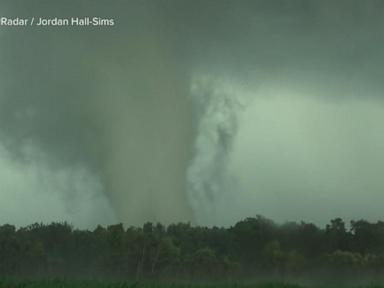
The sky turns an eerie shade of bruised purple, the air grows thick enough to chew, and suddenly the sirens wail. It happened across Iowa, tore through Illinois, and within forty-eight hours, the entire East Coast felt the aftershocks. You might think extreme weather stays localized. It doesn't. The atmosphere does not care about state lines, and the severe storms that just pounded the Northeast are directly tied to the deadly Midwest tornado outbreak that left communities in ruins just days ago.
It is a massive atmospheric engine. When a violent weather system fires up in the center of the country, it rarely just disappears. It evolves. Understanding how a single monster storm system transitions from a tornadic nightmare in the plains to a widespread destructive force in coastal cities is key to surviving the next one. The recent June 2026 tracking maps show exactly how these two regions share the same meteorological fate.
Tracking the Atmospheric Engine From Iowa to New York
The disaster began when a high-risk weather pattern setup over the central plains. The Storm Prediction Center issued rare, urgent wording in its public outlooks, explicitly warning of an organized outbreak. They were completely right. A mix of intense heat, Gulf moisture, and a powerful jet stream triggered violent supercells. In places like Mount Vernon, Illinois, tornadoes ripped through homes, causing tragic fatalities and massive structural damage.
But the tornadoes were only phase one. As the individual supercell storms grew, they merged into a massive, organized wall of wind known as a mesoscale convective system. This system morphed into a derecho, a straight-line wind storm that packed hurricane-force gusts exceeding 75 miles per hour. It knocked out electricity for more than 400,000 residents across the Midwest, flattening cornfields and ripping roofs off businesses.
Once that energy is moving, it keeps going. The system rode along a strong thermal boundary, sliding east across Indiana, Ohio, and Pennsylvania. By the time it reached the Northeast, the core characteristics changed, but the danger remained incredibly high. The system collided with a wall of dense, humid air sitting over cities like New York, Philadelphia, and Washington, sparking severe storms that flooded subways and brought down ancient trees.
Why the Northeast Was Prime for Destruction
Many East Coast residents wonder why a storm from Illinois matters to them. The answer lies in the extreme heat that built up along the I-95 corridor right before the front arrived. High temperatures act like premium fuel for an incoming storm system. When the cooler, unstable air mass from the Midwest crashed into the hot, humid air trapped over the Northeast, the results were explosive.
The atmosphere tries to balance itself out. When cold air hits hot air, the warm air is forced upward with incredible speed. This rapid updraft creates massive hail and intense downbursts of wind. While the Northeast rarely sees the wide, long-track tornadoes that plague Oklahoma or Illinois, it faces a unique vulnerability to flash flooding and straight-line winds due to dense urban development.
Concrete does not absorb water. When a line of severe storms dumps two inches of rain in less than an hour onto asphalt, the water has nowhere to go. This turns city streets into rivers instantly. The energy from the Midwest tornado outbreak did not simply fade away; it changed its clothes, transforming from a twisting wind threat into an urban flooding and infrastructure disaster.
What Most People Get Wrong About Straight Line Wind Damage
There is a common misconception that if a storm is not a tornado, it is not a big deal. That line of thinking gets people killed. Straight-line winds from severe storms can cause identical damage to an EF0 or EF1 tornado, sometimes covering a path that is hundreds of miles wide rather than a few hundred yards.
During the recent outbreak, thousands of people in the Northeast ignored severe thunderstorm warnings because they assumed only a tornado warning required taking shelter. That is a critical error. Straight-line winds can easily top 80 miles per hour, which is more than enough force to snap massive oak trees, flip unsecured vehicles, and push over power poles.
If you look at the damage patterns, tornadoes leave a chaotic, circular debris field because the winds rotate. Straight-line winds push everything down in one uniform direction. But to the homeowner whose roof has been peeled back, the distinction does not matter. Wind is wind, and the momentum carried over from the Midwest convective system proved that straight-line destruction is just as dangerous as a funnel cloud.
The Reality of Power Grid Vulnerability
A major takeaway from this multi-day event is just how fragile our electrical infrastructure remains. The storm system cut a path of darkness from Iowa all the way to Massachusetts. In the Midwest, transmission towers were bent in half by the winds. In the Northeast, mature trees planted a century ago were ripped from the soil, taking entire rows of power lines down with them.
Rebuilding a grid after a cascading storm event takes days, sometimes weeks. Utility companies have to coordinate across state lines to bring in mutual aid crews. When hundreds of thousands of people lose power simultaneously during a summer heatwave, the situation quickly shifts from an emergency of wind and rain to a public health crisis of extreme heat.
People living in suburban and urban areas often assume help will arrive in hours. This event proved that when a storm system is large enough to span multiple regions, resources get stretched to the absolute limit. You cannot rely on the flip of a switch always working after a massive front rolls through.
Surviving the Shift in Modern Weather Patterns
Weather patterns are showing signs of increased volatility, with systems maintaining their intensity over much longer distances. The classic boundary lines of where severe storms happen are blurring. The Northeast is experiencing a noticeable rise in tropical-level humidity earlier in the summmits, which provides the exact ingredients needed to sustain Midwestern storm systems as they travel east.
Staying safe means changing how you interpret weather alerts. A watch means the ingredients are in the kitchen; a warning means the meal is being served. When a severe thunderstorm warning is issued for your area, you need to treat it with the same urgency as a tornado watch.
The traditional advice of just staying indoors needs an upgrade. You need to know exactly which part of your indoor space offers the most protection from falling trees and flying glass.
Practical Steps to Handle Fast Moving Severe Weather
Waiting until the sky turns dark to plan your response is a recipe for disaster. You need a proactive strategy to handle the realities of these cross-country storm systems.
- Audit your property for wind hazards: Dead tree limbs overhanging your roof are ticking time bombs. Cut them down before the wind does it for you. Secure loose patio furniture, trash cans, and trampolines, which can become lethal projectiles in 70 mile per hour winds.
- Establish a dual layer communication plan: Cell towers fail when the power grid goes down. Keep a dedicated, battery-operated NOAA weather radio in your home. Ensure your smartphone has wireless emergency alerts turned on, and don't rely entirely on Wi-Fi networks that go dark the second the power flickers.
- Identify your interior safe zone: Move to the lowest level of your home, away from windows. If you live in an apartment building on an upper floor, identify an interior hallway or a stairwell that puts as many walls between you and the outside as possible.
- Prepare for multi-day grid failures: Keep your vehicles at or above half a tank of gas. Maintain a supply of non-perishable food and at least one gallon of water per person per day for a minimum of three days. Keep portable power banks fully charged ahead of any predicted storm lines.
The atmosphere is a continuous, moving puzzle. The destruction we saw in the Northeast was not an isolated random event. It was the direct consequence of a volatile, highly charged system that started its destructive run days earlier in the heart of the Midwest. Pay attention to the weather happening west of your location, because in a connected climate, their today is very often your tomorrow. Protect your home, secure your emergency supplies, and stay informed before the clouds roll in.