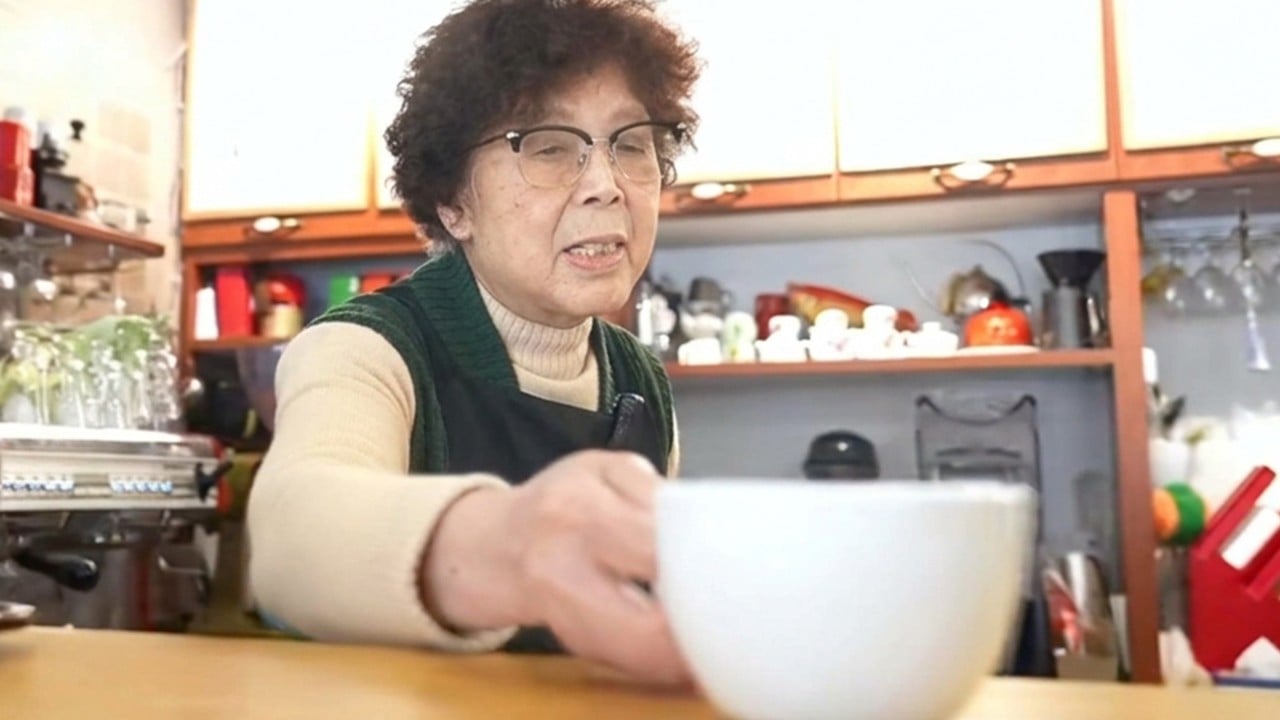
The steam rising from an industrial espresso machine smells of burnt sugar and crushed stone. To most people, that scent means morning routines, deadlines, and the hurried friction of modern life. To Chen Jinfang, it once smelled like an entirely foreign language.
At an age when society usually expects quiet retirement, folding laundry, and watching the afternoon shadows stretch across a balcony floor, Chen found herself standing behind a commercial counter in Zhejiang Province. Her hands, weathered by decades of domestic labor and the quiet, heavy work of raising a family, gripped a heavy portafilter. The metal was cold. The stakes were absolute. You might also find this related article useful: How Festival Waste Became Thousands of School Desks.
Her son’s coffee shop was bleeding money.
In the bustling economy of contemporary China, where digital natives launch trendy lifestyle brands before their morning commute, a small independent cafe failing is hardly headline news. Neighborhoods shift. Tastes pivot toward nitro cold brews and hand-poured geishas overnight. Rent climbs. Margins shrink. When a business founders, the typical script involves liquidation, quiet resignation, and the bitter taste of sunk costs. As extensively documented in recent coverage by Vogue, the results are notable.
Chen refused to read that script.
Instead, she did something radical. She became a student.
Watch a master craftsperson for a moment. Notice the economy of their motion. There is no wasted twitch, no hesitation between intention and execution. Chen had to build that economy from scratch. At seventy years old, she sat in training classes surrounded by twenty-somethings who spoke fluent latte art terminology, tracking milk temperatures with infrared precision. She memorized bean origins, extraction times, and the delicate chemistry of microfoam.
Why? Because a mother does not calculate return on investment. She calculates survival.
When the story of the Coffee Grandma first surfaced online, social media algorithms did what they always do. They flattened a complex human struggle into a digestible, sugary meme. They called it wholesome. They called it cute. They framed it as a charming retirement hobby that accidentally went viral.
They were entirely wrong.
This was not a hobby. It was an intervention born of fierce, protective pragmatism. It was a collision between traditional parental sacrifice and the hyper-competitive realities of modern consumer culture.
Consider the invisible architecture of family businesses in East Asia. The bond between parent and child is not merely contractual or emotional; it is deeply structural. When a child invests their savings, their sweat, and their identity into a venture like a cafe, a parent’s skin is inherently in the game. When that venture teeters on the edge of bankruptcy, the psychological weight transfers directly onto the older generation. Chen did not learn to brew espresso because she wanted a new hobby for her golden years. She learned because her son was drowning, and she refused to watch from the shore.
The internet celebrated her as an emblem of female independence. That framing, while technically accurate, misses the grit underneath. True independence rarely arrives with a grand manifesto or a corporate keynote address. More often, it looks like an elderly woman standing in a crowded kitchen, burning her fingers on hot steam wands, refusing to let her son fail.
Independence is forged in the refusal to be sidelined.
For decades, women of Chen’s generation played a very specific, invisible role in the grand narrative of economic development. They were the shock absorbers of society. They cooked, they cleaned, they raised grandchildren, and they absorbed the financial and emotional shocks of a rapidly modernizing nation without complaint. They were the quiet foundation upon which skyscrapers were built.
Yet, society often views aging women as static figures. We romanticize youth as the season of adaptation and treat old age as a period of inevitable obsolescence. We assume that once a person crosses a certain birthday, their capacity for learning hard new skills evaporates.
Chen’s steaming pitcher shattered that assumption with the force of a hammerblow.
When she stepped behind the counter, she did not just pull shots of espresso. She inverted the power dynamics of the room. The young customers who walked in expecting a standard transaction found themselves face-to-face with an elder who was mastering a craft right before their eyes. The novelty drew crowds, yes. But the longevity of the business proved something more profound: competence knows no age bracket.
We live in an era obsessed with disruption. Venture capitalists throw billions at twenty-year-old founders promising to reinvent industries through algorithms and artificial intelligence. We worship the disruptor who breaks things fast. But true disruption is sometimes much quieter. It is a grandmother learning how to steam milk at an age when most people have stopped learning new routes to the grocery store.
The cafe survived. The ledger shifted from red to black. The tables filled up with people who came for the novelty and stayed for the warmth of a woman who proved that it is never, under any circumstances, too late to learn how to keep the lights on.
As you walk past your local coffee shop tomorrow morning, pause for a second before you grab your paper cup. Listen to the hiss of the steam wand. Look at the person standing behind the counter.
Beneath every routine transaction lies a hidden story of reinvention, pressure, and quiet defiance. We are all, at any given moment, just one catastrophic failure away from having to learn an entirely new language.
The only question is whether we have the courage to pick up the portafilter when our turn comes.