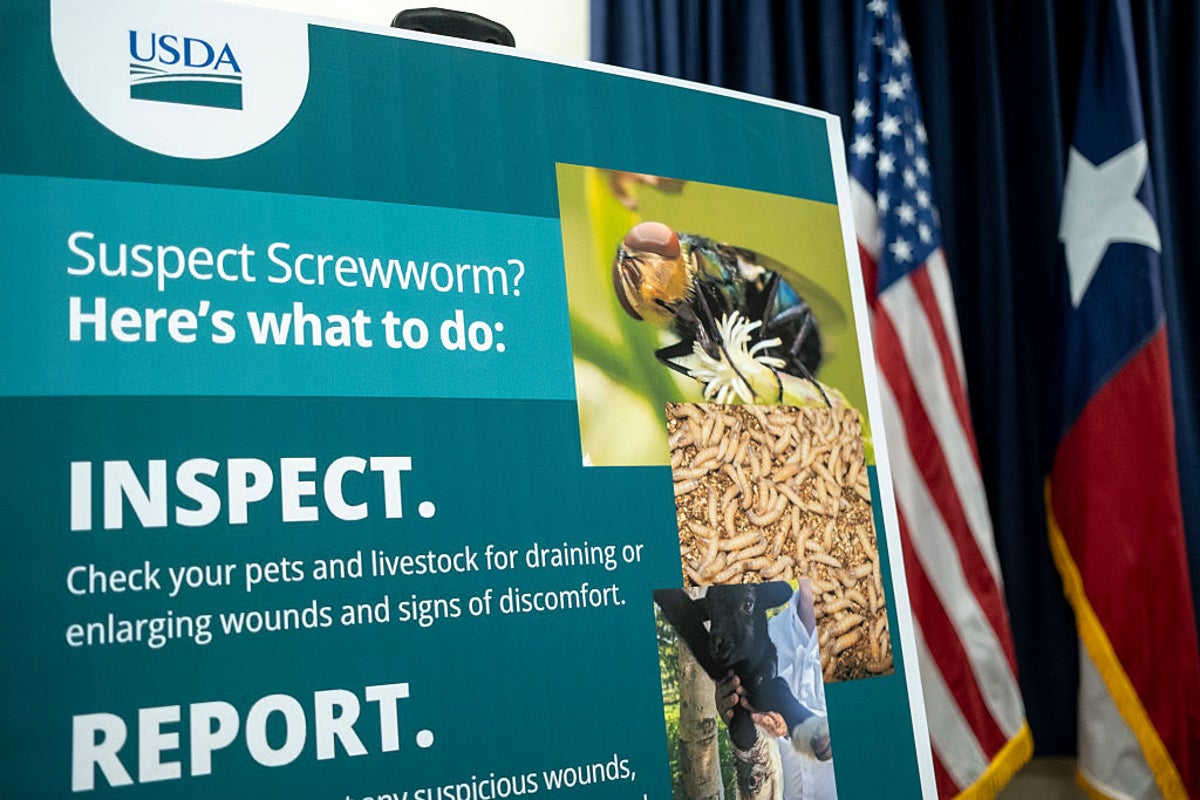
The New World screwworm is marching north, and standard veterinary defenses are entirely unequipped for what is coming.
For decades, American pet owners enjoyed a comfortable illusion of geographic immunity. We worried about ticks, fleas, heartworms, and the occasional rabies scare. We believed our borders were tightly sealed against biological threats that routinely ravage livestock in Central and South America. That illusion is splintering. Driven by shifting weather patterns, rising global temperatures, and increased movement across international zones, this flesh-eating parasite is systematically reclaiming historical territory.
When a standard blowfly lays eggs, the resulting maggots typically feed on decaying tissue, dead carcasses, or necrotic material. They are scavengers of opportunity. The Cochliomyia hominivorax operates under an entirely different, terrifying mandate. It targets living flesh.
Female flies are drawn inexorably to the scent of living tissue exposed by a scratch, a tick bite, a surgical incision, or even a minor tick attachment site. They deposit hundreds of eggs directly onto the warm, moist margins of an open wound. Within twenty-four hours, those eggs hatch into microscopic larvae equipped with sharp, meat-hook mouthparts. They do not wait for the tissue to die. They actively burrow into healthy, vascularized muscle and skin, feeding voraciously on the living animal.
To understand the biological horror of a screwworm infestation, one must look past the clinical definitions and examine the mechanics of the wound itself.
The larvae burrow downward and outward in a dense, writhing mass, expanding the pocket of damage beneath the skin. As they feed, they secrete proteolytic enzymes that liquefy the surrounding muscle tissue, turning a minor abrasion into a cavernous crater. The host animal experiences relentless, agonizing pain. Because the larvae secrete toxins that suppress local clotting and induce continuous bleeding, the wound often emits a distinct, sickly sweet odor that attracts more female flies. A single pet can become host to multiple overlapping generations of larvae simultaneously.
Left untreated for even a few days, the outcome is systemic shock, massive secondary bacterial infection, and death.
Veterinarians on the front lines face a brutal reality check. Most modern veterinary clinics in urban and suburban settings have never diagnosed a live screwworm case. The last massive outbreaks in the United States were stamped out decades ago through a monumental, federally coordinated biological eradication program involving the release of millions of sterile male flies. That institutional memory has faded. Today, general practitioners are encountering a parasite they only read about in outdated parasitology textbooks.
Misdiagnosis is rampant. A veterinarian seeing a draining wound on a dog returning from a southern border state might initially treat it as a routine abscess, a puncture wound from a fight, or a severe hotspot complicated by flystrike from common houseflies. Antibiotics are prescribed. Topical creams are applied. Meanwhile, the screwworm larvae continue their subterranean excavation, unaffected by standard antibiotics meant to target bacteria.
By the time the practitioner realizes the true identity of the invader, the structural damage to the animal is often catastrophic.
The Logistics of Vulnerability
Why are pets suddenly at heightened risk? The answer lies at the intersection of climate change and shifting wildlife corridors.
Screwworms thrive in tropical and subtropical climates. As winter freezes become shorter, milder, and less reliable across the southern tier of the United States, the geographic barrier that once held the flies at bay is eroding. Furthermore, wildlife vectors such as white-tailed deer, coyotes, and feral hogs act as silent transit systems. A deer carrying an undetected ear wound infested with screwworm larvae can cross state lines in a single night, shedding fertile flies into new, unprepared ecosystems.
Domestic pets living in rural or semi-rural environments face the highest exposure. Dogs that spend hours roaming wooded property, hunting, or interacting with livestock are prime candidates. However, urban pets are not entirely safe. A single stray fly entering through an unscreened window or hitching a ride on a vehicle can find a susceptible host in a backyard garden.
Prevention requires a complete overhaul of how we monitor pet health. Standard monthly flea and tick preventatives do not stop screwworm flies from landing and laying eggs. While some oral or topical parasiticides eventually kill larvae once ingested or absorbed into the bloodstream, relying on systemic medication after the fact is a dangerous gamble.
The first line of defense is aggressive environmental management and hyper-vigilance.
Every scratch, scrape, or minor cut must be treated immediately with antiseptic washes and covered if possible. If you live in an area flagged for potential screwworm migration, or if you travel with your pet through Central America, Mexico, or the southern border regions, daily physical inspections are mandatory. Run your hands through your pet's fur. Separate the coat to inspect the skin, paying special attention to the ears, between the toes, around the tail base, and anywhere a tick might have fed.
If you notice a small, wet lesion that seems unusually painful, do not wait for it to clear up on its own.
The Treatment Paradox
If a pet is diagnosed with a screwworm infestation, the treatment protocol is rigorous, manual, and deeply unpleasant for both the animal and the clinician.
There is no simple pill that makes the infestation vanish overnight. The practitioner must physically extract the larvae using specialized forceps, one by one, from the deep pockets of living tissue. This process requires heavy sedation or full anesthesia because the pain of extraction is extraordinary. Every single larva must be removed. Leaving even a fraction behind allows the colony to regenerate or triggers severe localized necrosis from decaying organic matter left inside the wound.
Once the manual extraction is complete, the wound is flushed aggressively with specialized larvicides and antiseptic solutions. Systemic broad-spectrum antibiotics are then administered to combat the inevitable secondary bacterial infections brought on by the introduction of foreign pathogens into the bloodstream.
The recovery period is long, requiring strict confinement, Elizabethan collars to prevent chewing, and daily bandage changes that test the patience of even the most devoted owners.
Preparing for the Inevitable Spread
The federal government and state departments of agriculture maintain surveillance networks, but these systems are primarily designed to protect the agricultural cattle industry, not household pets. Companion animals often fall into a regulatory blind spot. When resources are allocated, cattle ranches and multi-million-dollar livestock operations take precedence over a suburban backyard dog.
Pet owners must take individual responsibility for bridging this preparedness gap.
This means rethinking how we react to minor injuries. A small tear on a dog's ear flap, previously ignored as something that would heal on its own in a few days, must now be treated as an urgent biological vulnerability. It means keeping wound cleansers, sterile gauze, and protective ointments in every home emergency kit. It means questioning your veterinarian directly during routine checkups about local parasite intelligence reports.
The spread of the New World screwworm is not a hypothetical sci-fi scenario or an exaggerated headline designed for internet panic. It is a biological certainty unfolding across our southern boundaries, fueled by environmental shifts that humanity has set into motion.
Ignore the warning signs, and the cost will be measured in the agonizing suffering of animals that depend entirely on our vigilance to survive.