The headlines are celebrating a "diplomatic masterstroke" because Donald Trump signaled a rollback on Scotch whisky tariffs following a visit from King Charles III. The consensus is simple: taxes go down, prices go down, and the Scotch industry enters a new golden age.
This narrative is amateur hour.
If you think a handshake and a 25% reduction in duties will suddenly make your favorite single malt affordable or stabilize the spirits market, you are ignoring the brutal mechanics of global supply chains and corporate greed. This isn't about trade liberation. It's about a shifting geopolitical leverage play where the consumer is, as always, the last priority.
The Price Cut That Never Hits Your Wallet
The biggest myth in international trade is that tariff relief trickles down to the shelf price. It doesn't.
When the U.S. government removes a 25% duty on an imported luxury good, that margin doesn't vanish into the ether. It gets swallowed. I have sat in the rooms where these decisions happen. The importers look at the bottom line and realize that if the market has already "priced in" a $100 bottle of Lagavulin, there is absolutely zero incentive to drop that price to $80.
Instead, the importer keeps 10%. The distributor takes 8%. The retailer claws back the remaining 7% to cover their rising overhead. The consumer still pays $100.
We saw this exact dance during the 2021 tariff suspension. Did prices plummet? No. They stabilized at the "new normal" while the conglomerates—Diageo, Pernod Ricard, and LVMH—padded their quarterly earnings. To believe that this time is different is to ignore the fundamental directive of a publicly traded company: maximize shareholder value, not consumer savings.
The King Charles Factor Is Pure Theatre
The media loves the "Royal Influence" angle. It makes for a great story. A King visits, a President relents, and the special relationship is saved.
In reality, the King of England has as much influence over U.S. trade policy as a weather vane has over the wind. Trump’s move isn't a gift to the Monarchy; it’s a tactical maneuver to isolate the European Union. By carving out a win for the UK post-Brexit, the administration is signaling to Brussels that bilateral deals are the only way to play ball.
Scotch is merely a convenient pawn. It is a high-visibility, low-risk concession. Unlike steel or aluminum, Scotch doesn't compete with a massive domestic "Single Malt" lobby in the U.S. that can swing elections in the Rust Belt. Giving up the Scotch tariff costs the U.S. Treasury a rounding error in revenue but buys significant political capital in Westminster.
The Inventory Glut Nobody Wants to Discuss
The industry is currently screaming about tariffs because they need a scapegoat for a much larger problem: a massive global oversupply.
During the "premiumization" craze of the last decade, every distillery in the Highlands ramped up production. They bet that the world would never stop drinking $200 bottles of smoke and peat. They were wrong. High interest rates and a cooling global economy have slammed the brakes on luxury spending.
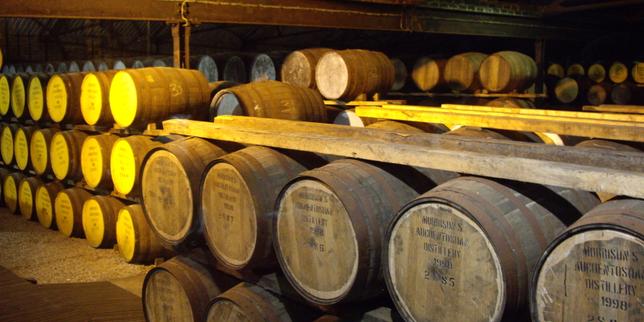
Distilleries are now sitting on warehouses full of aging stock that they can't move. They want the tariffs gone not so they can sell more to you, but so they can offload excess inventory to American distributors who are already bloated with "dead stock."
If the tariffs stay, the industry has to admit it overproduced. If the tariffs go, they can blame the "difficult recovery" for their stagnant sales figures. It’s a classic shell game.
The Rise of American Single Malt
While everyone is looking at Scotland, they are missing the real disruption happening in their own backyard. The U.S. Alcohol and Tobacco Tax and Trade Bureau (TTB) recently moved toward formalizing the "American Single Malt" category.
Producers like Westland, Balcones, and Virginia Distillery Co. aren't just making "American Scotch." They are making something distinct, and they don't have to ship it across the Atlantic.
Even with zero tariffs, Scotch faces a losing battle against the carbon footprint and logistics costs of domestic American spirits. A savvy investor isn't looking at the price of a crate of Macallan; they are looking at the production capacity of high-end American distilleries that are about to eat Scotland’s lunch in the mid-tier luxury market.
The Hidden Cost of "Free" Trade
Let's engage in a thought experiment. Imagine a scenario where Trump actually eliminates every single barrier to Scotch imports. Total deregulation.
What happens next?
The floodgates open. The market is saturated with low-quality "No Age Statement" (NAS) bottles designed to capture the new margin. The prestige of the "Scotch" brand—built on scarcity and heritage—erodes. When a product becomes a commodity, the quality always suffers.
We are already seeing this. To keep up with demand and maintain margins during the tariff era, many distilleries moved away from age statements. They started using younger whiskies, heavier filtering, and more caramel coloring. Removing the tariff won't bring back the 18-year-old expressions at a fair price; it will just accelerate the race to the bottom as brands compete on volume rather than craft.
The Strategy for the Real Insider
If you want to actually benefit from this news, stop looking at the retail shelf.
- Watch the Secondary Market: As big brands use tariff relief to shore up their balance sheets, independent bottlers (the "Indies") will find themselves squeezed. This is where the real value lies. Buy the independent bottlings now before the conglomerates buy up the remaining casks to control the supply.
- Ignore the Hype: Any "Trump-Royal" commemorative bottling is a trap. It's a marketing gimmick designed to extract a "collector's premium" on liquid that is likely mediocre.
- Pivots, Not Peat: The real money in the spirits world is moving toward agave and American grain. Scotch is a legacy play. It’s the IBM of the liquor cabinet—reliable, prestigious, but lacking the growth potential of the new guard.
The Scotch industry doesn't need a tariff holiday. It needs a reality check. It has spent years leaning on its "heritage" while ignoring the fact that the modern consumer is more price-sensitive and less brand-loyal than ever before.
The King didn't save Scotch. The President didn't save Scotch. They just gave a dying pricing model a few more months of oxygen.
Stop celebrating the "end of the trade war" and start asking why you’re still paying a 300% markup for fermented barley that’s been sitting in a damp shed for a decade. The math doesn't add up, and no amount of diplomatic theater is going to fix the underlying rot in the luxury spirits market.
Check the labels. Follow the margins. Don't be the person who pays for the King's lunch.