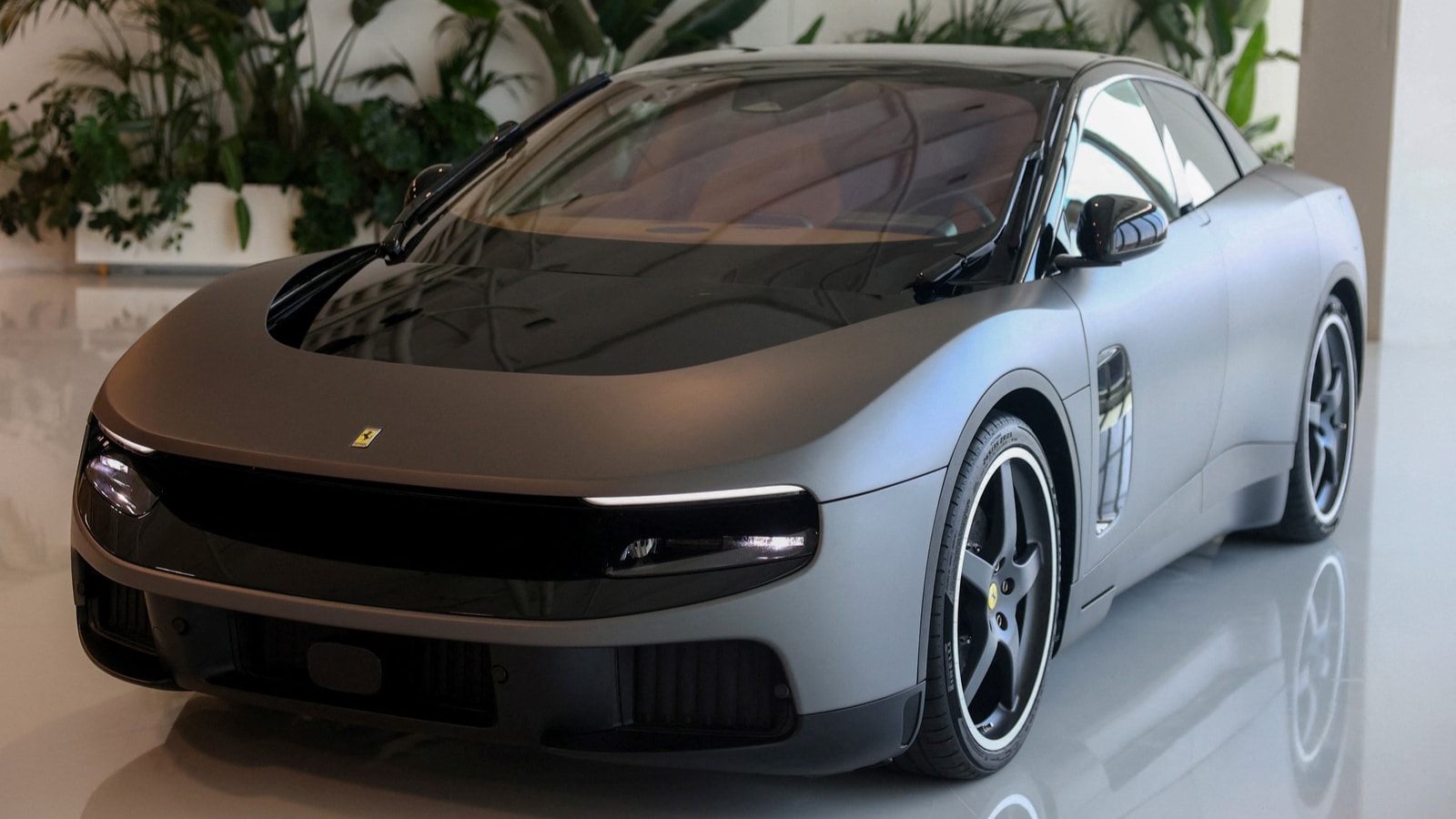
Ferrari’s announcement that its inaugural electric vehicle—the Luce—is already fully allocated for the upcoming production year is not a traditional demand story; it is the predictable output of a closed-loop capital allocation system. Conventional automotive reporting frames a sold-out order book as a sudden surge in consumer enthusiasm for electric propulsion. That interpretation confuses symptom with architecture. In Maranello, an allocation sell-out before broad public testing is the baseline operational requirement for protecting gross margins, residual values, and brand equity during a structural technology transition.
To understand how Ferrari neutralized the adoption risk that currently plagues mass-market and premium electric vehicle manufacturers, one must examine the mechanics of artificial supply ceilings, tiered customer qualification, and pricing power decoupled from drivetrain chemistry.
The Structural Economics of Controlled Scarcity
Mass-market automakers operate on an economies-of-scale model where unit profitability depends on maximizing factory utilization and amortizing fixed tooling costs across hundreds of thousands of units. When electric vehicle demand fluctuates, those manufacturers face immediate margin compression through inventory buildup and price discounting. Ferrari operates on the inverse economic principle, historically articulated by Enzo Ferrari as delivering one car fewer than the market demands.
By capping first-year production of the Luce before opening the order book, Ferrari establishes an asymmetric supply-demand curve. The operational mechanics of this model rely on three interlocking constraints:
- Production Ceiling Discipline: Maranello’s manufacturing infrastructure—specifically its e-building facility designed to integrate high-voltage battery assembly, electric axle production, and traditional chassis fabrication—is calibrated for flexibility rather than volume. Output is gated by assembly line cadence and strict quality tolerances, ensuring supply never approaches saturation.
- Order Book Visibility: Ferrari maintains a multi-year order backlog across its internal combustion and hybrid portfolio. Introducing the Luce into this queue allows executives to meter deliveries precisely, smoothing revenue recognition across fiscal quarters regardless of macroeconomic headwinds.
- Residual Value Protection: High-net-worth buyers treat limited-production Ferraris as depreciating-resistant assets rather than consumable transport. Overproducing an inaugural electric model would flood the secondary market, eroding resale values and breaking the implicit financial contract between the factory and its collector base.
When CEO Benedetto Vigna confirms that next year’s production is fully spoken for, the statement reflects deliberate capacity throttling as much as buyer appetite. The factory sets the denominator first; the existing client network fills the numerator.
Deconstructing the Buyer Qualification Funnel
A sold-out allocation for a new Ferrari nameplate does not indicate that first-time buyers rushed dealerships with deposits. Ferrari manages access to flagship and transitional models through a strict hierarchical qualification system managed via its global dealer network and client relationship databases.
Access to initial build slots follows a weighted scoring matrix built on historical purchasing behavior:
- Multi-Car Ownership History: Priority goes to clients who hold multiple current-generation models in their garages, demonstrating sustained capital commitment to the marque.
- Portfolio Diversification: Buyers who purchase non-limited V8 and V12 grand tourers alongside track-focused specials rank higher than buyers who only attempt to cherry-pick limited editions for immediate resale.
- Brand Participation: Active engagement in factory-sanctioned racing programs, Cavalcade driving events, and Tailor Made bespoke commissioning programs signals long-term alignment with the brand.
For the Luce, this qualification funnel serves a dual purpose. First, it guarantees immediate absorption of first-year supply without customer acquisition costs or marketing expenditure. Second, it places the first wave of electric Ferraris into the hands of seasoned brand loyalists who understand Maranello’s engineering philosophy. These early adopters act as insulation against critical skepticism. Rather than defending an electric drivetrain to skeptical mass-market luxury buyers, Ferrari places the vehicle with collectors who view the Luce as the next mandatory chapter in a continuous lineage.
Neutralizing the Electric Vehicle Depreciation Trap
The primary financial obstacle facing luxury electric vehicles across the broader automotive sector is severe first-year depreciation. Rapid advancements in battery chemistry, charging architecture, and software render early electric luxury sedans and sports cars obsolete within thirty-six months. Traditional luxury brands attempting to command six-figure prices for electric vehicles have struggled because buyers recognize that residual values collapse once a newer battery generation arrives.
Ferrari insulates the Luce from this technological obsolescence curve through three structural mechanisms:
Modular Hardware Architecture
Unlike legacy automakers that outsource entire battery packs and electric drive units as sealed black boxes, Ferrari engineered its e-building to assemble proprietary electric motors, inverters, and battery modules in-house. This vertical integration allows Maranello to service, upgrade, and remanufacture high-voltage components over decades. By treating the battery pack as a replaceable structural module rather than a permanent lifespan limiter, Ferrari preserves the long-term collectibility of the chassis.
Sensory and Dynamic Differentiation
In internal combustion supercars, emotional engagement is tied to acoustic frequencies, throttle response, and mechanical gearshifts. Electric powertrains inherently flatten these characteristics, delivering instantaneous torque with near-zero acoustic drama. To prevent the Luce from feeling indistinguishable from high-performance electric sedans, Ferrari focuses engineering resources on proprietary sound synthesis—amplifying real mechanical frequencies from the electric powertrain rather than playing artificial audio tracks—and vehicle dynamics software that manipulates torque vectoring across individual wheels to replicate agile, rear-biased handling characteristics.
Bespoke Commissioning Margin Expansion
Base price is merely the starting point for Ferrari unit economics. Through the Personalization and Tailor Made programs, buyers routinely add twenty to thirty percent to the vehicle's base transaction price through custom paint formulations, exposed carbon fiber weaves, and bespoke interior materials. Because these options carry minimal marginal production cost relative to their retail price, they insulate Ferrari’s operating margins from the higher bill-of-materials cost associated with electric drivetrains.
The Strategic Role of the Luce in the Powertrain Portfolio
The full allocation of the Luce must be analyzed within Ferrari’s broader multi-energy roadmap rather than as an isolated product launch. Unlike competitors that pledged total abandonment of internal combustion by fixed calendar dates—only to reverse those commitments when electric demand stalled—Ferrari maintained a balanced portfolio strategy dividing output across internal combustion, hybrid, and fully electric powertrains.
This diversification achieves two critical strategic objectives:
- Regulatory Compliance Without Brand Dilution: Global emissions mandates, particularly within the European Union and key Asian markets, impose severe financial penalties on fleet-average carbon emissions. A high-margin, zero-tailpipe-emission model offsets the carbon footprint of low-volume, naturally aspirated V12 models, allowing Ferrari to continue producing flagship combustion engines legally and profitably.
- Hedged Capital Expenditure: Because the Maranello assembly lines can shift production ratios between hybrid and electric architectures in response to real-time order intake, Ferrari avoids stranded asset risk. If electric vehicle adoption among ultra-high-net-worth individuals plateaus after the initial collector wave, the factory can throttle Luce production downward and reallocate build slots to high-margin hybrids without idling workers or writing down dedicated assembly lines.
Limitations and Execution Risks
While a sold-out first year validates Ferrari’s allocation mechanics, the strategy carries distinct operational vulnerabilities that will test management over the next thirty-six months.
The Second-Wave Demand Test: Initial allocations are easily absorbed by core collectors who buy every significant Maranello release to maintain their VIP status. The true test of the Luce’s commercial viability occurs in years two and three, when production must be absorbed by incremental luxury buyers who evaluate the vehicle on driving dynamics and daily usability rather than collector obligation.
Weight Versus Dynamics: High-density battery packs introduce unavoidable mass penalties. Even with structural battery integration and lightweight aluminum chassis engineering, an electric grand tourer or crossover carries significantly more curb weight than a mid-engine combustion sports car. Managing tire thermal degradation, braking endurance, and cornering agility under heavy mass loads remains an unresolved physics challenge across the high-performance electric sector.
Software Reliability: Modern electric architectures rely heavily on complex, centralized software ecosystems for battery management, thermal regulation, and human-machine interfaces. Legacy luxury automakers have repeatedly suffered brand damage from delayed launches and software glitches in first-generation electric platforms. Ferrari’s reputation for mechanical precision leaves zero tolerance for electronic bugs or charging incompatibilities among clients accustomed to seamless ownership experiences.
Strategic Execution for Luxury Automotive Competitors
Competitors attempting to replicate Ferrari’s pre-launch sell-out cannot simply mimic the marketing announcement; they must restructure their underlying unit economics before launching flagship electric models.
- Establish Hard Volume Caps Before Pricing: Luxury brands must define maximum annual production numbers based on projected three-year residual values rather than factory capacity. Sacrificing short-term unit volume is the only reliable mechanism to eliminate dealer discounting and preserve brand equity.
- Implement Tiered Allocation Gates: Require prospective buyers of flagship electric models to demonstrate brand commitment through existing ownership or bespoke commissioning deposits before granting access to first-year build slots. Filtering out speculative flippers protects secondary market pricing during the critical first twenty-four months of deliveries.
- Decouple Chassis Value from Battery Lifespan: Engineering teams must design battery enclosures for straightforward removal and future cell-chemistry upgrades. Offering a factory-backed battery replacement and certification program guarantees collectors that the vehicle will remain functional and valuable decades after initial delivery.
- Maintain Flexible Assembly Infrastructure: Avoid single-powertrain factory commitments. Invest in modular assembly lines capable of building internal combustion, hybrid, and electric architectures under one roof so production mix can adjust dynamically to real-world order backlogs rather than regulatory forecasts.


