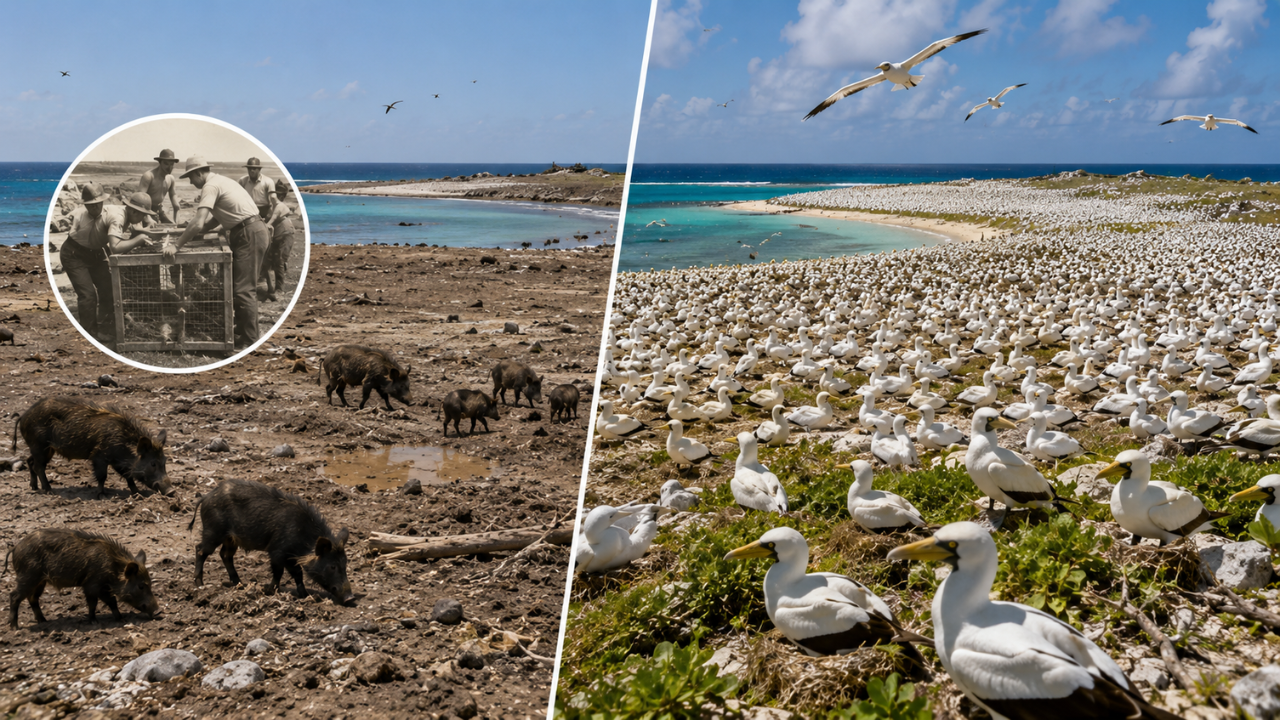
The standard environmental narrative loves a clean fairy tale. Drop fifty-eight pigs onto an isolated atoll, watch them breed, label them ecological terrorists, wipe them out, and watch the seabirds bounce back to a neat one hundred thirty-seven thousand. Cue the applause. Print the award. Put it in the glossy magazine.
It is neat. It is tidy. And it is a profound distraction from how ecosystems actually function.
Conservationists treat island ecosystems like pristine glass display cases. They assume that if you remove the human-introduced variable, the ecosystem snaps back to some mythical Eden. I have spent years watching institutions blow millions on eradication campaigns while ignoring the broader mechanical reality.
Clipperton Atoll is not a wildlife sanctuary saved by a heroic extermination squad. It is a textbook case of reductionist ecology masking structural failure.
The Lazy Consensus of Eradication
The mainstream story goes like this. Feral pigs introduced by mariners or guano miners tore up the atoll. They ate the eggs of ground-nesting seabirds like boonies and terns. Once those pigs were cleared away in nineteen fifty-eight, nature healed itself.
This framing relies on a lazy premise: that nature is a zero-sum game where every predator removed equals a direct, linear dividend for prey.
Ecosystems do not operate on simple spreadsheets. When you eradicate a dominant mammalian herbivore-turned-carnivore from a coral atoll, you do not restore history. You create a massive ecological void. Pigs weren't just eating birds; they were turning soil, altering nitrogen cycles, and interacting with crab populations, plant cover, and marine nutrient deposits from offshore upwellings.
By focusing entirely on the body count of the pigs, biologists sidestep the messy reality of what actually drives seabird populations: marine resource availability, ocean temperature anomalies, and pelagic food web dynamics. A seabird population does not boom simply because the ground is quiet. It booms because the ocean underneath it is producing enough small pelagic fish to feed millions of hungry chicks.
If the fish aren't there, a pig-free island is just an empty parking lot with better views.
The Missing Nuance in the Guano Wars
Let us look at the actual history of Clipperton. This tiny French speck in the eastern Pacific wasn't just a quiet nature retreat overrun by rogue livestock. It was a brutal extraction site. For decades, humans stripped the rock of guano, displaced native species, brought in rats, pigs, cats, and humans who treated the atoll as a temporary mining camp before abandoning it entirely.
When the pigs were finally culled, the celebratory narrative ignored the secondary ecological shockwaves. Removing a keystone mammal triggers a trophic cascade that rarely matches our human desire for symmetry.
Let us run a thought experiment. Imagine a scenario where you pull every single introduced vertebrate off an isolated island overnight. You wipe out the rats, the cats, the goats, and the pigs. What happens next? Do the endemic plants instantly reclaim their ancient territory? Do the seabirds descend in glorious harmony?
Often, they don't. Without herbivores keeping aggressive vines and non-native weeds in check, invasive vegetation explodes. The ground becomes choked with dense, impenetrable thickets that actually prevent ground-nesting birds from landing or moving to their traditional nesting scrapes. The ecosystem doesn't revert to nineteen hundred; it shifts into a bizarre, hyper-modified novel ecosystem that requires permanent human intervention to keep from collapsing into a different kind of monoculture.
Conservation agencies love to talk about "restoration," but they are usually chasing a ghost.
The Downside of Our Own Medicine
I am not here to argue that feral pigs belong on fragile coral atolls. They cause immense local damage, erode soil, and decimate naive island fauna. When an island's endemic species have evolved without mammalian predators, the arrival of a rooting, omnivorous ungulate is an extinction-level catastrophe.
Here is the bitter pill that conservation purists refuse to swallow: eradications are frequently treated as vanity metrics for bureaucratic funding.
I've watched organizations trumpet a successful island clearance while surrounding pelagic fisheries collapse due to industrial overfishing. You can slaughter every pig on Clipperton, but if industrial longliners strip-mine the surrounding tuna stocks that drive seabird foraging success, those one hundred thirty-seven thousand birds are walking a tightrope over an abyss.
Focusing exclusively on terrestrial eradication is like performing plastic surgery on a patient suffering from cardiac arrest. It looks proactive, it makes for great press releases, and it completely misses the fatal wound.
Dismantling the Façade
People ask: If invasive species removal works, why call it theater?
Because it treats symptoms while ignoring systemic pathology. It creates the comforting illusion that we can surgically excise human mistakes from the planet and leave behind pristine wilderness.
We cannot. The Anthropocene is not a place we can manage through isolated hit-and-run culling operations. Every square inch of the globe, from uninhabited coral rings in the eastern Pacific to the deep ocean trenches, is tied to global climate shifts, plastic pollution, and industrial fishing pressures.
If we want to protect seabirds, we have to stop pretending that dropping a bounty hunter onto an atoll solves the planetary crisis. We need to look at marine protected areas, pelagic catch limits, and ocean warming models.
Stop funding feel-good cleanups that serve as PR shields for institutions unwilling to tackle the hard, boring, systemic drivers of ecological collapse.
The pigs are gone. The birds had their moment. The ocean is still dying.
Fix the water.


