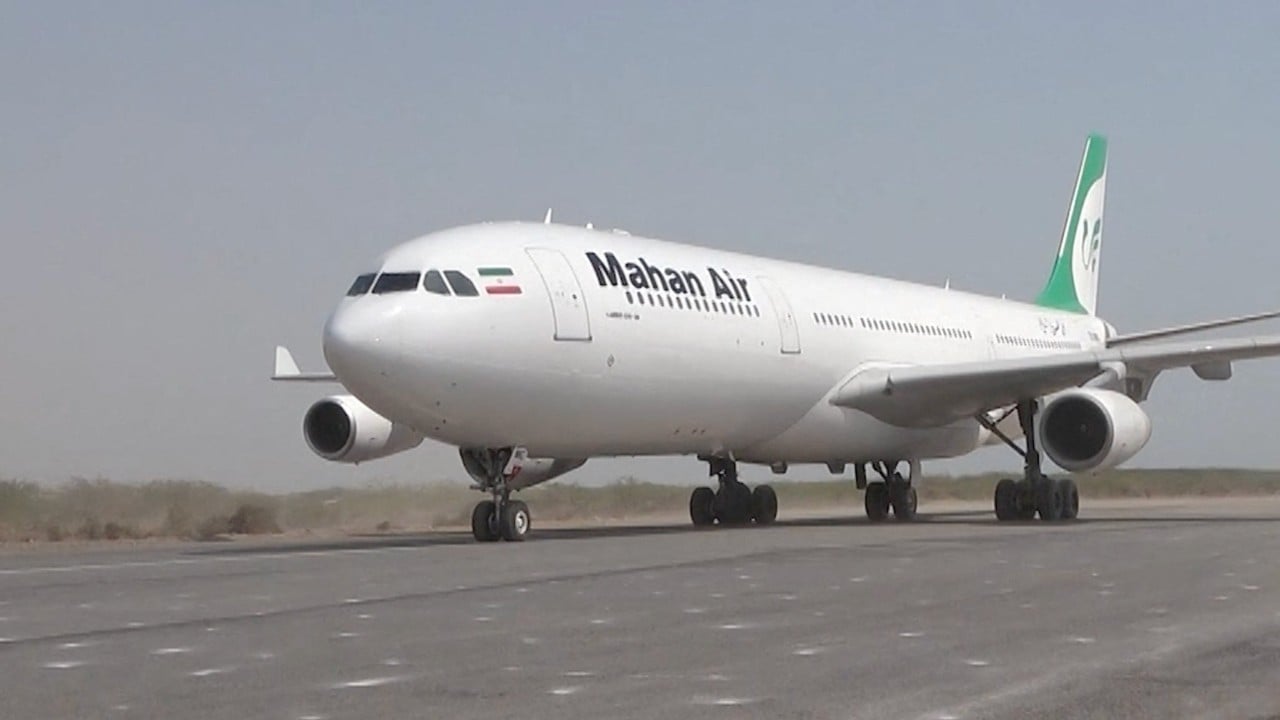
Washington loves a good administrative hammer. Whenever geopolitical tensions spike, the playbook gets dusted off with predictable monotony: announce sweeping restrictions, slap new designations on commercial carriers, and pretend that parking a few Boeing or Airbus airframes will alter foreign policy outcomes. The lazy consensus among foreign policy pundits assumes that grounding passenger jets starves regimes of strategic power.
That theory collapses the second you examine how secondary aviation markets actually operate. I have spent years tracking supply chain workarounds and sanctions evasion architecture. When regulators target flag carriers, they do not paralyze a state apparatus. They merely hand a lucrative monopoly to shadow brokers who specialize in moving gray-market parts through a maze of shell companies in Central Asia and the Persian Gulf.
The Mechanics of Regulatory Evasion
Commercial aviation runs on parts turnover, not grand ideology. Every modern airframe requires a relentless stream of certified components, from avionics modules to turbine blade replacements. When official channels close due to Treasury Department designations, operations do not halt. They migrate.
- Registry hopping: Aircraft are routinely deregistered in home jurisdictions and re-flagged under compliant third-party flags.
- Broker arbitrage: Spare components are funneled through opaque intermediaries in non-aligned nations, drastically inflating acquisition costs but never stopping the flight schedule.
- Cannibalization: Older hulls in the domestic fleet are systematically stripped for spares to keep primary long-haul routes functional, shifting safety margins downward while keeping aircraft in the air.
This is where the standard analysis fails. Washington treats aviation sanctions as a technological blockade. In reality, they are a tax on inefficiency. The Iranian government absorbs the higher cost of parts procurement, passes the friction onto domestic travelers, and watches western policymakers pat themselves on the back for delivering a supposedly crippling blow.
The Human Cost of Performative Policy
Let us look past the rhetoric and examine who actually absorbs the impact of these restrictions. It is not the political elite or the security apparatus. Those entities maintain private transport networks, military logistics corridors, and access to unmonitored air assets that never touch a civilian registry.
The people who suffer are middle-class families trying to visit relatives abroad, merchants relying on regional trade routes, and technicians forced to work with degraded maintenance documentation. By cutting off access to legitimate Original Equipment Manufacturer support, sanctions actively degrade the safety baseline of commercial routes inside the sanctioned zone.
If your goal is to make flying inherently more hazardous for civilian passengers while failing to ground a single strategic asset, then sweeping aviation restrictions are a resounding success. If your goal is to force a strategic behavioral shift, you are operating on magical thinking.
What Washington Refuses to Admit
Bureaucracies hate acknowledging their own obsolescence. Admitting that targeted financial bans and asset freezes have diminishing returns in a multipolar trade environment requires an institutional humility that foreign ministries rarely possess. Instead, they double down. Every time a workaround is discovered, a new round of designations is drafted, creating an endless cycle of administrative whack-a-mole.
Sanctions work when they target concentrated, illiquid choke points—such as specific financial clearinghouses or direct state-owned energy export terminals. They fail miserably when applied to dispersed, highly adaptable gray-market networks like commercial aviation spares procurement.
Stop pretending that administrative paperwork can repeal the laws of supply and demand. Until policymakers understand that every restriction creates its own shadow market, we will continue watching this theater act play out on an endless loop.


