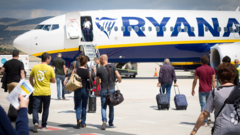
A 34% drop in quarterly profit isn't what European aviation giants usually display during the kickoff to the peak summer travel season. Yet, Ryanair just posted exactly that, watching its after-tax profit tumble to €538 million for the three months ending June 30.
The headline culprit sounds like a textbook macroeconomic shock: the intense geopolitical conflict involving Iran, which sent global oil prices ticking back past $90 a barrel. But if you look closely at how the budget carrier actually operates, this financial hit reveals a much more deliberate strategy. Ryanair didn't just get caught in a storm of rising costs. They actively chose to slash ticket prices to keep their planes full, gambling that volume would shield them from long-term damage. For a more detailed analysis into this area, we suggest: this related article.
The Math Behind the 20 Percent Exposure
Airlines hate unpredictable energy markets, which is why most of them buy their fuel months or years in advance at fixed rates. Ryanair is notoriously aggressive with this tactic. The airline actually managed to hedge 80% of its fuel requirements for the year at a highly favorable $67 a barrel until March.
The problem lies entirely in the remaining 20% left exposed to the open spot market. For broader context on this development, in-depth analysis can be read at Forbes.
Because of the supply anxieties and crude spikes triggered by the Iran conflict, the price of that unhedged jet fuel more than doubled, soaring past $150 a barrel during the quarter. That single exposure vector dragged total operating costs up by 11% to €3.81 billion. When a fifth of your fuel bill suddenly doubles, even the most disciplined low-cost structure in the world takes a bruising.
Fighting Consumer Hesitancy With Cheaper Tickets
If skyrocketing fuel costs represented the supply-side blow, a shifting consumer mindset dealt the demand-side challenge.
According to Ryanair Chief Executive Michael O’Leary, the outbreak of the war created a wave of consumer hesitancy. Holidaymakers started worrying about potential jet fuel shortages across Europe and grew generally anxious about the economic fallout of another major conflict.
The immediate result? People stopped planning ahead. Booking windows shrunk dramatically as travelers delayed buying tickets until the last possible moment, leaving airlines blind to their summer load factors.
Instead of holding the line on ticket prices to protect their profit margins, Ryanair did what it always does when demand softens: they triggered a price war.
- Traffic grew: Total passenger numbers actually jumped 6% to 61.3 million.
- Fares fell: The average ticket price dropped 6% year-on-year.
- Revenue flattened: Because of the deep discounts, total revenue only crawled up 1% to €4.38 billion despite millions of extra passengers.
It's a brutal reminder of how thin airline margins can be. Ryanair deliberately used cheap tickets to stimulate the market, choosing to absorb a profit dip rather than fly half-empty planes.
The Long Game Against Shaky Rivals
While a 34% drop in profit misses market expectations, Ryanair isn't exactly panicking. The company recently wiped out its remaining €1.2 billion bond debt in May, leaving the airline completely debt-free with a gross cash cushion of over €2.8 billion at the end of June.
This fortress balance sheet gives them a massive advantage over competitors who can't afford to play the long game. Chief Financial Officer Neil Sorohan pointed out that as the industry navigates a brutal combination of expensive fuel and a dominant US dollar, weaker, highly leveraged legacy and regional carriers are going to struggle heavily to survive the upcoming winter.
Furthermore, the European aviation sector is actively consolidating. EasyJet is currently moving toward going private via a £5.7 billion takeover by Apollo, which could severely constrain capacity across major European hubs if the new owners decide to cut underperforming routes. By keeping its own expansion targets intact—aiming for 216 million passengers this fiscal year—Ryanair is betting that it can squeeze out its rivals, even if it means tolerating lower ticket yields in the short term.
If you are trying to figure out how to plan your own travel or investment strategy around these shifts, the playbook is relatively straightforward. Expect Ryanair to keep offering promotional, cut-rate fares for flights booked several weeks out to force demand. However, keep in mind that they are aggressively penalizing late bookers to make up the difference; if you wait until the final days before departure, you'll end up paying an steep premium as the airline attempts to claw back its unhedged fuel margins.