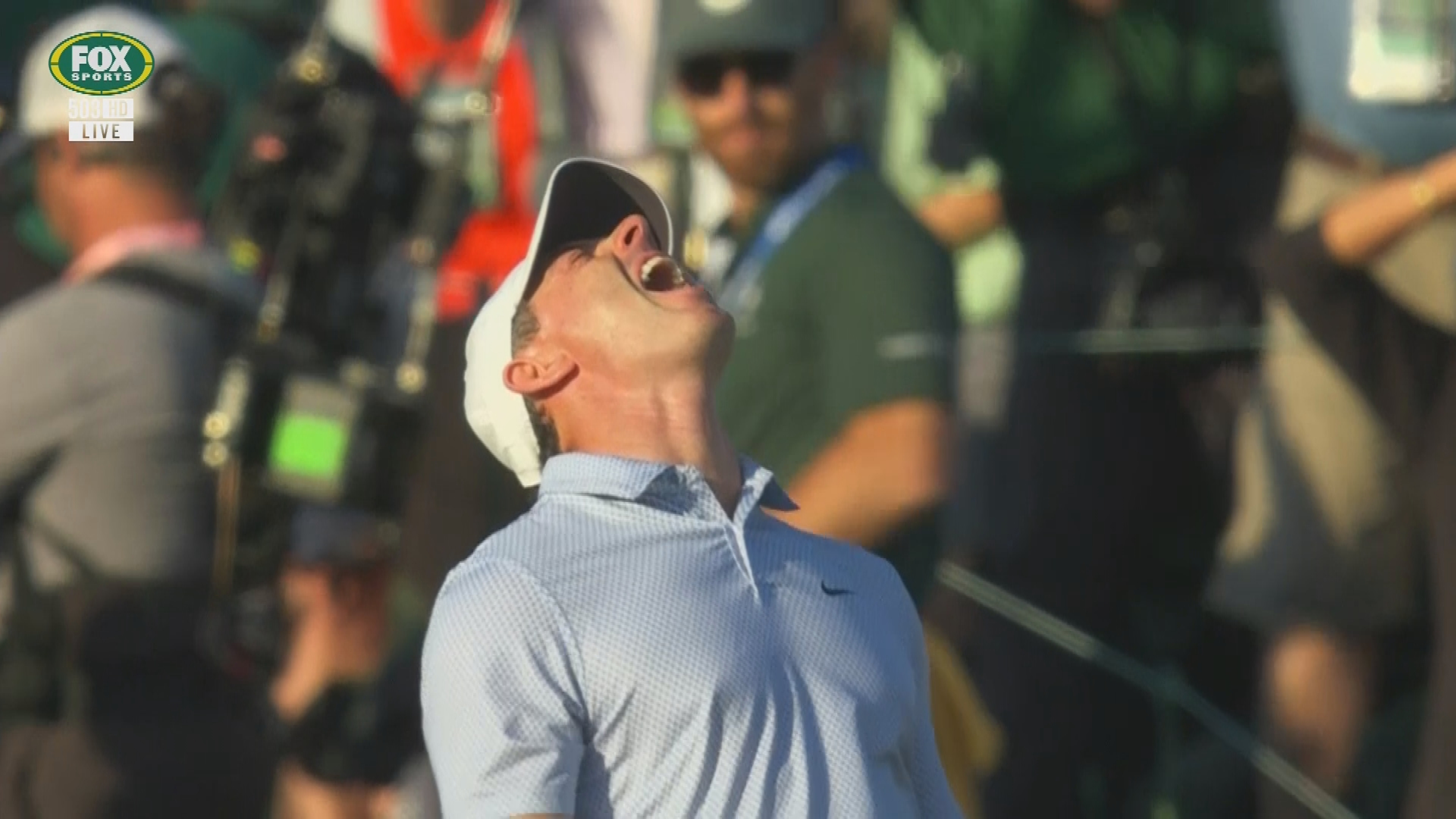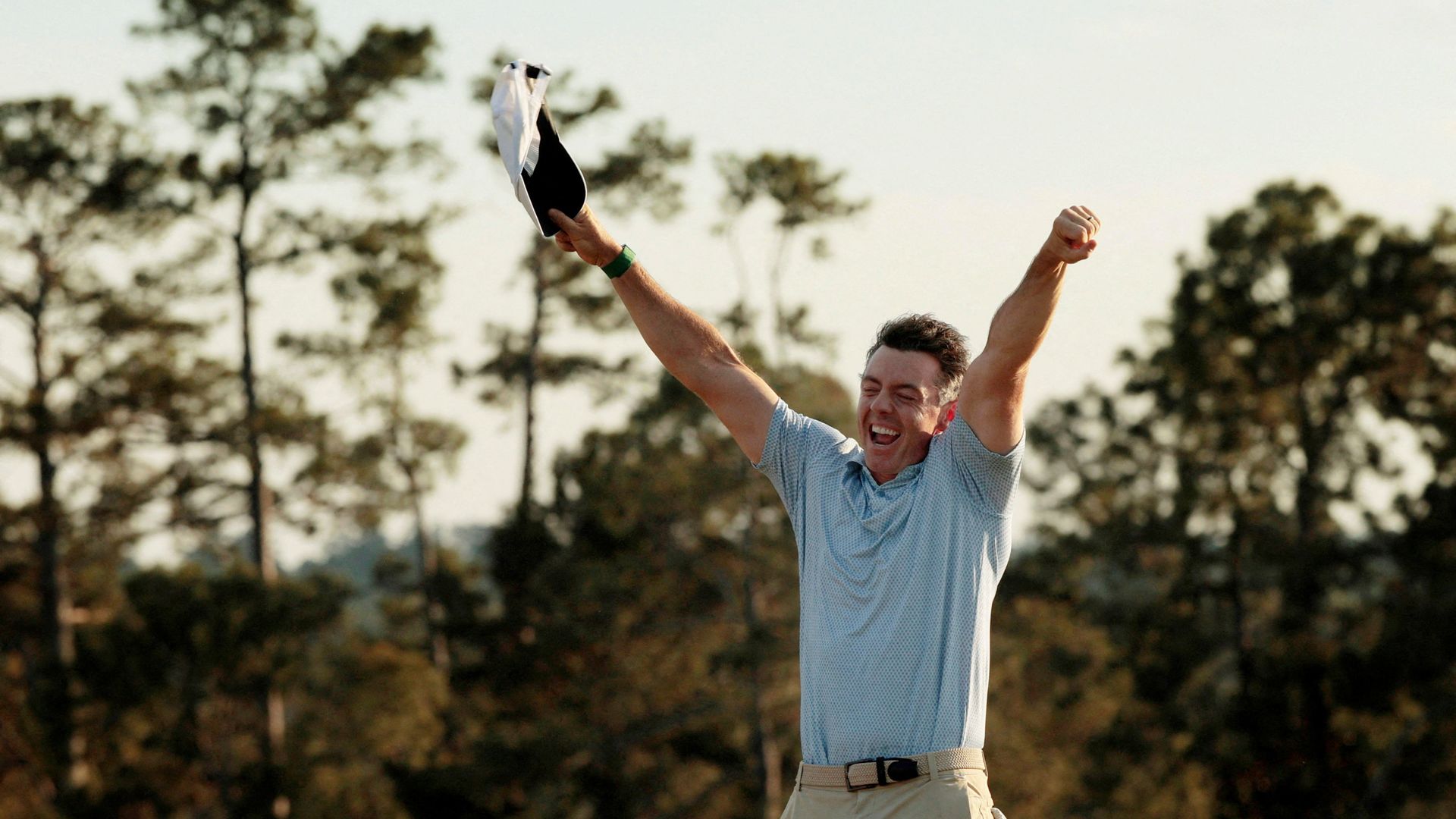
The golf world is currently tripping over itself to crown Rory McIlroy as the undisputed heir to the throne. The headlines are screaming about "immortality" and "the second coming of Tiger" because he just slipped on a second consecutive Green Jacket. It’s a nice narrative. It’s clean. It’s also fundamentally wrong.
If you think Rory’s dominance at Augusta signifies a healthy, thriving era of professional golf, you aren't paying attention to the mechanics of the game. You’re watching the scoreboard, not the swing. You’re reading the trophy engraving, not the data that suggests we are witnessing the narrowing of a sport into a predictable, high-variance lottery.
The Illusion of Dominance
Winning back-to-back at Augusta is statistically improbable, but let’s stop pretending it’s a feat of pure, unadulterated skill. In the modern era, the Masters has become a specialized experiment in ball speed and vertical launch. Rory didn't "out-think" the field. He out-lengthened a course that has become defenseless against the modern equipment-athlete composite.
The "lazy consensus" among analysts is that Rory has finally mastered his mental demons. They say he’s "found peace" or "embraced the pressure." That is sports-psychology fluff. Rory won because Augusta National has been "Tiger-proofed" into a state where only four or five humans have the physical profile to actually compete. When the field is effectively reduced to five people before the first tee time on Thursday, winning twice in a row isn't a miracle. It’s an inevitability.
I have spent two decades analyzing the physics of the golf swing and the economics of the PGA Tour. I’ve watched legends crumble because they couldn't adapt to the "bomb and gouge" era. What we are seeing now isn't the rise of a new king; it's the homogenization of a craft.
The Myth of the Career Grand Slam Redemption
Everyone wants to talk about how this win "completes the journey." It doesn't. If anything, it highlights the glaring holes in the rest of his resume over the last decade.
To be truly dominant—to be the "King"—you have to win when the conditions don't favor your specific launch angle. Tiger Woods won on baked-out brown grass at Hoylake without hitting a driver. He won at Bethpage Black in a swamp. He won at Torrey Pines on one leg.
Rory wins when the grass is lush, the air is still, and the course allows him to treat the par 5s like long par 4s. This isn't an attack on his talent; it's a correction of the record. He is the greatest "front-runner" in the history of the sport. If the conditions are 72 degrees and the fairways are soft, give him the trophy now. But don't tell me he's the best player in the world when he struggles to break 75 the moment a 20-mph wind blows off the Irish Sea or the greens at a US Open turn into glass.
Why Your "People Also Ask" Queries are Flawed
You’re asking the wrong things. You want to know if Rory is better than prime Tiger. He isn't. You want to know if he’ll win 10 majors. He won’t. Here is the reality of the questions you should be asking:
Does Rory’s win bridge the gap between LIV and the PGA Tour?
No. It deepens it. By cementing his status as the PGA Tour’s golden boy, he becomes a political lightning rod. His success is being used as a weapon in a corporate war. When a player’s legacy becomes a marketing tool for a tour's "integrity," the sport loses. We are no longer talking about the quality of his 60-yard wedge shots; we are talking about his loyalty to a board of directors.
Is back-to-back at the Masters the hardest feat in sports?
Hardly. Try winning the Tour de France without a team of domestiques or defending a heavyweight title against a younger, hungrier striker. Golf, by its nature, is a game of luck mitigated by skill. Over 72 holes at the same course every year, the "luck" variable for a long hitter at Augusta is lower than anywhere else on earth.
The Problem with Modern Augusta
Augusta National is the most beautiful gatekeeper in sports. It is also the most stagnant. By lengthening the 13th and tinkering with the 11th, the green jackets have inadvertently created a blueprint.
Imagine a scenario where a Formula 1 track was designed so that only cars with a specific engine displacement could take the corners. You wouldn't call the winner the "best driver"; you'd call him the guy with the right engine. Rory has the right engine for Augusta.
The data shows that Rory’s strokes gained off the tee at Augusta are nearly double his season average. Why? Because the course removes the penalty for his misses. If you miss big at Oakmont, you’re dead. If you miss big at Augusta, you have a window through the trees and a pine-straw lie that any pro can spin a ball off of.
We are celebrating a lack of variety. We are cheering for a specialist who has found the one stadium that perfectly fits his biomechanical flaws.
The Downside of the Rory Era
There is a cost to this worship. When we elevate a player based on a specific type of dominance, we ignore the decline of the "shot-maker."
- The Death of the Draw: You don't need to shape the ball anymore. You just need to clear the corner.
- The Putter Lottery: Rory’s putting remains his Achilles' heel, yet he wins because he hits his approach shots three clubs shorter than his rivals.
- The Emotional Tax: The media’s obsession with Rory’s "redemption" creates a vacuum. It sucks the oxygen away from the Scottie Schefflers and the Jon Rahms who, statistically, are playing more consistent golf across all terrains.
I’ve seen the industry pivot toward this "star-making" machinery before. It happened in the late 90s, but back then, the star was actually better than everyone else in every category. Rory is not. He is the best at a specific version of golf that is currently being subsidized by the manufacturers and the broadcasters.
Stop Looking at the Green Jacket
The Green Jacket is a symbol of tradition, but in Rory’s case, it’s a shroud. It hides the fact that the professional game is fracturing. It hides the fact that the gap between the "elites" and the "field" is purely a function of equipment optimization.
If you want to see who the best golfer in the world is, don't look at who wins at Augusta. Look at who is in the top ten at the end of a grueling, windy Sunday at Muirfield. Look at who survives a US Open where the winning score is +2.
Rory McIlroy is a phenomenal athlete. He is a generational talent. But he is not a King. He is a beneficiary of a system that has decided that power is more valuable than precision, and that a good story is more important than a complete game.
The sport doesn't need another Rory win. It needs a course that he can't overpower. It needs a tournament that demands he hit a low, stinging 2-iron instead of a high, soft 9-iron into a par 5. Until that happens, his "dominance" is just a well-scripted repeat of a movie we’ve already seen.
The Masters isn't a test of golf anymore. It's a coronation ceremony for the loudest engine in the garage. Stop confusing the two.