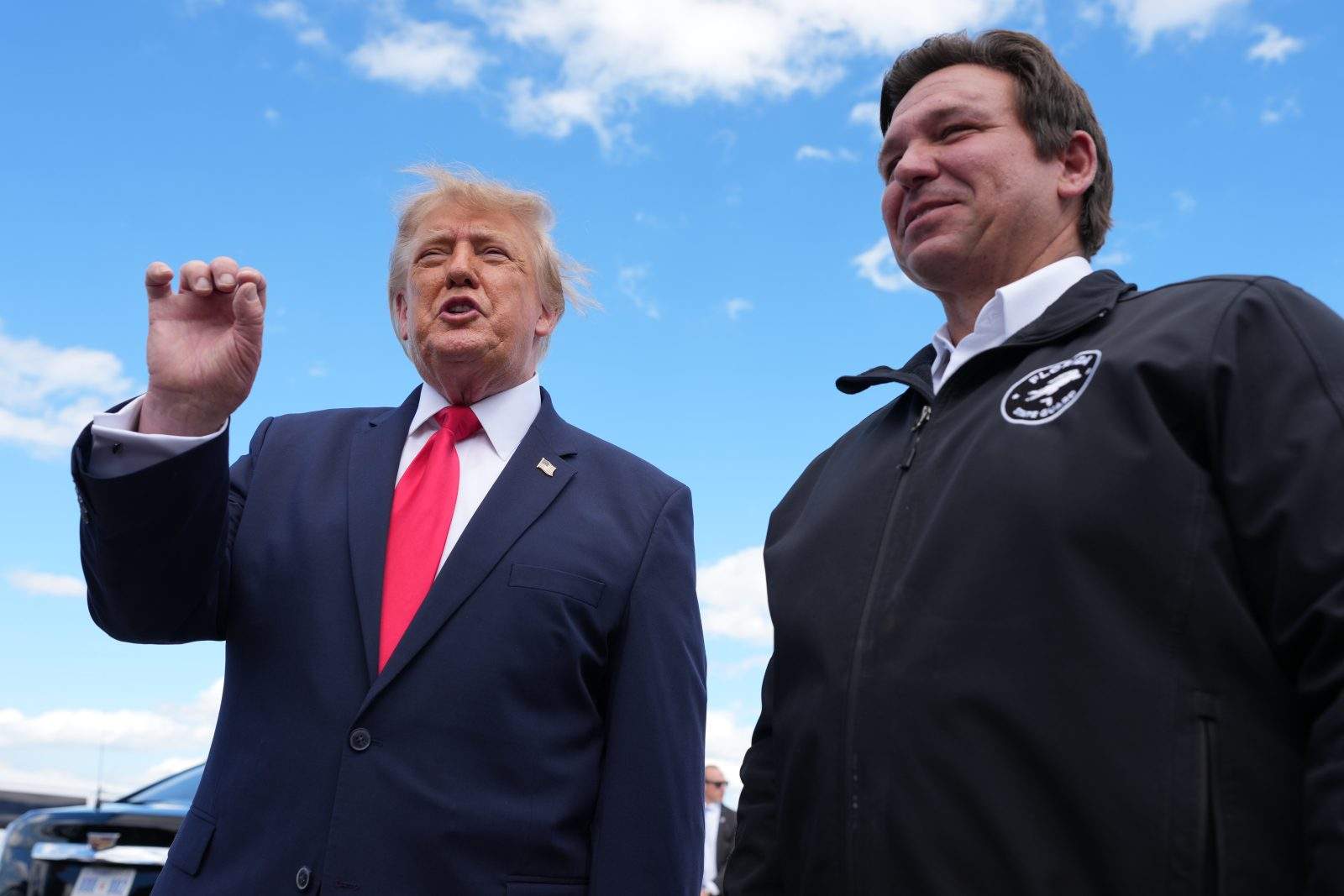
Florida Governor Ron DeSantis doesn't mince words when he's worried about the Republican Party's future. He recently warned conservatives that a sweeping Democratic victory—commonly called a blue wave—wouldn't just mean a rough election night. He called it an "extinction-level event" that could cripple the GOP for years to come.
That sounds dramatic. Honestly, in modern politics, alarmist rhetoric is practically a daily currency. Yet when you strip away the cable news soundbites and look at the structural math behind American elections, DeSantis is pointing to a very real vulnerability. If Democrats capture unified control of Washington or flip key statehouses during a wave election, the rules of the game itself could change before Republicans ever get another turn at bat.
I've watched political cycles swing back and forth for decades, and most midterm or presidential losses are temporary. You lose a few seats, lick your wounds, blame the party in power for inflation or gas prices, and bounce back two years later. DeSantis is arguing that this time is different. He's betting that a major Democratic sweep would trigger permanent institutional shifts—from judicial appointments to voting laws and statehood battles—that lock Republicans out of power long-term.
What DeSantis Actually Means by an Extinction Level Event
Politicians love apocalyptic metaphors, so it helps to translate what DeSantis is really talking about. When he uses the phrase "extinction-level event," he isn't saying the Republican Party will literally vanish off the ballot tomorrow. He's talking about losing the structural advantages that keep the GOP competitive in a country where demographic and cultural shifts have made national popular-vote wins harder to come by.
Think about how power works in Washington. A normal election loss means Democrats pass a budget you hate or stall a few conservative bills. A true wave election gives the winning party enough cushion in the House and Senate to bypass internal moderate holdouts and rewrite foundational rules.
DeSantis has repeatedly pointed to Democratic proposals like eliminating the Senate filibuster, granting statehood to Washington, D.C., and Puerto Rico, and expanding the Supreme Court. If Democrats win big enough to push even two of those items through Congress, the electoral map shifts overnight. Adding four reliably Democratic Senate seats from new states alone would make it mathematically grueling for Republicans to win back the upper chamber for a generation.
Why Midterm and Wave Elections Leave Lasting Scars
History backs up the idea that wave elections aren't just temporary bruises. Look back at 1932, 1964, or even 2010. Those weren't ordinary cycles where a handful of swing districts traded places. They reshaped policy, redistricting, and party coalitions for ten to twenty years.
When a party rides a massive wave into office, three things happen immediately:
- Redistricting power shifts at the state level. If a wave hits during or right before a census cycle, the winning party draws the congressional maps for the next decade. Even outside census years, state supreme court flips—like what happened in Wisconsin in 2023—can force mid-decade map redraws that wipe out safe seats.
- Judicial benches get cemented. Presidents backed by a friendly Senate confirm federal judges at breakneck speed. Those lifetime appointments outlast any president's term, shaping how laws on guns, abortion, regulations, and voting are interpreted for thirty years.
- Donor networks dry up. Nothing kills political fundraising faster than looking like a guaranteed loser. Corporate PACs and mega-donors don't like throwing money into a black hole, and once that financial pipeline slows down, rebuilding state party infrastructure becomes brutal.
DeSantis knows this firsthand from his time in Florida. When he took office in 2019, Florida was still considered the ultimate purple swing state, decided by razor-thin margins. By capitalizing on momentum, reshaping state courts, and building an aggressive voter-registration machine, Florida Republicans turned a toss-up state into a reliable red stronghold within four years. He's warning his party that Democrats can run that exact same playbook in reverse on a national scale.
The GOP's Structural Vulnerability Right Now
You can't understand DeSantis's warning without looking at why Republicans are nervous in the first place. Despite strong voter frustration over the cost of living and immigration in recent cycles, the GOP has struggled with a glaring problem: turnout consistency among low-propensity voters.
Donald Trump proved he can bring millions of working-class voters to the polls when his name is at the top of the ticket. The catch? Many of those voters simply stay home when he isn't running. Meanwhile, modern Democrats have built a coalition heavy on college-educated suburbanites—a demographic that votes reliably in every single election, from presidential races down to obscure local school board contests.
That turnout gap creates a dangerous trap. In high-turnout presidential years, Republicans can overpower Democratic advantages through sheer enthusiasm. In lower-turnout cycles or special elections, that college-educated base gives Democrats a built-in floor that's tough to crack. If economic conditions or candidate missteps depress Republican enthusiasm at the same time, a routine loss quickly snowballs into a wave.
Where the Money and Ground Game Are Slipping
Beyond voter demographics, there's a nuts-and-bolts organizational issue that rarely makes flashy headlines. Winning tough elections requires boring, expensive infrastructure: field offices, data analytics, ballot-chase operations, and legal teams ready to challenge procedural changes.
In several key battleground states—places like Michigan, Arizona, and Pennsylvania—state Republican parties have spent recent years bogged down in internal infighting and cash shortages. While GOP factions argued over party leadership and loyalty tests, Democratic state committees quietly banked millions of dollars and kept year-round organizers on the payroll. DeSantis has been vocal about this exact failure, arguing that you can't beat a well-funded machine with rallies and social media posts alone.
Is DeSantis Overstating the Danger
Let's be fair here. Political warnings are never purely analytical—they're also strategic tools. When Ron DeSantis calls a potential Democratic surge an extinction-level event, he's doing two things at once. First, he's genuinely sounding the alarm about institutional changes Democrats could enact with big majorities. Second, he's trying to scare complacent GOP donors and voters into opening their wallets and showing up to vote.
There are solid reasons to think an actual "extinction" of the GOP isn't on the table, even in a bad election year:
- American politics has a built-in thermostat. Whenever one party wins big and governs aggressively, voters almost always swing back the other way within two to four years. Barack Obama won a massive wave in 2008, only to watch Republicans wipe out his House majority in 2010.
- Moderate Democrats still exist. Even if Democrats win narrow majorities in the House and Senate, passing radical structural changes like court expansion or D.C. statehood requires unanimous support from centrist lawmakers representing swing districts. Those politicians know voting for major institutional overhauls could cost them their seats immediately.
- State-level resistance slows federal overreach. Republican governors and attorneys general have become experts at tying up federal policies in court for years, blunting the immediate impact of Democratic legislation.
So no, the Republican Party isn't going the way of the Whigs overnight. Still, dismissing DeSantis's warning completely misses the point. You don't have to go extinct to lose a decade of policy battles, judicial influence, and legislative control.
What History Tells Us About Political Realignments
If you want to see what a true long-term setback looks like, look at California in the 1990s or Virginia in the late 2000s. Neither state flipped because of one single bad candidate. They flipped because one party misread demographic shifts, lost ground in rapidly growing suburbs, and failed to adapt its message until the electoral math became nearly impossible to overcome.
California used to be the birthplace of modern conservatism, giving the country Richard Nixon and Ronald Reagan. Once Republicans lost their footing with suburban voters and growing minority communities there, the state didn't just lean blue—it locked the GOP out of statewide office for decades.
DeSantis's core argument is that national Republicans risk walking into that same trap if they treat every election like a personality contest instead of an organizational war. Voters in swing suburbs care about kitchen-table economics, public safety, and competence. When Republicans nominate polarizing candidates who spend more time relitigating past grievances than talking about housing costs or schools, those suburban voters bolt—and they rarely come back quickly.
How Voters and Campaigns Can Actually Read the Warning Signs
If you're trying to figure out whether a real blue wave is building—or if politicians are just crying wolf to boost fundraising—ignore national polling averages. National polls tell you very little about how individual districts and Senate seats actually fall.
Instead, watch three specific indicators that political strategists track behind closed doors:
- Special election overperformance. When one party consistently beats its baseline partisan lean by five to ten points in off-year special elections, a wave is usually forming. It signals an enthusiasm gap that national polls often miss until October.
- Generic congressional ballot margins. Historically, Republicans need to be roughly tied or slightly ahead on the generic ballot to hold the House comfortably, largely due to how voters are geographically distributed. If Democrats hold a sustained lead of four points or more heading into autumn, GOP majorities are in serious trouble.
- Small-dollar fundraising velocity. Watch quarterly Federal Election Commission (FEC) filings for challenger candidates in swing districts. When little-known challengers suddenly start outraising entrenched incumbents, grassroots energy is surging on the ground.
DeSantis is right about one undeniable truth: political momentum is unforgiving. Once a wave builds enough force to sweep away state legislatures, governorships, and Senate seats in a single night, complaining about the aftermath won't bring those seats back. Pay attention to the structural fundamentals—turnout operations, candidate quality, and state-level organization—because those are the only things that actually stop a wave before it hits.