The water does not knock. It arrives.
In the high valleys of the Himalayas, where the air tastes of thin stone and pine smoke, mornings usually begin with a deliberate quiet. A prayer wheel turns in the dust. A child blows on a tin cup of tea. Down below, the glacial river babbles a predictable song, a cold white ribbon fed by ancient ice that has melted on a schedule older than human memory.
Then came the night the mountain broke.
If you stood on the ridge above Melamchi that evening, you would not have heard the warning. You would have felt it first—a low, rhythmic vibration in the soles of your feet, like the purr of a giant engine buried deep beneath the earth. A second later, the air filled with the sharp, unmistakable scent of crushed rock and old mud.
By morning, the river was gone. In its place was a slate-gray monster ten meters high, chewing through concrete bridges, swallowing stone houses, and erasing centuries of footprints in a single, roaring breath.
For weeks afterward, the world asked the standard questions. How much rain fell? Which embankment failed? How many millions in infrastructure vanished beneath the slurry?
Those are the questions of accountants. They miss the pulse of the tragedy. To understand why a flash flood tears through a village with the fury of an unchained predator, you have to look higher than the rain clouds. You have to look at what the sky left behind, and what the ice is whispering to the stone.
The Eye in the Orbit
Two hundred miles above the chaos, blind metal cylinders orbit the globe in absolute silence. They do not care about grief. They care about light, wavelength, and reflection.
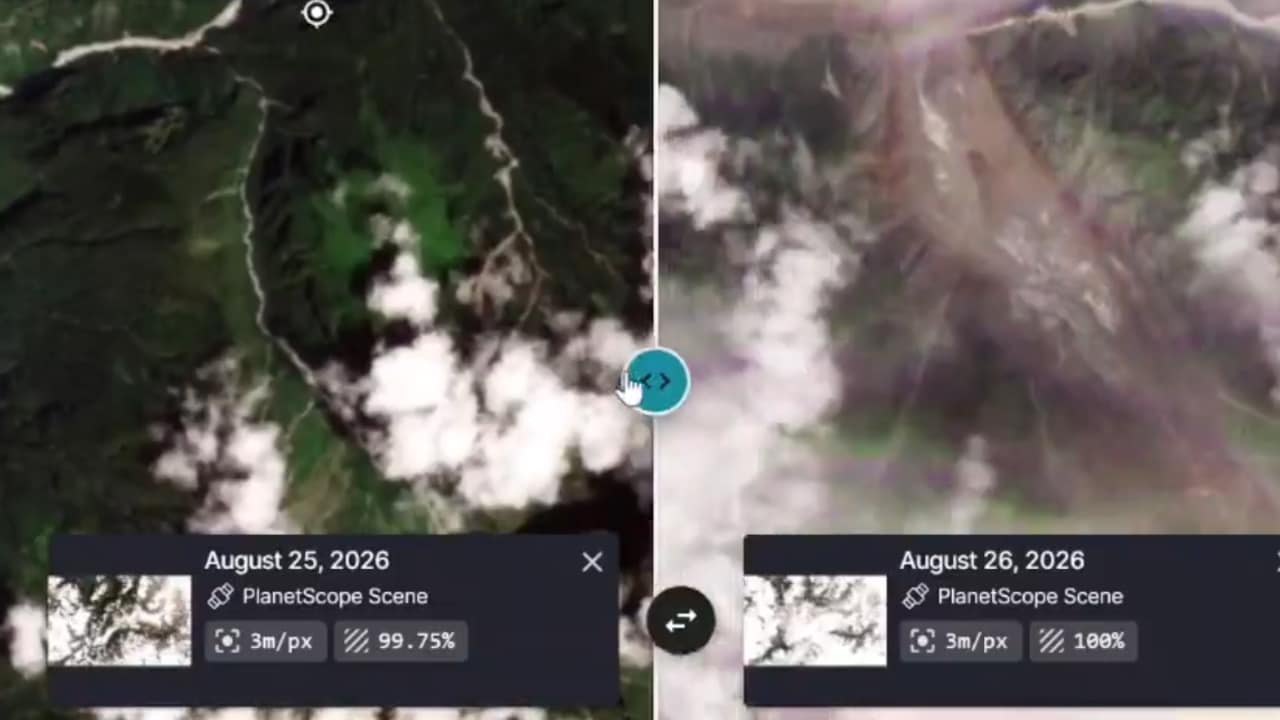
In the days following the disaster, scientists at international monitoring centers pulled high-resolution satellite imagery from orbit, peering down through the thinning monsoon vapor. What they found beneath the clouds rewrote the standard narrative of disaster.
The heavy rains were not the sole architect of the ruin. They were merely the match dropped near a powder keg.
High up in the rugged folds of the upper basins, satellite observation revealed a series of catastrophic breaches in hidden glacial lakes. Imagine a bathtub perched on a crumbling ledge, filled to the brim with loose gravel and melting ice. For decades, natural dams of moraine—piles of debris pushed aside by retreating glaciers—held back millions of cubic meters of water. These were fragile walls built of gravel and prayer, held together only by the sub-zero grip of permafrost.
As global temperatures ticked upward, that permafrost began to sweat. The ice cement turned to slush.
When a sudden cloudburst struck, it didn't just swell a river; it tipped an already precariously balanced scale. One hidden lake gave way. That sudden deluge slammed into the lake below it, triggering a domino effect of natural impoundments bursting like paper bags. A glacial lake outburst flood, known to hydrologists as a GLOF, was born.
By the time the water reached human settlements, it was no longer just a river. It was a liquid battering ram carrying the weight of a million tons of displaced earth.
Living on Borrowed Time
Let us walk through what that means for the people who call these valleys home.
Imagine Tsering. He is a hypothetical shopkeeper whose family has run a roadside tea stall in Sindhupalchowk for three generations. Tsering knows every eddy of the local river. He knows when the snows recede in spring, when the monsoon arrives in July, and how high the water climbs during a normal heavy storm. He has watched the river rise and fall his entire life, a reliable clock ticking beside his door.
Or so he thought.
The terrifying reality of modern mountain hydrology is that traditional ecological knowledge—passed down through centuries of grandfather to father to son—is suddenly obsolete. The clock is broken. The river no longer behaves according to ancestral rules because the roof of the world is melting.
When satellite data shows a growing blue smudge high in an inaccessible glacial moraine, Tsering cannot see it from his porch. He cannot hear the water seeping through the unstable gravel three thousand meters above his head. He lives downstream from a time bomb he didn't build, waiting for a warning that often arrives only minutes before the roar begins.
This is the invisible stake of our changing climate. It is not just about melting ice caps on a distant screen or abstract temperature graphs flickering at scientific summits. It is the widening chasm between the speed of planetary transformation and the human capacity to adapt.
The Anatomy of a Warning
To look at satellite imagery of a swelling glacial lake is to stare into a complex puzzle of physics, geography, and human vulnerability.
When researchers analyze these orbital snapshots, they are looking for specific signatures. They track changes in surface area over weeks. They measure the darkening tone of water pooling behind unstable ice cores. They calculate the steepness of the slopes and the volume of loose debris waiting to be mobilized.
It is high-stakes detective work conducted from the vacuum of space.
Yet, the greatest challenge has never been capturing the data. It is translating a cold pixel on a computer screen in Kathmandu or Washington into an immediate, life-saving alarm for a village nestled deep in a gorge where cell service is a luxury and sirens are nonexistent.
Consider the chain of custody for a warning. A satellite snaps an image. Algorithms process the pixel shifts. Analysts flag an anomaly. Reports are filed, reviewed, and eventually routed through bureaucratic channels to local authorities.
By the time the alert reaches the tea stall, the mountain has already moved.
We have engineered incredible tools to watch the earth unravel, but we are still fumbling with the wiring required to protect the people standing in its path.
The Weight of the Stone
There is an old mountain saying that the earth remembers every footstep, but it also eventually reclaims every stone we try to borrow from it.
When we look back at the devastation left by flash floods triggered by glacial lake outbursts, we are forced to confront an uncomfortable truth. We cannot simply build higher concrete walls or dredge deeper channels. Water of that volume, backed by thousands of feet of elevation drop, treats concrete like chalk.
The solution—if we can call it that—requires a fundamental shift in how we inhabit the edges of nature. It demands that we listen to the silent sentinels orbiting above us, using their cold digital eyes to map danger before it becomes destiny. It requires early warning systems powered by real-time sensor networks, community-led evacuation drills, and an honest reckoning with the pace of glacial retreat.
The monsoon will return next year. The high ice will continue to weep under a warming sun. Hidden lakes will form in the silent cradles of remote peaks, gathering weight, waiting for the next heavy cloud to brush against the ridge.
Down in the valley, the tea stalls will be rebuilt. The prayer flags will be strung across the gorge once more, snapping briskly in the mountain wind. And the river will keep flowing, bearing the secret history of the ice, reminding anyone willing to listen that the earth is speaking to us from the sky, long before it breaks the ground beneath our feet.