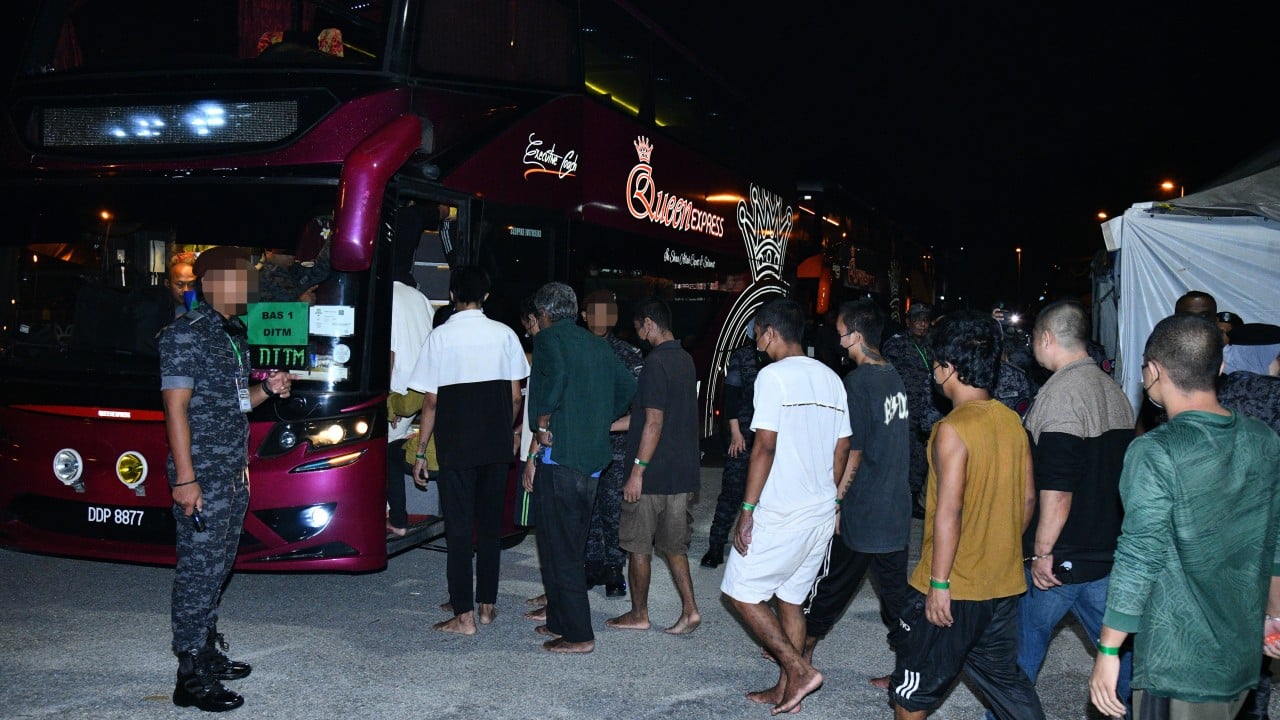
The rain in Kuala Lumpur does not fall; it arrives in sheets, heavy and warm, erasing the outlines of the skyscrapers until the city looks like a watercolor left out in a storm. On a morning that tasted of wet asphalt and diesel, thousands of Myanmar nationals stood outside the gates of a detention facility, clutching plastic bags containing their entire lives.
Paperwork. A spare shirt. A faded photograph of a mother whose face has begun to blur in the memory of exile. If you found value in this post, you might want to check out: this related article.
They were waiting for trucks. Not trucks to freedom, but trucks back to a country that has spent years tearing itself apart from the inside.
To read a news ticker is to consume human tragedy as a dry arithmetic. Malaysia deports X number of people. Official statements cite immigration laws, expired visas, the bureaucratic machinery of a sovereign state maintaining its borders. The numbers roll across screens in silent ticker tapes. But numbers do not have lungs. Numbers do not remember the smell of woodsmoke hanging over a village in Rakhine State or the sudden, shattering concourse of artillery shaking the earth beneath a child’s bed in Kayah. For another angle on this event, refer to the latest update from The Washington Post.
Let us walk, for a moment, in the shoes of someone who knows only the friction between safety and survival. Imagine Daw Tin, a hypothetical composite drawn from dozens of real testimonies gathered by humanitarian monitors over the past three years. She spent two years working illegally in a garment factory on the outskirts of the capital, her fingers stained with indigo dye, sending every spare ringgit back to a cousin sheltering in a monastery near Mandalay. She was not a threat to the state. She was an engine of labor, invisible until the police van idled outside her tenement door at dawn.
When the deportation order came, it arrived not with malice, but with indifference. Indifference is often more terrifying than hatred because it cannot be reasoned with. You cannot negotiate with a stamp on a piece of blue paper.
The Malaysian government defends these actions through the lens of national sovereignty. Every nation guards its perimeter. Laws are drawn to separate the documented from the undocumented, the legal worker from the shadow dweller. From a desk in Putrajaya, the logic is clean. Borders define nations. Without enforcement, law dissolves into suggestion.
Yet, human reality refuses to stay neatly inside legislative margins.
Since the military junta seized control of Myanmar in February 2021, the nation has spiraled into an ongoing civil war characterized by airstrikes on civilian targets, mass displacement, and the collapse of the basic infrastructure required to sustain life. The United Nations and human rights organizations have repeatedly warned that returning individuals to this environment exposes them to grave risks, including arbitrary detention, forced conscription, and violence.
To send someone back into that theater of conflict is not merely an administrative correction. It is an ejection into an active volcano.
Consider the logistics of the return. The deportees are loaded onto military-linked aircraft or naval vessels. They land in Yangon or are transferred across specific border checkpoints under the watchful eyes of authorities who view those who fled with deep suspicion. In the eyes of the regime, leaving the country during its darkest hour and seeking refuge abroad is often interpreted as an act of political disloyalty.
What happens to a person when they step off that plane?
For some, it is immediate interrogation. For others, it is the silent terror of disappearing into a network of internal checkpoints where extortion is the currency of survival. The savings accumulated through years of menial labor in foreign kitchens and construction sites are often confiscated long before they reach home. They return poorer, more vulnerable, and marked as outsiders in their own birthplace.
We must confront the profound moral friction at the heart of this crisis. Host nations in Southeast Asia, many of which are not signatories to the 1951 Refugee Convention, find themselves caught in an untenable squeeze. They fear mass influxes of displaced populations straining public services, depressing local wages, and creating security challenges. They look at the porous maritime borders of the Andaman Sea and see an existential tide.
And yet, deterrence built on the suffering of the desperate carries its own heavy invoice.
The policy assumes that the threat of deportation will deter others from making the perilous sea crossing or seeking refuge in the shadows. But deterrence relies on rational calculation. When the alternative to fleeing is a burnt-out home and the certainty of violence, deportation is merely a hazard to be risked, much like the overloaded wooden boats that brave monsoon seas. People do not flee because they are looking for adventure; they flee because the ground beneath them has turned to ash.
There is a quiet cruelty in how modern bureaucracy processes human desperation. Files are opened. Hearings are waived or expedited. Signatures are applied. The machinery grinds forward, fueled by policy memos and diplomatic protocols, operating at a distance from the screams of the marketplace or the silence of a bombed-out hospital ward.
When the trucks finally rolled away from the depot in Kuala Lumpur, carrying those thousands toward the tarmac, the rain had not stopped. It slicked the roofs of the vehicles, mirroring the streaks on the cheeks of those looking out through the wire mesh.
We live in an era obsessed with walls, with digital surveillance, with the crisp geometry of borders. We map the earth into colors and classifications, forgetting that beneath every category lies a beating heart that only wants tomorrow to be slightly less terrifying than yesterday.
The flights have landed. The paperwork is filed. The statistics have been entered into quarterly reports. But in the quiet hours after midnight, when the city lights reflect off the wet pavement of two different worlds, the question remains suspended in the heavy air.
What do we owe the stranger at the gate when the house inside is burning, and we have chosen to lock the door from the outside?